
In a five-part series, we would like to share with you our experiences of setting up a corporate database, particularly in the area of data management and technology implementation, based on our own experiences in our company. In the first part, we focus on expectations and triggers surrounding internal digital reporting.
If we want "more" from data
We at doubleSlash also set out on this path years ago, Base decisions on data and started to build a data hub. For us, this means Automated data preparation and provision of analyses for a specific group of internal users. The experience gained from this - as well as from customer projects - is incorporated into this article. The other parts of the blog will follow:
|
The Term „Business Intelligence“ (BI) first appeared as a term several decades ago. The names have changed several times since then. However, the core idea is still the same. BI systems are there to create information-based foundations for operational decisions. How the information-based foundations are created has changed massively over the decades. In recent years, for example, machine learning has been heralded as a major trend for BI. The benefits of recognizing patterns in existing data are clear. However, this also requires a high-quality database that is large in many dimensions. Usually, the path of data utilization in companies begins with the description of the past and the current situation. A start is also made on linking different data sources. This makes it possible to recognize the reasons that have led to different situations in the past and present. As experience with the data sources increases and the data pool and correlations grow, the path can continue in the direction of a preview, e.g. using machine learning. However, the later possibilities require the first steps to be taken. These begin when a company makes the decision, base operational decisions on information from data.
Triggers for automated company reporting
All companies generally record data - e.g. when it comes to accounting, which has to be carried out within the company or by service providers. In addition, there is often a manually created reporting system, e.g. for the management, for which one or more employees calculate key figures from their area of responsibility. In addition to the advantage that these people usually have very good technical knowledge of the data, there are essentially three major difficulties:
|
At doubleSlash, these three reasons were joined by the Growing company size which increasingly required a division of labor and thus also prevented one person from being aware of a large number of key figures. Larger Interest of external stakeholders also required the preparation of standardized key figures at regular intervals.
A Manual reporting/reporting is often based on a large number of files, calculations and systems and therefore a great deal of know-how in the heads of employees - as is the case at doubleSlash. In addition, considerable employee capacities are tied up, especially when they have to provide data outside of the reporting cycles. A database that can be used to make prompt and qualified decisions should solve this problem and also reduce the monthly or quarterly workload. It becomes the Procedure of employees mapped in automated data processingto determine the information from a verified database.
Sometimes it is also a very specific routine for individual employees who have to merge a large number of individual files on a daily, weekly or monthly basis, e.g. to get an overview of orders and stock, and who want or need to dramatically reduce these efforts by means of automated merging and provision. The marketing department serves as an example from our data project. There, KPIs were calculated manually from many online data sources, to which only some employees had access, which could not comprehensively reflect the impact and success of marketing measures carried out. However, the marketing department cannot find a possible increase in inquiries from potential customers in sales, which is one of the aims of the efforts, in its own sources.
Expectations of (automated) company reporting
Once it has been established that a database should be set up, initial expectations begin to develop. Some of these are specified in detail and go into varying degrees of detail. Prioritization into the Determination of requirements one. Others remain at a high altitude and are rather implicit reasons for later satisfaction or even dissatisfaction if the solution does not happen to correspond to the unspecified ideas.
Looking back, doubleSlash's expectations were to receive up-to-date reporting "at the touch of a button". In addition, to have the option, independently create dashboards at any time based on the data sources provided (self-service) and Reduce expensesrequired for manual data collection and presentation. In addition, the expectation was to expand big data knowledge in open source technologies. The latter is of course characteristic of us as an IT service provider, as we always want to expand our knowledge of new technologies.
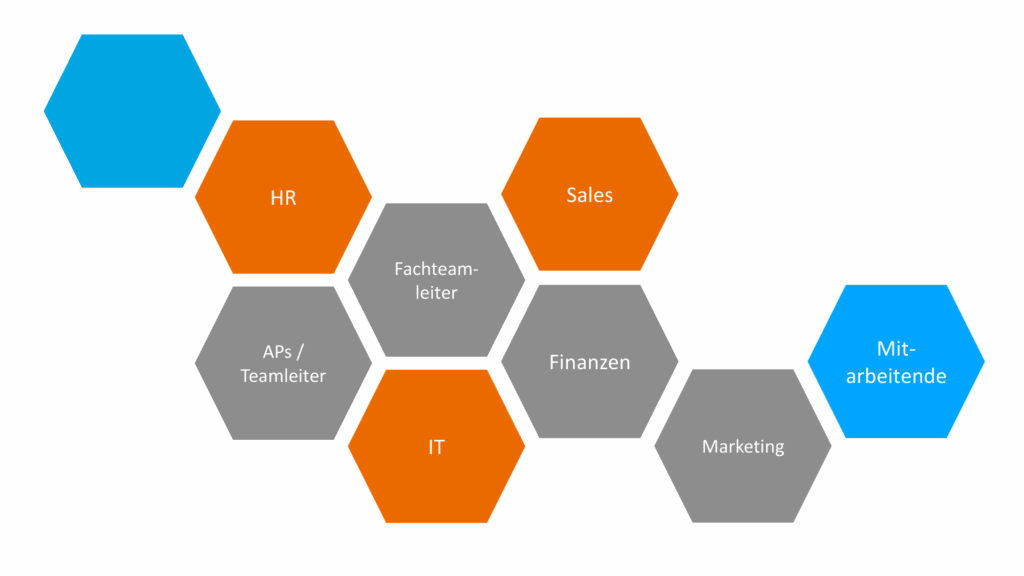
At a somewhat later stage, other departments such as Marketing and HR joined the project with expectations and questions. In addition to the aforementioned reduction in workload, they also saw the possibility of gaining additional perspectives on the data and being able to put it into context better. This was not always possible before due to the effort involved. In addition, marketing has its own goals, which are derived from corporate goals, the effect of which can only unfold through the cooperation of all those involved in the company. The aim was to be able to keep a better eye on these cross-departmental objectives by using a shared database.
Conclusion
In data projects with customers, we encounter similar triggers and expectations as when we set up our own data hub:
- The reduction of effort,
- the risk of manual errors and
- the dependence on reporting cycles
are initially in the foreground. Over time, factors are often added that are made possible by a better understanding of the data. They become new contexts and perspectives in the data The company expects to be able to take data-driven corporate management to the next level. It is important to take a close look at the triggers for automated company reporting and the associated challenges. In the process, it is crucial to clarify expectations by identifying and prioritizing requirements.
In the next episode of the series we go to a professional structuring of the reporting system which is important for the use and understanding of the data in a larger user group.