
Generative AI cannot reach its full potential without a solid data infrastructure. Companies that invest in their data quality and integration will benefit in the long term.
Poor data quality - the biggest obstacle to generative AI
Many companies want to implement AI-supported use cases, but the data quality is often inadequate. Outdated, unstructured or incomplete data leads to AI models delivering incorrect or unusable results. The result: delayed implementation, frustration and a lack of added value.
Generative AI models are only as good as the data with which they are trained and fed. Typical problems are
- Unstructured or outdated data: Many companies work with historically grown systems that are not ideal for AI applications. Technical and organizational barriers to data access make the use of GenAI more difficult.
- Lack of standardization: Without clear data structures and consistent formats, it will be difficult to make meaningful use of GenAI. Inconsistent data makes model adaptation more difficult and reduces the quality of the results.
- Lack of integration: Data is often isolated in silos. Without seamless integration, the added value of GenAI remains limited. A standardized data platform and well thought-out interfaces are essential.
- Data protection and compliance hurdles: Regulations such as the GDPR often make accessing relevant data complicated. Companies need to find solutions to meet data protection requirements and at the same time make their data available efficiently for AI to use.
Companies are wasting valuable opportunities if they do not pursue a solid data strategy. They lose out to competitors who are already working with GenAI and optimizing their processes. This results in inefficient processes, higher costs and less personalized customer experiences. AI can provide targeted support in responding to customer needs and creating better, individualized offers. In addition, new business models and data-based monetization opportunities remain untapped.
How companies optimally prepare their data for AI models
Inventory of the data
In order to improve their database for AI applications, companies should first carry out a comprehensive inventory of their existing data landscape. It is important to analyze what data is available, where it is stored and how it is structured. Outdated or incorrect data should be cleaned up and updated, and standards for the collection and maintenance of new data should be established.
Breaking down data silos and improving integration
A key challenge is the integration of data. Companies should break down data silos and create a uniform, accessible platform that can be accessed by all relevant systems. Effective metadata management helps to make the administration and processing of this data efficient.
Ensuring data protection and compliance
Secure and efficient access to data is another key issue. Companies should ensure that mechanisms are in place that both meet data protection and compliance requirements and optimize the flow of data for AI applications. Modern cloud technologies and scalable data platforms play a key role here, as they enable a flexible and future-proof data strategy.
Strengthening data competence in the company
In addition to the technical aspects, the corporate culture is also crucial. Companies should invest in training their employees to promote a data-driven mindset. The better the understanding of data throughout the company, the more effectively AI applications can be implemented and used.
Structured database as a foundation - a practical example
Many companies face the challenge of preparing their database in such a way that it can be used effectively for AI applications. An example from our own practice shows how a structured approach facilitates this process.
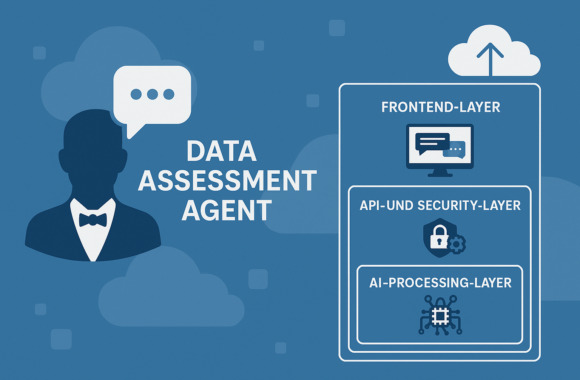
In one of our projects, we initially worked with our customer as part of a Data Assessment Workshops concrete use cases defined. This structured approach not only created clarity about the requirements, but also enabled a long-term data strategy.
Another key topic was the Data integration. In many companies, data is distributed across different systems - a problem that makes the use of generative AI difficult. By developing a standardized platform, access to current and consistent data was made easier. This has removed technical and organizational hurdles and accelerated data-based decisions.
On this basis, we finally developed a Automated data preparation implemented. After a comprehensive analysis of the existing data landscape - What data is available? How is it structured? Where are there gaps or inconsistencies? - we integrated distributed data sources and made them available in standardized formats. This created a solid database that reliably supplies AI models with high-quality information.
The result: Improved data quality, broken data silos and a stable architecture as the basis for the successful use of generative AI.
Conclusion: AI can only develop its full potential with a high-quality database
Companies that invest in a high-quality database benefit in many ways. An optimized data strategy enables more precise analyses and well-founded decisions based on reliable information. This not only improves internal processes, but also increases innovative strength, as data-driven business models can be implemented more quickly and efficiently.
In addition, a clean and well-integrated data architecture ensures greater efficiency in the automation of business processes. AI can access structured and consistent data without obstacles, which reduces error rates and speeds up processes. This leads to cost savings and increases competitiveness.
Another key benefit is the improved customer experience. With a high-quality database, AI-supported personalization and tailored offers can be implemented in real time. Companies can better understand their customers and respond to their needs in a targeted manner, which strengthens customer loyalty and promotes long-term business relationships.
Ultimately, a well-managed database also increases the scalability of AI solutions. Companies are able to implement new technologies more quickly and react flexibly to market changes. Investing in the quality of your data now creates a future-proof foundation for sustainable success through generative AI.
Use the potential of your data for success with Generative AI. Start your data-driven future with us now.