
Data rooms: What they promise - and why they are important
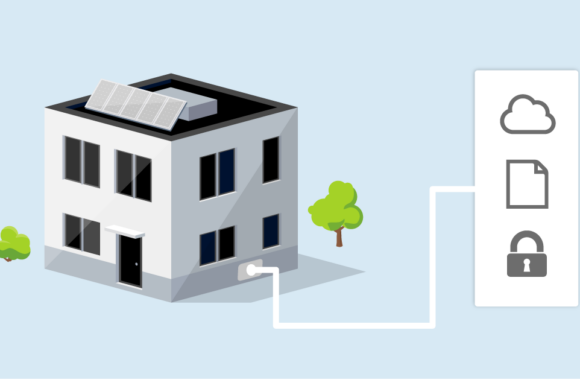
Imagine if data could be used as naturally as electricity from the socket. This is precisely the vision of data rooms: an infrastructure that connects companies, authorities and machines. Standards ensure compatibility, certificates and governance rules ensure trust. The aim is to use data as a raw material - with real business value. Marketplaces should bring suppliers and consumers together and enable use cases such as CO₂ calculation, quality tracking or the digital battery pass.
The devil's advocate: why things are going wrong
Anyone who is honest has to admit: The big promises have not yet been kept. The reality is sobering:
- Unsexy topicData rooms" sound like regulation, not innovation. No hype, no glamor - discussions revolve around bureaucracy.
- InertiaMore than ten years have passed since the first "Industrial Data Spaces" in 2014. Gaia-X, Catena-X - the buzzwords are familiar, but the results remain limited.
- GravitationThe larger the organization, the slower the rotation. Mammoth projects threaten to freeze due to their own mass.
- Missed targetsGaia-X was supposed to be Europe's answer to hyperscalers. Today, these very hyperscalers are sitting at the table. Sovereignty looks different.
- "Jugend forscht"Many projects are exciting laboratory experiments - with millions in funding but no tangible production maturity.
- Complexity & bureaucracyGovernance models, compliance labels and architecture schemes are more of a deterrent than a source of trust.
- Balancing act under antitrust lawData rooms are dangerously close to competition law. Governance mistakes could be costly.
- Political uncertaintyThe years of back and forth over the Supply Chain Act show how paralyzing regulation can be.
Overview of subsidies
- Catena-Xover € 100 million in funding (Fraunhofer IOSB).
- Gaia-X: First tranche 2022: € 117 million for eleven lighthouse projects, € 132 million in total by 2025 (BMWK).
Despite these sumsROI has yet to materialize. Without subsidies, many projects would barely be alive. Data rooms are on a funding drip - like a heart-lung machine.
Governance, law and market pressure
Even beacons like Catena-X are struggling with adoption. Ford has been requiring its suppliers to use Catena-X since 2024 - but many are neither prepared nor motivated. Without complete supply chains, use cases collapse. At the same time, the German Federal Cartel Office is urging caution: one wrong governance step can turn into an antitrust case.
What needs to happen for data rooms to become part of everyday life
For data rooms to be more than just pretty PowerPoint slides, a radical change of course is needed:
- Hands-on mentalityLess diagrams, more pragmatic implementations.
- Simple communicationAway from technical jargon, towards understandable stories and use cases.
- User centricityCompanies don't buy data rooms - they want solutions to real problems.
- StaminaInfrastructure is not created overnight. Electricity grids also took decades.
Questions & Answers
Have data rooms failed?
No - but they are nowhere near where they should be. Decades for standards and regulation are normal when it comes to infrastructure.
Why is it so complicated?
Because too many stakeholders have a say, too many interests clash and politicians and industry often send contradictory signals.
When is it worth starting?
Those who get in early actively help to shape standards and secure competitive advantages. If you wait, you risk becoming a consumer instead of a co-designer later on.
My personal view of the future
Yes, many things went wrong: too much promised, too little delivered. Too many millions seeped away in prototypes without real adoption. But I remain convinced that data rooms are a necessary step - and an arduous one at that. The government and industry are showing commitment, visible in billions in funding and mandatory requirements from OEMs.
My forecastData rooms will become a matter of course. But only if we flip the switch now - pragmatically, user-centered and with staying power.
What is your assessmentAre data rooms more hype or a real opportunity for you?