Data rooms promise more control and secure collaboration between companies. Is this also worthwhile for medium-sized companies? We explain what's behind it, clear up misunderstandings and show concrete advantages and examples.
Data rooms explained simply
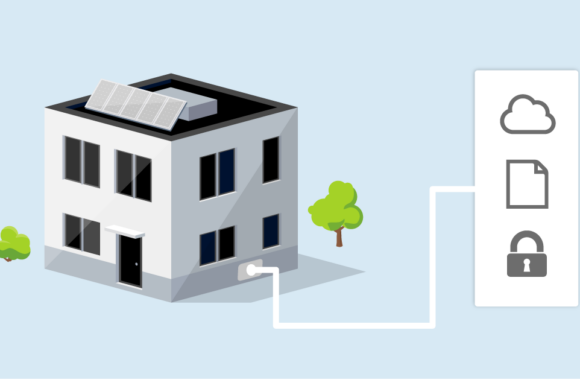
A data room is a secure digital space in which companies can share data with each other - so that each party retains control over their data.
The most important features:
- Controlled exchange: Companies define exactly who is allowed to see which data and what it can be used for.
- Data remains with the owner: only access is granted, similar to online banking.
- Common rules and standards: Technical standards and digital gatekeepers secure access.
In short: A data room is a trustworthy digital marketplace for data.
Data rooms at a glance
- Definition: Secure digital area for data exchange
- Advantages: Control, security, efficiency, new business models
- Special feature: data remains with the owner
- Examples: Catena-X (automotive), Manufacturing-X (industry), energy industry
- Funding: government programs make it easier to get started
These 3 misconceptions prevent many from getting started
1. "Data rooms are only for large corporations."
Wrong. Corporations such as BMW and Siemens have launched their first projects. But medium-sized companies are also benefiting enormously, particularly in mechanical engineering, logistics and the energy sector.
2. "It's too complex, too expensive and too bureaucratic."
Partly correct. Getting started can seem complicated. But there are open source solutions such as the Eclipse Dataspace Connector. Funding programs (e.g. from the BMWK) also help.
Partners like doubleSlash provide companies with practical support at the start.
3. "There are no real use cases."
Yes, the first projects show clear benefits:
- Catena-X: links data in the automotive supply chain, for example for CO₂ balances or quality management
- Manufacturing-X: building an industry-wide data ecosystem for Industry 4.0
- Energy industry: develops data-based services, for example for load distribution or billing
Why it's worth getting started - especially for SMEs
Setting up a data room costs time and money. But the advantages clearly outweigh the costs.
- New business models: e.g. predictive maintenance or usage-based billing
- Competitive advantages: Early starters secure technological advantages
- Increased efficiency: less coordination effort, leaner processes
- Cost savings: Standardized technologies reduce IT costs in the long term
- Funding programs: reducing hurdles and risks
Data rooms are an investment in future security and new sales.
How SMEs are helping to shape development
SMEs can not only participate, but also actively shape developments. Those who invest today will create new business models, more independence and digital sovereignty tomorrow.
What does it take? Courage, openness to new technologies and strong partners.
Conclusion: A real business opportunity
Data rooms are not a panacea. But they do offer real added value: more control over data, secure collaboration and new sales potential.
Anyone who deals with this topic now will gain a clear advantage in a data-driven world.
doubleSlash supports you - from the initial strategy to the technical implementation.
FAQ - Frequently asked questions
- What distinguishes a data room from a cloud?
In the cloud, data is usually stored on external servers. In the data room, it remains with the owner. Only the access rights are shared. - Isn't it too expensive to get started?
There are open source solutions and support programs. In the long term, you can even save money by using less IT. - As a medium-sized company, do I even need a data room?
Yes, especially if you are involved in supply chains or want to develop data-based services. - How do I get started?
Ideally with a pilot project, accompanied by partners such as doubleSlash. - Are there already examples from practice?
Yes, for example Catena-X or data rooms in the energy industry. These projects show that Data rooms are not a dream of the future.