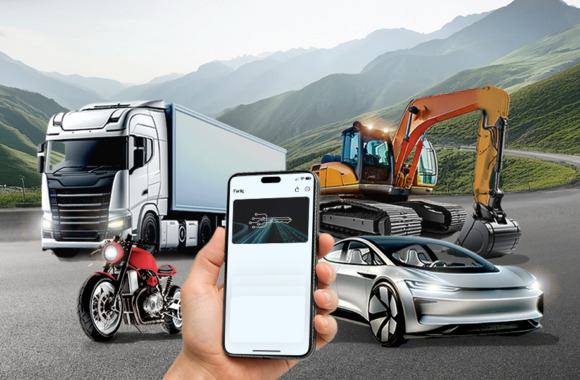
Whether car, train, bus or bike - the decision depends on individual factors and, above all, the purpose. Are you going to work, shopping or on vacation? Personal preferences and the respective requirements play a decisive role. The means of transportation can be evaluated on the basis of various criteria, such as flexibility, cost, environmental friendliness or comfort. Of course, very few people consciously draw up a list of advantages and disadvantages; they usually follow a well-established routine.
The main characteristics of the most common means of transport are summarized below:
- Flexibility: Cars offer maximum flexibility as they can be used independently of timetables.
- Costs: Cars have higher purchase and maintenance costs, while public transportation and bicycles are often significantly cheaper.
- Environmental friendliness: Bicycles and public transport are considered to be significantly more environmentally friendly. Cars, on the other hand, contribute to higher CO₂ emissions.
- Convenience: Trains and cars offer the most comfort on longer journeys, while bicycles are more suitable for shorter distances.
- Security: Trains are one of the safest means of transportation compared to motorcycles.
- Availability: Particularly in rural areas, the car offers better availability than public transport, which is often limited by timetables and intervals, due to its independence.
The assessment of these aspects varies greatly depending on the individual perspective. For some, cycling to work is a welcome exercise, even if they would be faster by car. Others value their vehicle less as a means of transportation and more as a status symbol. While some consider the CO₂ consumption of a means of transportation to be the decisive factor, for others aspects such as comfort - for example, heated seats in winter - are crucial. In summer, on the other hand, a cargo bike could become the preferred choice for shopping.
The term "car" also covers a wide range: from compact e-vehicles to V12 super sports cars with over 1,000 hp. The variety of options reflects people's different needs and priorities and makes it clear that there is no universal "best" means of transportation.
Mobility is constantly changing
Mobility is constantly changing, and this change has many different origins. Major government innovations such as the Deutschlandticket are bringing about changes that are groundbreaking in the truest sense of the word. This step not only redefines the use of public transport, but also triggers massive investments worth billions and comprehensive legislative adjustments. For many public transport users, the Deutschlandticket means a considerable reduction in costs compared to monthly tickets, which were often expensive in the past. At the same time, fare structures have been simplified, making the switch to public transport more attractive. The introduction of the ticket is an example of a so-called Major Change - a change that deeply affects the structure of mobility and directly influences mobility behavior by fundamentally reassessing the individually perceived advantages and disadvantages.
Personal decisions, such as choosing a new place of residence, can also lead to similarly serious changes. At a local level, the introduction of e-scooters, for example, can help to promote the use of micromobility in a particular area.
But not every change is as spectacular as the Deutschlandticket. There are also smaller, evolutionary technical advances that appear less impressive at first glance, but nevertheless make a significant contribution to the mobility of the future. The Digital Keywhich was developed in accordance with the Car Connectivity Consortium standard, is one such example. It may not revolutionize mobility on a national level, but it offers tangible benefits for individual vehicle manufacturers, car sharing companies and their users.
The Digital Key contributes in its own way to digitalization and networking, thereby creating added value for the end user. This technology can prove to be an important piece of the puzzle in the development towards intelligent mobility and a Shared Mobility Economy a future in which resources are used more efficiently and mobility services are designed more flexibly.
Introduction of the Digital Key
The specification for the digital vehicle key defines the following three main use cases, among others: Create (Owner Pairing), Release (Sharing) and Terminate (Terminate).
Create (owner pairing):
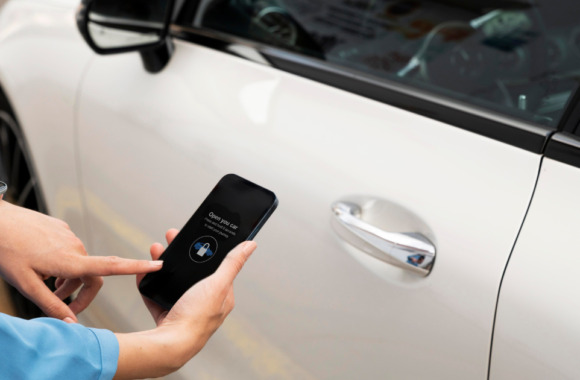
The digital vehicle key makes it possible to open, start and manage a vehicle using a digital key that is located in the smartphone's native wallet (or secured element) and can therefore also be used offline (compared to a remote app solution). Instead of a conventional physical key, the digital key enables the authorized user to access the vehicle via a wireless communication interface such as Bluetooth, Ultra-Wideband (UWB) or Near Field Communication (NFC). With owner pairing, a digital key is linked to a specific vehicle and its owner. This is a one-off process. This ensures that the key can only be used by this specific vehicle and its owner and cannot be transferred to other vehicles.
Share
The digital key can be easily shared with other people, such as family members or friends, e.g. via iMessage without a special app. This makes it possible to lend or rent the car without having to hand over physical keys. The digital key can be assigned for a specific period of time or according to a fixed schedule. Copies of the key can also be shared with special profiles with restricted rights.
Terminate
Unlike physical keys and key fobs, digital CCC keys can be easily terminated or (temporarily) blocked. The owner of the vehicle can revoke issued keys at any time via their smartphone or the vehicle HMI. For example, a user can decide that they or a friend no longer need access to the vehicle, or they can deactivate CCC Digital Keys linked to a stolen or compromised mobile device if the device has been lost.
Effects of the Digital Key on mobility
If we look again at the main characteristics of the most common means of transportation, we can see the following changes:
Flexibility: The Digital Key simplifies the spontaneous use of vehicles without the need for physical keys - ideal for shared company vehicles, as well as private fleets or commercial car sharing. Even a shared flat can use just one vehicle instead of several.
Convenience: The digitalization of access eliminates the need for key management, which is particularly advantageous for families and car-sharing models. Thanks to UWB technology, the vehicle can be opened with the smartphone in your pocket. Even in the case of commercial car sharing, there is no need to queue at the counter; instead, the key can be delivered directly digitally.
Availability: As vehicles can be managed digitally, potential availability is increased and unused vehicles can be made usable.
Costs: In the long term, the digital key helps to reduce costs, as vehicles can be shared more easily and costs can therefore be shared more effectively.
Security: Digital keys can be locked remotely to prevent unauthorized access in the event of theft.
Conclusion: Evolutionary and revolutionary changes in mobility
While the Deutschlandticket is bringing about a major and visible change in mobility, the Digital Key represents a subtle yet decisive change. It fits into the larger puzzle of a digital and connected mobility future as an evolutionary advance. Both technologies contribute in their own way to shaping future mobility and play an important role in the development towards a more sustainable and efficient use of resources.