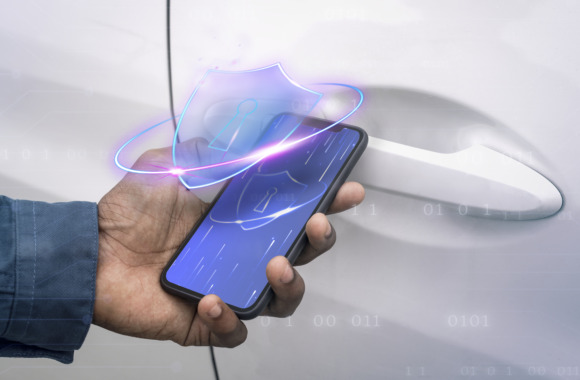
However, for smart locks to be truly suitable for everyday use, they must be able to do more than just open doors. They should be able to integrate seamlessly into existing IT infrastructures, be networked with other systems and meet the highest security standards. While companies and private households already benefit from modern access solutions, there is often a lack of cross-manufacturer standardization. This is precisely where Aliro comes in - a new standard from the Connectivity Standards Alliance (CSA) that makes digital keys more secure, flexible and compatible than ever before.
Challenges and opportunities in the smart lock market
The market for smart locks is growing rapidly. More and more companies and households are turning to digital access solutions. However, despite increasing demand, manufacturers and service providers are facing several challenges:
- Security & data protection: Digital keys must be reliably protected against cyber attacks and unauthorized access.
- Interoperability: The large number of proprietary technologies makes seamless integration into smart home and enterprise systems difficult.
- Ease of use: End customers expect simple operation - be it via smartphone, wearable or voice control.
- Scalability: Solutions must be flexibly designed for private and commercial applications.
Digital keys: How companies & private households can use smart locks
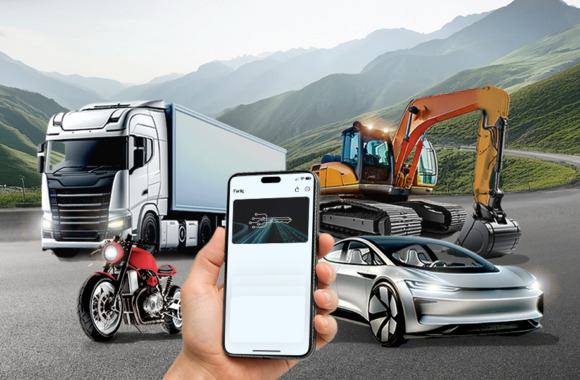
Digital keys have already proven themselves in the automotive industry. The Digital Key Standard of the Car Connectivity Consortium (CCC) enables users to open and start vehicles via smartphone. There is similar potential for smart locks:
- Company: Employees, service providers and guests receive secure, time-limited access.
- Hotels & vacation apartments: Guests can receive their digital key in advance and check in directly.
- Private households: Homeowners can grant temporary access to family or friends.
- Delivery services & services: Delivery staff or cleaners are granted access at certain times - without physical keys.
Integration of smart locks into existing IT infrastructures
Smart locks must be seamlessly integrated into existing IT systems in order to realize their full potential. Companies are increasingly relying on digital access control systems that are connected to existing user directories and identity management platforms. Modern smart locks can interact with existing systems via open interfaces so that access rights can be managed centrally and adjusted in real time.
Smart locks play a particularly important role in building automation. In networked smart buildings, they can be integrated into IoT platforms or bus systems such as KNX, allowing them to work together with other intelligent devices. For example, the door lock can be automatically unlocked when an authorized smartphone is detected nearby, or it can connect to alarm systems to trigger a warning in the event of unauthorized access.
The use of standardized communication protocols also makes it easier to connect to cloud-based services or on-premise systems. This enables companies to control access rights across locations and document access logs for security and compliance purposes.
Thanks to these technical possibilities, smart locks can not only be flexibly integrated into existing infrastructures, but can also be used as part of a comprehensive digital security strategy.
Aliro: The new standard for digital access control
The Connectivity Standards Alliance (CSA) has developed Aliro, a new standard that standardizes digital keys in the smart lock industry. Aliro offers a secure, standardized communication protocol for access control systems that works across all manufacturers.
Digital Key und AliroTwo standards with a common vision
Aliro is based on the same principles as the CCC Digital Key for vehicles:
- Digital keys on mobile devicessuch as smartphones or wearables
- Encrypted authentication for secure access control
- Interoperability between devices from different manufacturers
- Flexible authorization models for temporary or recurring access
While the CCC Digital Key was developed specifically for vehicles, Aliro is extending this concept to doors, buildings and commercial access systems. This means that proven security mechanisms and technologies can be used in more and more areas of application.
Technological basics of Aliro
Aliro uses various radio technologies for wireless communication, including Near Field Communication (NFC) for short-range connections, Bluetooth® Low Energy (LE) for energy-efficient connections and Ultra-Wideband (UWB) for high-precision tracking.
Advantages for different areas of application
- Company: Benefit from simple integration and standardized interfaces.
- Private households: Use smartphones or wearables as keys.
- Installers: Get standardized technologies for easier setup.
- Manufacturer: Reduce integration effort and guarantee interoperability.
Conclusion: The future of digital access control
With Aliro, the CSA is creating an open standard for smart locks, similar to the CCC Digital Key in the automotive industry. This will make digital keys more secure, flexible and interoperable. Companies and private households that are early adopters of this technology will benefit from greater security, improved user-friendliness and new business models.
Also interesting is how the Digital Key changing the mobility of tomorrow.