and what the industry and its IoT standards can learn from them.
What is Matter?
Matter is a license-free connection standard with the aim of providing an open and uniform standard for communication between different smart home devices. With Matter, different devices can communicate and work together regardless of brand or manufacturer. With the Matter protocol, it is therefore possible to turn the individual devices into a hub. This means that users no longer have to worry about whether a newly purchased device is compatible with their existing system.2

This makes it possible, for example, for smart home users to control the same smart home system with both Apple devices and Android devices.
In addition, home devices such as smart home lamps from different providers or similar can be easily used in parallel as they can be controlled together via a single app. Overall, Matter enables seamless integration of different smart home devices and offers a simple, user-friendly and manufacturer-independent smart home experience.
How does Matter work?
The central problem that Matter solves is fragmentation. Up to now, all smart home systems have had different protocols and transmission media and speak different languages, which means that they cannot communicate with each other. This is now unified in a single language.
Communication and transmission protocols are based on the Internet Protocol (IP). For a device to comply with the Matter standard, at least one of the following options should be used:1
- Ethernet/LAN cable (IEEE 802.3)
- WiFi / WLAN (IEEE 802.11)
- Thread (IEEEE 802.15.4)
- Bluetooth Low Energy (BLE)
The path to industry
A connection standard such as Matter could not only be used in the private smart home sector. Such a standard for manufacturer-independent communication would also be desirable in industry. Until now, the challenge has not only been in private households, but also in industrial applications, because there was no uniform standard for communication between different devices. Until now, communication between machines has been via OPS (UA), but unlike Matter, this cannot be used across manufacturers and cannot be seen as an open standard that everyone uses.
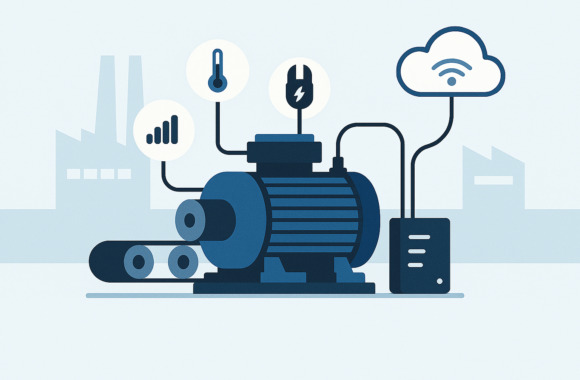
In industrial manufacturing, for example, this could mean that the machine fleet in production halls could be networked using industry standards based on the Matter model, making it easy to exchange data, perform predictive maintenance and carry out updates.
Such overarching standards could also play an important role in medical technology in the future. In hospitals and clinics, cross-manufacturer standards could be used to collect the results of blood samples in a standard system and then forward them to a surgical robot. The robot could then directly access all the necessary information by networking with this standard and thus link different work steps with each other.
In summary, it can be said that protocols such as Matter not only open up many new possibilities in the private smart home sector, but also in industry. By networking various devices and machines, work processes can be optimized, workflows automated and time and costs saved.3
What are the advantages?
Simple setup and operation
The connection standard offers a major advantage in terms of simple setup and operation. Previously, different apps had to be used for products from different manufacturers, which was often impractical. Now, control is only carried out via Matter, which simplifies handling considerably. This means that no gateway is required, allowing the devices to communicate directly with each other without any detours.
Local communication
Another advantage is that the devices communicate locally via the home network. In contrast to previous practice, where the switching signals were exchanged via the cloud, with Matter you are no longer tied to the cloud.
Data security
Data security is also an important aspect of the connection standard. Data exchange is encrypted and the use of blockchain technology prevents manipulated accessories from being connected or data from being intercepted. This ensures the security and integrity of the data.1
What challenges need to be solved?
Interchangeability
The standardization of Matter means that the unique selling points of the individual product providers (such as Philips vs. Osram) are interchangeable and you are no longer tied to a single manufacturer. The basic functions are almost identical for all providers, which raises the question of why you should go for a higher-priced device just to possibly get a higher product quality. In order to survive in the masses and stand out from the competition, manufacturers now have to differentiate themselves more than ever before through the added value of their product.1
Conclusion
There have already been a number of field reports, but also critical voices. The fact is, however, that an overarching standard for device networking is needed if digitalization is to progress in the industry. Matter can provide a good impetus for this. It is not without reason that many companies such as Amazon and Google are already working on certifying their products with Matter and want to complete this in the near future.
[1] https://matter-smarthome.de/ ^
[2] https://www.heise.de/news/Matter-ist-fertig-Ueberstandard-fuers-Smart-Home-jetzt-verfuegbar-7283991.html ^
[3] https://www.cio.de/a/wie-matter-iot-innovationen-freisetzen-koennte,3613160 ^
[Picture] https://www.highlight-web.de/6770/matter-der-neue-standard-fuer-smart-home/