IIoT is seen as the key to the factory of the future. But studies show: Many projects fail when moving from the pilot phase to scaling. The reason rarely lies in the technology, but in a lack of interoperability. Open standards such as OPC UA and MQTT break up isolated systems and create the basis for scalable IIoT architectures.
A Cisco study shows: "Sixty-one percent [...] believe that we have barely begun to scratch the surface of what IoT technologies can do for their businesses." 1
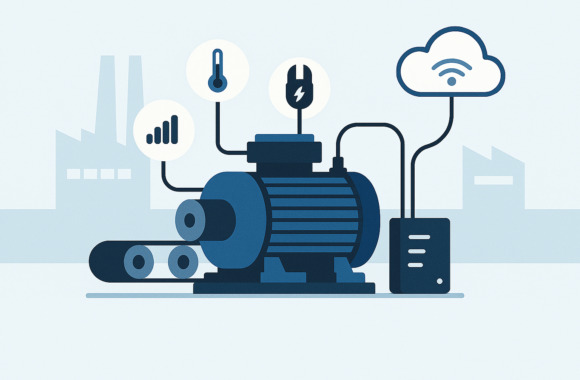
The next step is the Industrial IoT (IIoT): the networking of Operational Technology (OT) and IoT by connecting machines, sensors and automation systems with IT systems and digital services.
OT meets IT: the core challenges of modern IIoT architectures
Modern IIoT architectures face two core challenges:
- How do machines and systems understand each other (OT world)?
- How does this data get into IT systems and the cloud (IT world) efficiently?
Standards such as OPC UA and MQTT solve precisely these problems - together instead of individually.
Standards in use: OPC UA and MQTT at a glance & in practice
OPC UA: Language & context in the OT world
Target: Standardized language for machines in automation technology
Strengths:
- Deeply anchored in control systems & production
- Data is semantically enriched ("This is a temperature in °C")
- Interoperable across manufacturers
- IEC 62541 - established industry standard
Practical example: see text - OPC UA in automotive production2
MQTT: Efficiency & scalability in the IT world
Target: Lean protocol for fast & efficient data transmission
Strengths:
- Ideal for cloud & edge connection
- Publish/Subscribe -
Flexible data distribution - Conserving resources -
even on small
IoT devices - ISO/IEC 20922 -
global IoT standard
Practical example: see text - MQTT in the Smart Factory2
Practical experience clearly shows the difference: OPC UA creates communication in the OT world, for example when robots and machines from different manufacturers are seamlessly integrated in an automotive production facility without the need to maintain dozens of proprietary interfaces3. MQTT acts as the link to IT, for example in a smart factory where hundreds of sensors continuously transmit temperature and vibration values to the cloud - where the data is used for condition monitoring and predictive maintenance.
More details on the advantages of MQTT in the IoT context can be found in the doubleSlash blog.4
However, while these examples show the potential that standards can unfold, everyday life in many companies still looks different: Over the years, specialist departments have built up independent solutions, usually as closed systems that only communicate with each other to a limited extent. Different manufacturers, protocols such as Profibus or Modbus and proprietary interfaces mean that there is no standardized language and stand-alone PLC solutions are created.
To connect these islands anyway, companies often rely on gateways. They translate data from one protocol to another and thus create selective interoperability between OT and IT. According to IoT Analytics "are IIoT gateways enabling IT and OT convergence by securely and efficiently sharing data between floor-level OT equipment and IT equipment or the cloud".5
But this translator role has its limits: The more gateways are used, the larger the patchwork of individual connections becomes. Integration costs increase, maintenance becomes complex and there is no uniform database.
Standards instead of gateways: the path to scalable IIoT architectures
Today, however, end-to-end data flows are crucial - across machines and levels, from OT to IT. Without open standards such as OPC UA or MQTT, these islands remain and block the scaling of IIoT solutions.
Analyses show: Only through standardization can IoT platforms be scaled efficiently and heterogeneous systems be operated interoperably [5]. This basic principle must now also be applied to IIoT - in order to reduce the complexity of integration and at the same time meet the requirements for robustness and security.
This is precisely where OPC UA and MQTT complement each other:
- OPC UA provides the necessary context and semantic depth at machine level.
- MQTT ensures efficient, scalable communication right up to the cloud.
Together, they form the basis for future-proof IIoT architectures: semantically rich data that is transported quickly and leanly to IT and cloud systems.