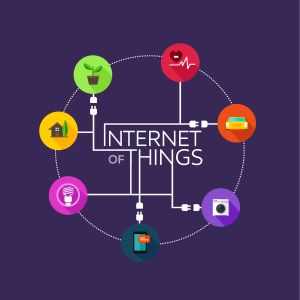
"Internet of Things", or IoT for short, is one of the technological buzzwords of recent years and can be heard in the context of a wide range of topics in business and the private sphere. Put simply, it is about networking end devices with each other and with a backend and integrating this network into existing systems and processes. Among other things, manual processes can be automated and technical processes can be monitored in real time.
There is now a controversial public debate about the usefulness of the Internet of Things and the direction in which the technology for networking products is developing. Critical articles, such as a report in Die Zeit about CES 2016 entitled "CES 2016 - Internet of Bockmist" [1], feed the general opinion that IoT applications are superfluous and that problems are often created first in order to then overcome them with an IoT solution. For example, the article casts doubt on the usefulness of a Wi-Fi safe that can be opened via a mobile app and Touch ID. In addition, the article criticizes the still immature security of some of the products. However, the examples presented in the article come from a limited area of application that does not focus on IoT-based solutions, which already create added value for companies and customers today.
As an experienced company in the context of the Internet of Things, doubleSlash has been involved in numerous projects that have successfully implemented IoT systems and brought benefits for users and companies. Among other things, we were heavily involved in setting up the Connected Car Services for BMWi and the Remote management for Telekom involved. Based on this experience, we want to give a brief overview of how and where IoT solutions are being used successfully and venture a forecast for the future.
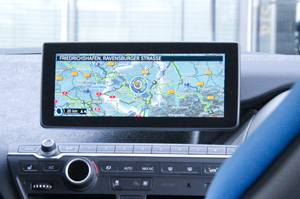
Private vs. industrial context of IoT
There are two basic areas in which IoT solutions are used: The private environmentwhich comprises the personal everyday life, and the industrial context, where the Internet of Things is mostly used to optimize processes.
IoT in the private environment
The development of the IoT for private users is still young and in the discovery phase. This shows that the technology is still in its infancy and key factors such as a Uniform IoT standard [2] or immature IT security have not yet been clarified or implemented. Many IoT products for end customers have their origins in the B2B sector and are adapted for the B2C market.
The best-known applications in the private sphere are Connected Car and Smart Home. The networking of appliances and systems in the home, such as heating, lighting or washing machines, enables the user to control the Use of the systems via mobile devices to control and optimally adjusted. However, the coffee machine that automatically orders new beans or the washing machine that checks electricity prices and only runs on cheap electricity tariffs are currently mostly used by technology enthusiasts.
One Analysis for future development [3] in the smart home sector predicts that 68 percent of American households will be "smart" by 2020. Once the current problems such as new challenges for IT security and different communication standards for devices have been solved, the "Connected Home" become a part of everyday life.
Internet of Things in industry
In the industry the IoT has already been successfully established for several years. It is the driving force behind the technology. In turn, the IoT is already seen as the driver for the business of the future. A McKinsey study on the IoT [4] speaks of economic added value of around 11 trillion US dollars for the industry from 2025. Modern companies will find many new opportunities in the IoT to increase their own profitability. In an industrial context, this is also referred to as Industrial IoT.
Company benefit vs customer benefit vs from IoT
In the industrial sector, the IoT is becoming an enabler for a improved Customer benefits and a increased business benefits. These two objectives do not necessarily coincide per se. The customer benefit is primarily reflected in fulfilled needs, while the company focuses primarily on the known parameters of "time, costs and quality". An optimal IoT solution creates added value for both the company and the customer.
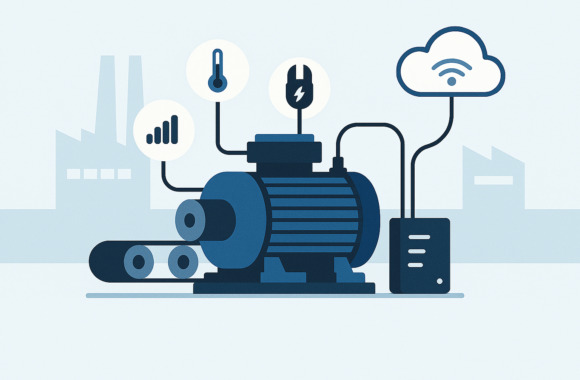
The Advantages for the company through IoT are manifold. Real-time data can be made accessible by networking hardware and a specific user interface. An IoT solution thus enables the so-called Remote Services as well as the Predictive maintenance. Technical problems can be detected at an early stage (in real time), preventative action can be taken against them and they can be rectified via remote access. This allows the company to reduce maintenance and incident management costs, which can be considerable in some cases.
In principle, IoT systems enable transparency in the economic efficiency of products and (technical) processes. The new possibilities are reflected in improved business cases and influence various areas of the company. In previous blog posts, we have already described how the IoT not only improves service and quality but also After Sales and Marketing changed positively. IoT solutions can also be used to optimize production and communication processes within the company.
The Customer benefits through IoT is reflected in a higher quality of products and the Specification of customer needs again. With transparency in the life cycle of products, the company can identify and rectify qualitative defects. IoT-based services in the context of the connected car offer benefits such as Real Time Traffic Information RTTI, intermodal routing or real-time vehicle diagnostics.
The Differentiation between private and industrial use of IoT-based solutions is important. In industry, the Internet of Things has established itself as an enabler for various ways to improve efficiency. No new use cases need to be created, IoT enables the improvement of existing processestechnical or communicative.
In the private sector, manufacturers of connected systems still need to clarify some essential points such as security, standards, etc. Once the teething troubles have been overcome, IoT solutions will also provide users with helpful services in the private sphere.
With a focus on the development of IoT-based systems - especially in an industrial context - we have gained experience in all areas that are important for the successful implementation of IoT solutions in our project work. In the BMW Connected Car area, for example, we have been significantly involved in the Development of BMWi Services involved.
Thanks to our practical experience, we have built up an extensive portfolio of Services for the implementation of IoT solutions developed. From connecting various hardware to an IoT platform to configuring the platform and designing the user interface for different front ends (e.g. mobile devices, WebApp or native tools), we took care of both the IT design and the software implementation.
Sources:
[1] http://www.zeit.de/digital/internet/2016-01/ces-2016-internet-of-bockmist
[2] https://staging.blog.doubleslash.de/category/iot-und-m2m/
[3] http://thenextweb.com/insider/2015/12/23/2016-predictions-for-iot-and-smart-homes/#gref
[4] http://www.crn.de/netzwerke-storage/artikel-107492.html
http://www.computerwoche.de/a/geschaeftsideen-fuer-das-internet-of-things-iot,3093645
Find out more about IoT services and connected products here