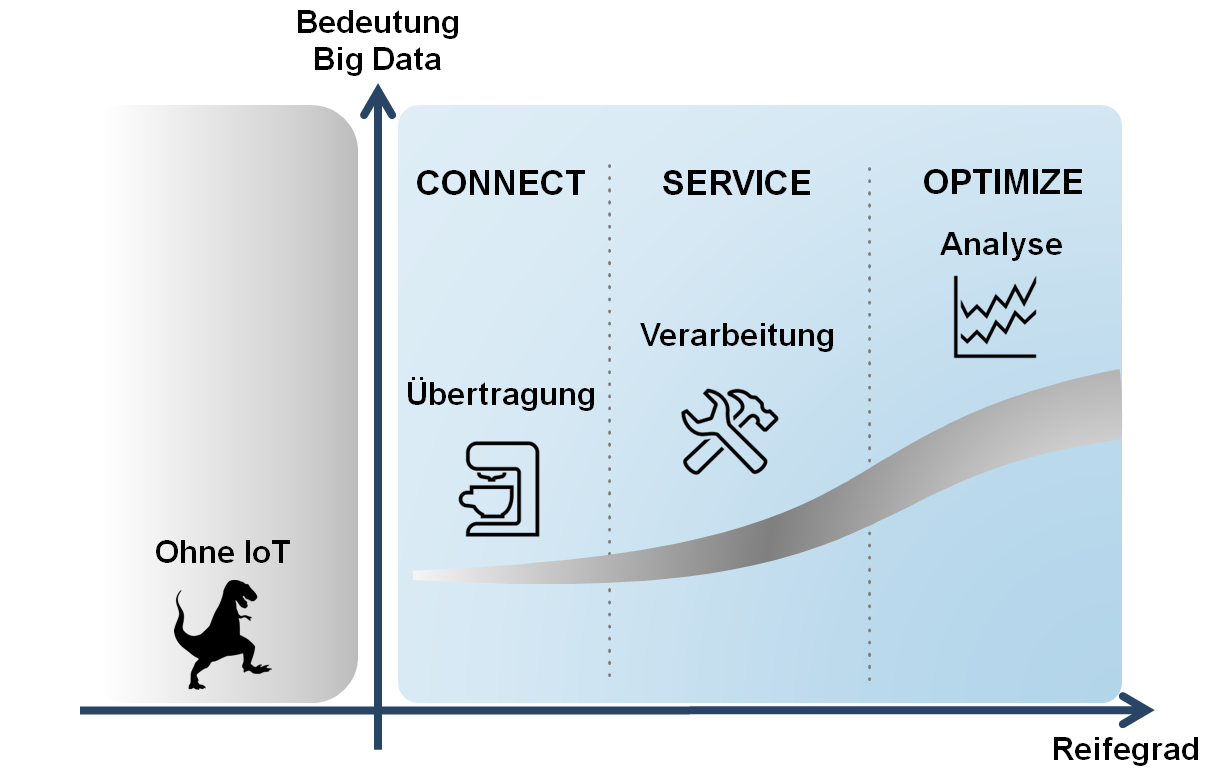
In the first part of this blog series I explained the origins of big data and described the extent to which it is a truly new technology. In the second part I used a simple maturity model to describe the relationship between big data and IoT process optimization.
In this third part, I would like to Connection between big data and IoT process optimization with a very specific application example.
This is to be achieved with the help of the company "Drehe Fräse Häusle baue GmbH" happened - an imaginary, medium-sized company from the Baden-Württemberg region that manufactures machine tools. This company is, of course, the world market leader in its field. Nevertheless, every now and then a machine breaks down somewhere in the world at a customer's premises. How this Use case in the different degrees of maturity is clearly described in the following examples. To make them easier to understand, I have added a BPMN diagram supplemented.
First, an employee of the customer must Failure of the machine to find out. He then calls the "Home building 24/7 hotline" and reports the defect. With a rough description of the fault pattern, a Technician commissionedwho makes his way to the customer. The customer first carries out a Detailed error analysis through. He may discover that he does not have the required spare part with him and then drives back to the head office. Here he is then informed by the head of the spare parts warehouse that the Required spare part not available and must first be ordered from the supplier in China. As this delivery from Asia takes time, the technician can only return to the customer with the spare part three weeks later. There, he replaces the required spare part and installs a firmware update at the same time.
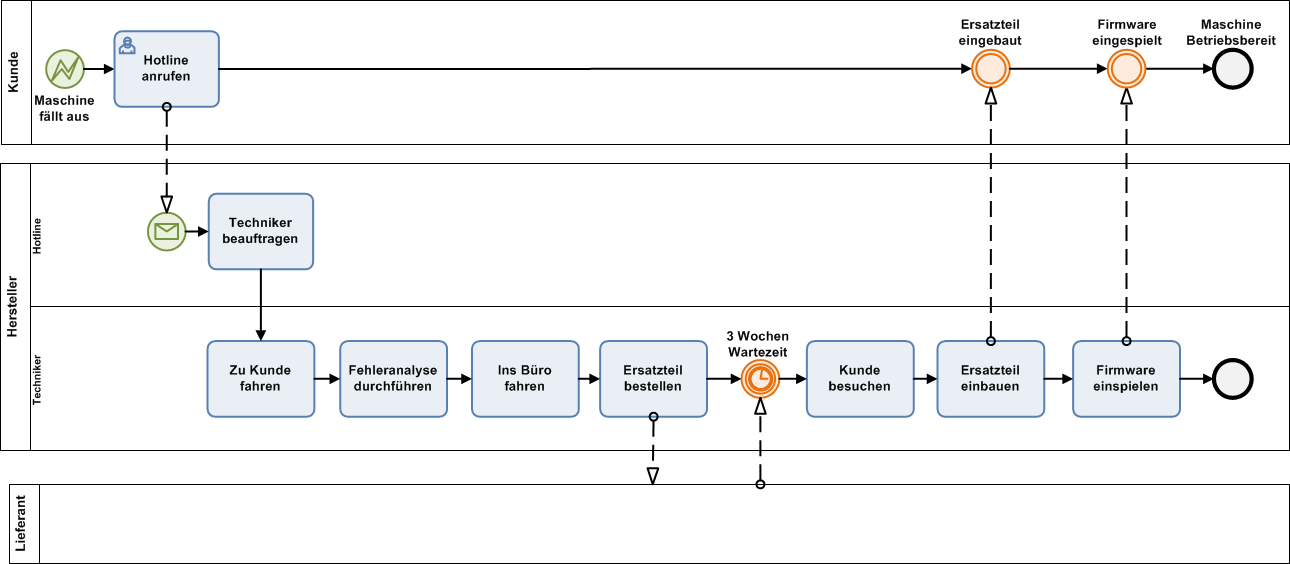
The overall effort involved in this business process is of course huge. It is characterized by many manual steps, because Data is not transferred automatically. Instead, they are only maintained manually, if at all. As a result, the process is very much shaped by the experience of the employees.
At this level, the same use case is already running somewhat more efficient off. Because the devices are already networked, it is now possible to automatically an error message be transmitted to "Drehe Fräse Häusle baue GmbH". As this message already contains a Error code this can correctly categorized can be triggered. In our example, the order for the spare part can now be triggered directly. The next steps are the same as in the previous example "Maturity level: Without IoT" off. The technician travels to the customer, installs the spare part and installs a firmware update.
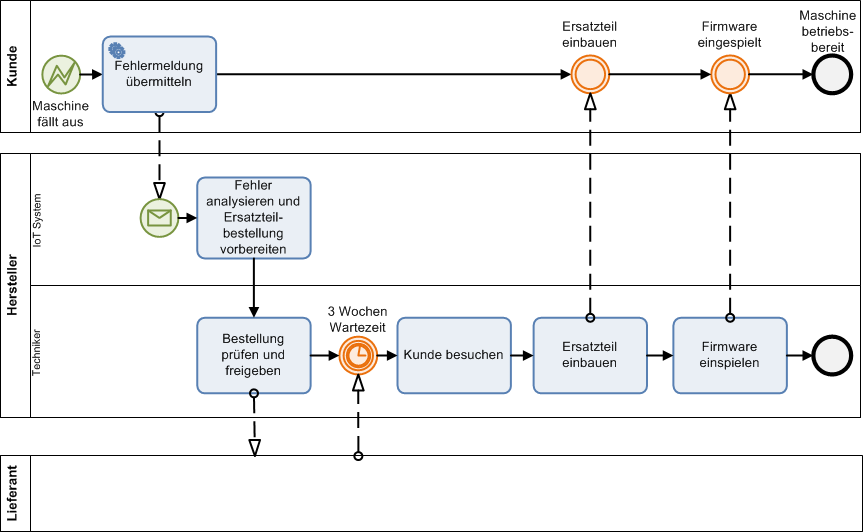
The Access to status information does have certain advantages. The technician no longer has to drive to the customer for nothing. The Ordering the required component can be triggered directly become. The focus of this process is the one Efficient data transmissionwhich can be achieved, for example, by a Suitable network infrastructure and lean IoT protocols achieved.
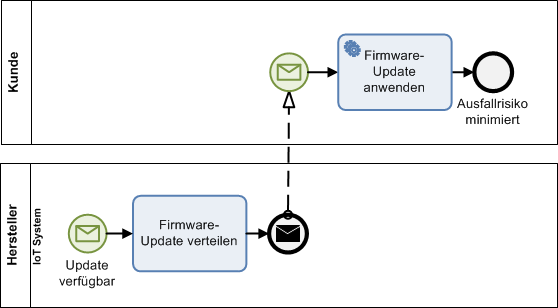
At the next level of our maturity model, a more extensive Integration of the connected things into the company's internal business processes. For our "Drehe Fräse Häusle baue GmbH" In concrete terms, this means that they can, for example Remote firmware updates on their machine tools. This measure helps to Reduce the risk of device failure.
In addition, the Merging IoT data with legacy systems (e.g. warehouse management system, ERP system, etc.) have already been Data analysis. This allows the demand for individual spare parts to be determined. If the stock of a spare part falls below a certain minimum stock level, then automatically the supplier a corresponding Order triggered. This way there are always enough Spare parts in stock. Once the error code has been transmitted, the technician can immediately drive to the customer with the correct component and replace it.
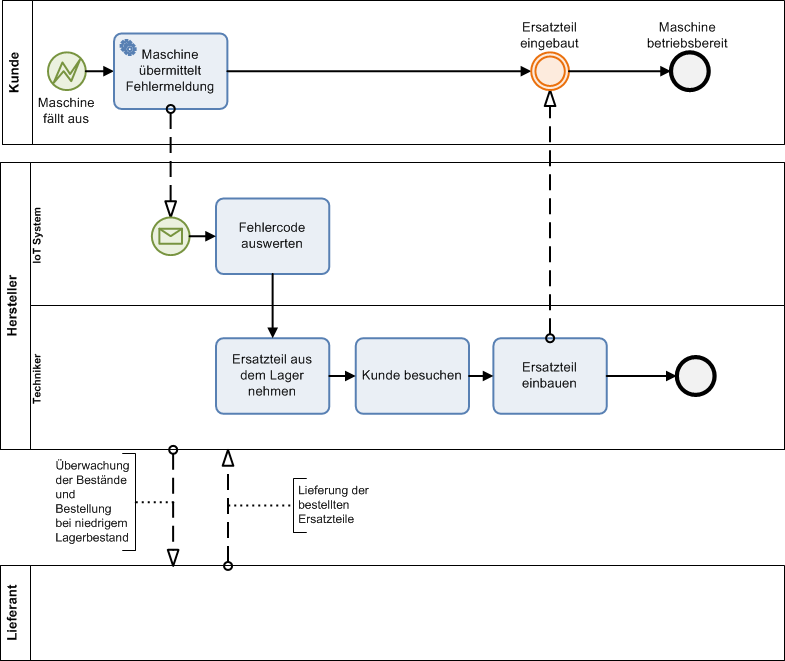
In this example process, the connected things already so slow "smart". The Total expenditure for this process is consequently only low. One can also speak of a local or distributed intelligence speak. What is important here is Efficient data processingwhich can be achieved, for example, by Easily scalable cloud and database technologies can achieve.
In this phase Machine data continuously transmitted from the customer to the manufacturer and evaluated. On the basis of the transmitted data (age, degree of utilization, error codes, ...) it is now possible to determine intelligent algorithms make a statement about which Probability a machine will fail in the near future. If the system classifies a failure as probable, the automatically a proposal for a maintenance date created. This means that it is now possible to Replace spare part as a preventive measure. The machine tool does not fail in the first place.
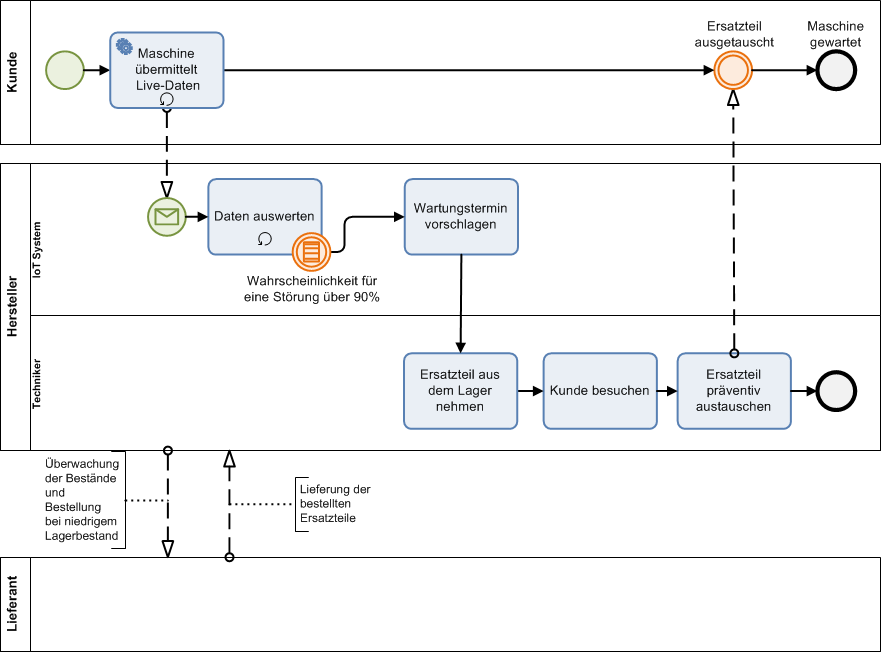
In this process Predictions about the behavior of things possible (keyword Predictive maintenance). The System optimizes itself independently. The important thing here is to ensure efficient data analysiswhich can be achieved, for example, by Cloud computing and the Application of suitable algorithms can ensure.
The overall cost of this process is very low.
IoT process optimization - What happens next?
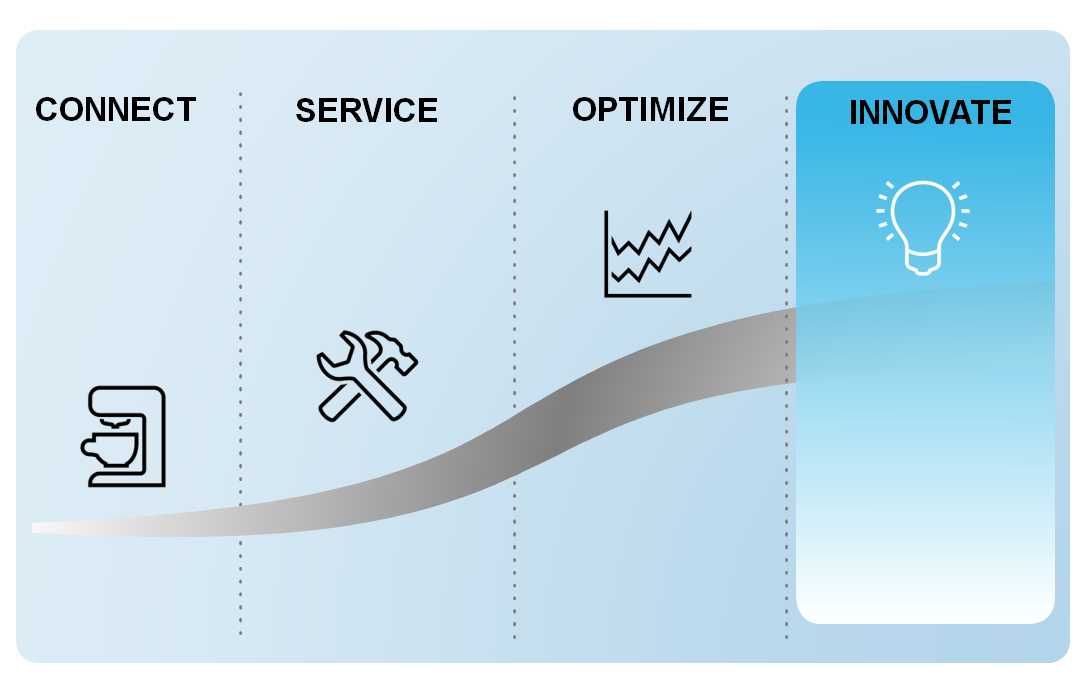
Building on the level of maturity achieved, the "Drehe Fräse Häusle baue GmbH" all of a sudden completely new ones, Innovative products and business models. For example, it is now suddenly possible to use the machines On Demand certain Enable or disable functionalities. Customers only have to pay for what they actually use. In the end, this pleases the customers, who can save money, and our Swabian company, because it gains new customers through innovative business models.