
From the flood of data to a source of information
What to do when machines send more data than your system can process?
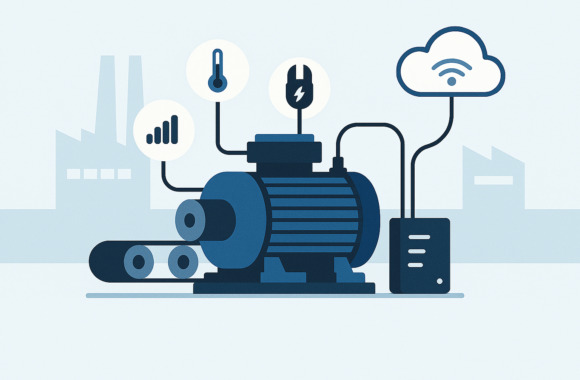
Today, networked machines, vehicles and systems can continuously send data - be it on temperature, the condition of components or the use of individual systems. This information is a valuable resource for companies to monitor operating processes, plan maintenance in a targeted manner, detect problems at an early stage or better understand and respond to user behavior. At the same time, it is precisely this flood of data that poses major challenges for many IT systems. Data volumes are growing rapidly, they often have to be processed in real time and data quality is not always consistently high.
In order to cope with these requirements, a high-performance and scalable IT system architecture is needed that can reliably process large data streams and flexibly handle new requirements. This is exactly what modern IoT platforms make possible - often with two powerful technologies: Kafka and Spark.
Kafka: The digital mail system for machine data
Kafka is best compared to a highly efficient postal system - but for data instead of letters. Sensors on machines or vehicles constantly send "messages", i.e. measurement results or status information.

Kafka receives them, stores them temporarily and distributes them reliably to downstream systems for further processing. It does not matter whether the recipients are available at the moment. Kafka ensures that no message is lost and that everything arrives in the correct order.
The strength of Kafka is demonstrated when millions of messages are transmitted per second. Even then, the system remains stable. It can also be flexibly expanded if new data sources are connected or business needs require new data processing. This ability to scale horizontally makes Kafka a viable basis for IoT systems that grow and develop over time.
Another advantage lies in the clear separation: the systems that supply data do not need to know anything about those who evaluate it later. The same applies vice versa. This decoupling ensures flexibility and makes IoT architectures robust to deal with changes.
Spark: Real-time analyses for IoT data
While Kafka efficiently collects and forwards the data, Spark takes on the task of standardizing it and converting it into insights. Spark can analyze huge amounts of data in a very short time, drawing not only on the current data stream but also on stored historical values.

This creates dynamic analyses that can also take long-term developments into account.
Spark impresses above all with its high processing speed. It remains highly performant even with complex calculations. The platform is also designed to scale with growing data volumes. Computing-intensive processing steps can therefore be distributed across many servers without the user noticing anything. This means that analyses remain performant even when thousands of data points have to be processed simultaneously.
Another advantage is its flexibility in terms of content. Spark is not only suitable for transforming data and monitoring system states, but also for AI-supported forecasting and detecting patterns and anomalies.
The perfect match: how Kafka and Spark complement each other
This combination is particularly effective when used together. While Kafka ensures that all data ends up reliably and completely in the system, Spark takes care of turning it into usable information in the shortest possible time. A concrete example of this is its use in modern trains.
During the journey, sensors continuously record measured values at various points in the train: from the engine to the braking system to the door control. In a practical use case, these can be transferred to a Kafka Cluster in the cloud via a connectivity box. There, the measured values are received in so-called Kafka Topics, analogous to mailboxes, and made available to a Spark Cluster for further processing. Spark jobs then analyze the data in real time, detecting when a temperature value on an engine rises, for example, and can automatically suggest measures based on this. The result of processing from a Spark job can then be stored in a database or again in a Kafka Topic for further processing. In this way, very flexible data processing solutions can be set up that can be easily scaled and expanded to include new business use cases.
Conclusion: Your key to data-driven decisions
Together, Kafka and Spark form a strong and future-proof foundation for modern IoT data processing. Companies that rely on this architecture can not only meet today's requirements, but are also prepared for future developments. In a world where machines are constantly communicating, this combination is the key to data-driven decisions. Anyone who not only wants to store large amounts of data, but really wants to use it, should at least consider the combination of Kafka and Spark.
Do you want to finally understand and use your IoT data? Then talk to us! In a no-obligation workshop, we will analyze your current pain points together and show you tried-and-tested solutions to develop an architecture that grows with your requirements - scalable, high-performance and future-proof.