In this article, we dispel the most common myths surrounding Node.js - and show you how you can minimize potential risks with targeted measures.
Is Node.js really insecure?
Node.js itself is no more insecure than other platforms. The Node.js project has a dedicated security team that focuses on identifying, fixing and communicating security vulnerabilities. The team provides regular updates on their security releases via their official blog: https://nodejs.org/en/blog/vulnerability
However, as with any technology, security depends largely on the implementation and the best practices used. Many security issues arise from insecure code written by Node.js users, rather than Node.js itself. There are a few simple but helpful measures to counteract potential risks right from the start of the project.
Measures to minimize risk:
To ensure the security and quality of the developed software, various measures should be taken to minimize risks.
Linter tools
An essential step is the use of linter tools such as ESLint. These tools analyze the code during the development phase and identify potential problems as well as stylistic and syntactic errors. This reduces the risk of security vulnerabilities and errors.
Regular updates
Regular updates are also crucial. Make sure that Node.js is always up to date. Updates fix known vulnerabilities and make the software more secure.
Code Reviews
Code reviews play a central role in quality assurance. Code reviews by colleagues help to identify and eliminate errors and security gaps at an early stage. These peer reviews promote both the security and quality of the code.
The combination of these measures - the use of linter tools, regular updates and thorough code reviews - can significantly increase the security of the software and minimize potential risks.
"NPM packages entail risks"
npm (Node Package Manager) is a package manager for Node.js. It enables developers to install, manage and share libraries and tools from a central repository. With npm, developers become very productive by being able to use a wealth of existing functionalities. If all these functions had to be written in-house, development would take many times longer. Not all packages in the Node Package Manager (NPM) are equally secure. Since any developer can publish packages, there is no guarantee that they are free of security vulnerabilities. Even platforms such as Java, which are known to be very secure, can have security vulnerabilities. An example of this is the Log4j vulnerability in early 2022, which illustrates that there are always risks when using libraries and packages that were not written in-house. However, there are some measures that can be taken to significantly minimize these risks.
Measures to minimize risk:
Checking the dependencies:
An important first step is to thoroughly check the dependencies. Tools such as "npm audit" can help to identify security gaps in the dependencies used and thus recognize and eliminate potential risks at an early stage.
Use established packages:
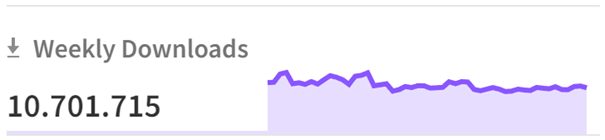
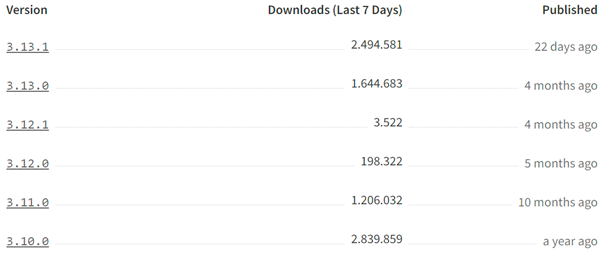
When selecting packages, you should always rely on established and proven solutions. Each NPM package has its own page at NPM. There are statistics on the weekly downloads of the package. The higher the number of downloads, the more established the package is.
Check for active maintenance:
Regular updates ensure that you benefit from the latest security fixes and improvements. Before using a package, check that it is regularly updated and maintained and that there are regular releases. This ensures that the package is actively maintained and that potential security gaps are quickly closed. NPM also provides an overview of this on the respective package page:
Number of maintainers:
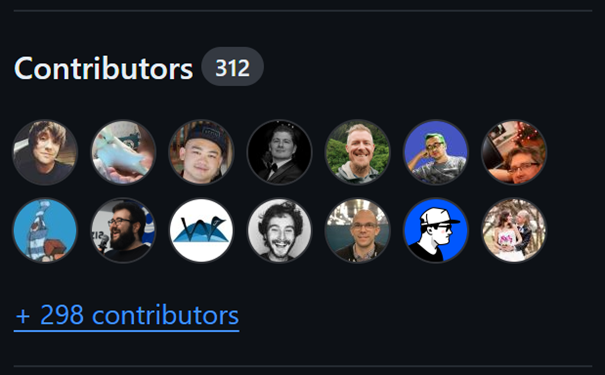
Many npm packages are only maintained by a single maintainer or a very small number of maintainers. Although this is not problematic in principle, there is a higher risk with these packages that they will not be maintained. Larger teams tend to have members who are more familiar with security and care more about it.
It makes sense to identify the packages that only have a few maintainers in order to better assess the risk. The command "npm view maintainers" can be used to list all maintainers of a project. However, many packages that are maintained by a complete team are automatically published via a single npm account. It is therefore also advisable to check the GitHub repository used to develop the package:
Use of package-lock.json:
Another essential element to ensure consistent and reproducible builds is the use of the "package-lock.json" file. This file locks the specific versions of dependencies, which prevents the introduction of unexpected or potentially insecure code. The precise definition of dependency versions ensures that the software works identically in different environments and avoids potential problems.
Conclusion: safety is in your hands
Node.js is no less secure than other platforms and has a dedicated security team that provides regular security updates. However, security depends heavily on the implementation and best practices of the developers. Many problems result from insecure code from users, not from Node.js itself. A few simple measures to minimize risk have already been mentioned. However, there are many more measures, especially with regard to programming best practices. It is beyond the scope of this article to cover them all.
At doubleSlash, we are convinced of the security and performance of Node.js. Thanks to our extensive experience and expertise, we rely on proven best practices to develop secure and efficient applications. As part of our portfolio, we offer customized solutions based on Node.js that meet the highest security requirements.