(Disclaimer: Fake news is allowed on certain days - note the publication date ;-)
Java release 24, which appeared two weeks ago, will be the last to follow the current versioning scheme. The first releases of Java all had "1" as the main version number ("major" according to Semantic versioning), and the "minor" version was incremented. The releases were therefore called 1.0, 1.1, 1.2, 1.3 and 1.4. Since Java 5 (a.k.a. 1.5), only the major version is used, which is incremented with each new release, i.e. 5, 6, 7 etc., up to the current 24. Accordingly, the next release, which will appear in September this year, should have the version number 25. But things turn out differently.
Year-based software versioning
Many software manufacturers have started to name their releases according to the year of release. Since 2004, for example, the release number of the Linux distribution Ubuntu from the year and month in which the version was released - e.g. 24.10 for the release published in October 2024. Microsoft has also followed this trend and named its Office versions after the respective year of release (Office 2016, Office 2019, Office 2021). Likewise JetBrains, manufacturer of the popular Java IDE IntelliJ IDEAwhich has been following this model since 2016, starting with version 2016.2.5.
Advantages of year-based versioning
Naming releases according to the year of release has a number of advantages. For example, the version number immediately reflects when a software version was released. Users can therefore see directly how up-to-date a version is. The publication of one or even several releases per year also promotes user confidence in the longevity and stability of the software.
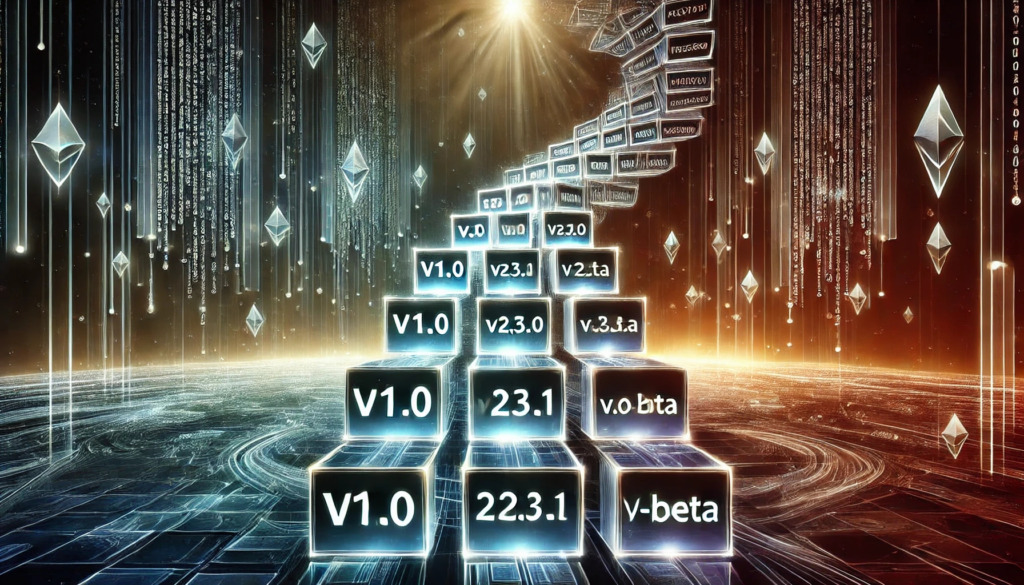
Java versioning soon to be year-based
The publishers of Java would now also like to take advantage of this. The fact that Java 25 (according to the old scheme) will be released in 2025 is seen by them as a favorable opportunity to switch to the year-based scheme. Mark Reinhold, Chief Architect of the Java Platform Group at Oracle, writes:
"Switching the versioning model in the context of Release 25 is favourable, as it involves only a minor adjustment for the Java users. The only change is a minor version being added to the release number, while an adaption of the major version is not required."
According to Reinhold, Java users would only have to change to a minor extent, as only a minor version would be added, while the major version number would not need to be adjusted.
The new versioning scheme is YY.Xwhere YY stands for the year (without the 2000 part), and X for the number of the release published in the same year. As the Java releases are published every six months (cf. JEP-3 - JDK Release Process), there will be two values for X, namely 1 for the March release and 2 for the September release. As the upcoming release will be released in September, it will have the version number "25.2". This may seem counterintuitive at first, as it is the first release with a main version number of 25, but according to Reinhold, "[...] we don't want to make an exception, but rather apply the new scheme consistently right from the start."
The following releases will then be numbered 26.1, 26.2, 27.1 etc. accordingly.
Details and background information on the new versioning model can be found in the corresponding JDK Enhancement Proposal (JEP): JEP-4125 - Change versioning schema of the JDK).