Artificial intelligence is used everywhere today, for example in chatbots, recommendation systems, and business processes.
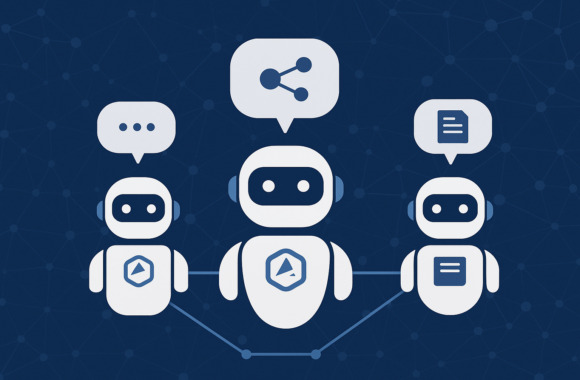
But what happens when different AI agents, such as a voice assistant, a booking system, and a data analyst, need to communicate with each other?
Until now, this has been difficult because each agent speaks its own technical language and operates according to its own rules.
This leads to friction losses, incompatibilities, and duplicate development work.
The A2A protocol, short for agent-to-agent, solves precisely this problem.
It creates a common communication basis through which AI agents, regardless of which provider or framework they were built in, can collaborate securely, in a structured manner, and efficiently.
This transforms a collection of isolated tools into a genuine, interactive AI ecosystem.
How A2A works, the basic principle
A2A works with two roles:
- A2A Client, the agent making a request
- A2A server, the agent that processes them
Communication takes place via HTTP(S) with JSON-RPC 2.0, alternatively also with gRPC or REST.
So that agents know who they are talking to, everyone publishes a so-called agent card, a kind of digital business card.
It contains information about who the agent is, what it can do, how to contact it, and what security requirements apply.
This allows each client to check how it establishes a connection and which methods it is allowed to use.
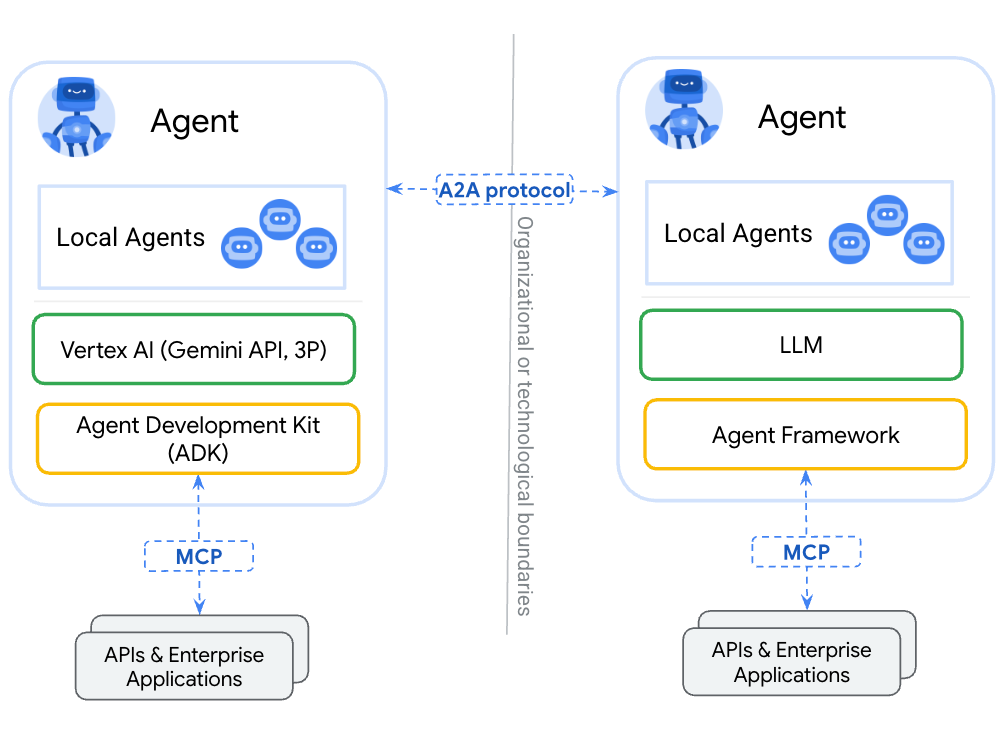
To enable agents to communicate with others, Google provides the A2A SDK, a collection of tools and templates that developers use to build agents quickly and in compliance with standards.
The SDK takes care of the technical basis, i.e., things like HTTP connections, the format of messages, and the secure exchange of data.
The so-called agent executor builds on this and takes care of the actual content.
It decides how the agent responds to a request, which capabilities it uses, and how the results are processed.
In a manner of speaking, the executor translates the technical language of the protocol into real actions, such as a flight booking, an analysis, or a recommendation.
This makes each agent an independently thinking building block that can be flexibly integrated into larger systems and works seamlessly with other agents.
Communication and task management, from message flow to streaming
Communication between agents takes the form of messages, i.e., structured messages that can consist of several parts, such as text, files, or structured data.
A request is initiated by the client, the remote agent receives it, processes the task, and returns the response.
A task has a clear life cycle: submitted, working, input required, completed, or failed.
This allows agents to reliably identify the status of a request.
Sometimes a message can be answered directly if the request is simple enough or can be processed immediately.
In such cases, no separate task is created; instead, the remote agent sends the response back immediately.
This makes data exchange particularly efficient for smaller interactions.
For tasks that take longer or deliver ongoing results, A2A supports two additional mechanisms:
- Streaming via Server-Sent Events (SSE), the remote agent keeps the connection open and sends updates or interim results while the task is running.
- Push notifications: the remote agent can actively inform the client as soon as a task changes or is completed.
These features make the protocol responsive and user-friendly, without any time-consuming polling or delayed responses.
Enterprise-level security
Security is a key element of A2A. All connections run via HTTPS with current TLS configurations, recommended TLS 1.3.
Authentication and authorization are performed using established procedures such as:
- OAuth 2.0 (Bearer Token)
- API keys
- mTLS
- OpenID Connect
Every request is reviewed; no agent is granted access without authorization.
Security mechanisms also ensure that only trusted communication partners are admitted and that data integrity is guaranteed at all times.
A2A in action, from theory to practice
A practical example illustrates how A2A creates added value:
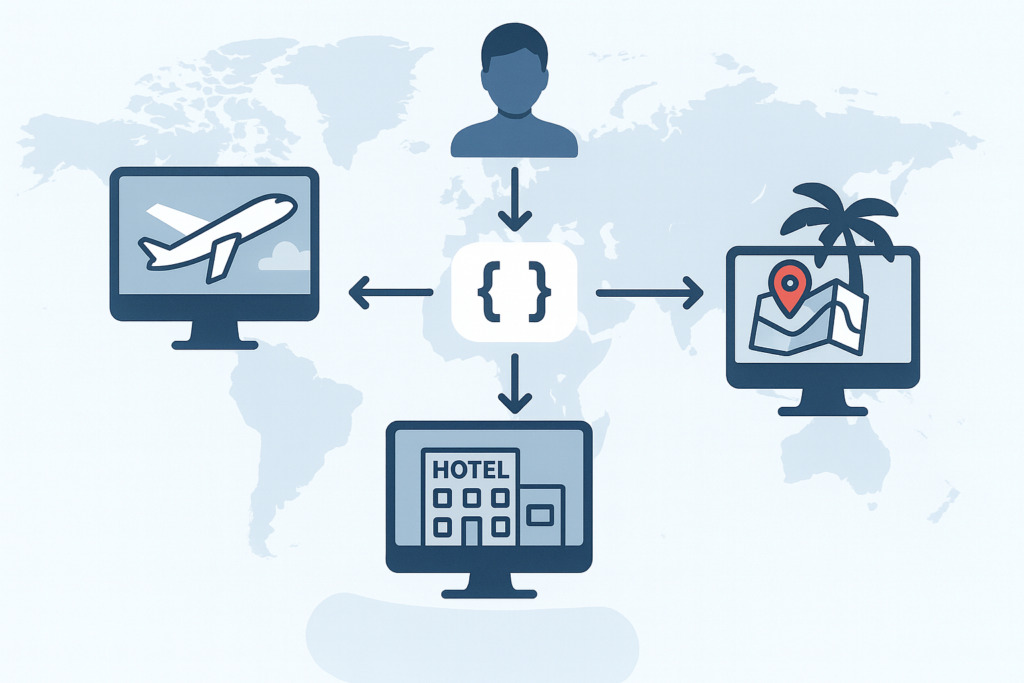
A travel planning agent is supposed to organize a complete trip for a user. Three specialized agents work together to achieve this.
The flight agent finds suitable flights and passes the travel details on to the hotel agent, who automatically suggests available accommodations.
The activity agent then uses this information to plan activities and excursions at the destination.
None of these agents need to know how the others work internally.
Everything runs via standardized JSON messages transmitted via A2A.
This creates a network of flexible, intelligent modules that can be dynamically connected to form an overall system.
A2A and MCP, how they complement each other
MCP, the Model Context Protocol, is another open standard that defines how an AI agent accesses tools, data sources, or APIs.
It creates a simple and consistent way to connect tools, access data, and exchange contextual information.
So while MCP helps connect agents with tools and data sources, A2A goes one step further by connecting agents with each other.
Conclusion: The dawn of a new era for agents
The Agent2Agent protocol is more than a technical standard; it is the next step toward a world in which intelligent systems work together instead of existing side by side.
For companies, this means less integration effort, more automation, and greater efficiency.
Because when machines finally learn to talk to each other, we humans will have more time for the important things in life, such as our next cup of coffee.