

Monday evening. 20:15. All you really want to do is switch off - with chips and a squid game. Instead: Fjords, documentary, autoplay. Your cell phone vibrates: "We think you'll love this!" Three minutes later, waterfalls glisten on the screen - no sign of Seong Gi-Hun and the blood-red tracksuits.
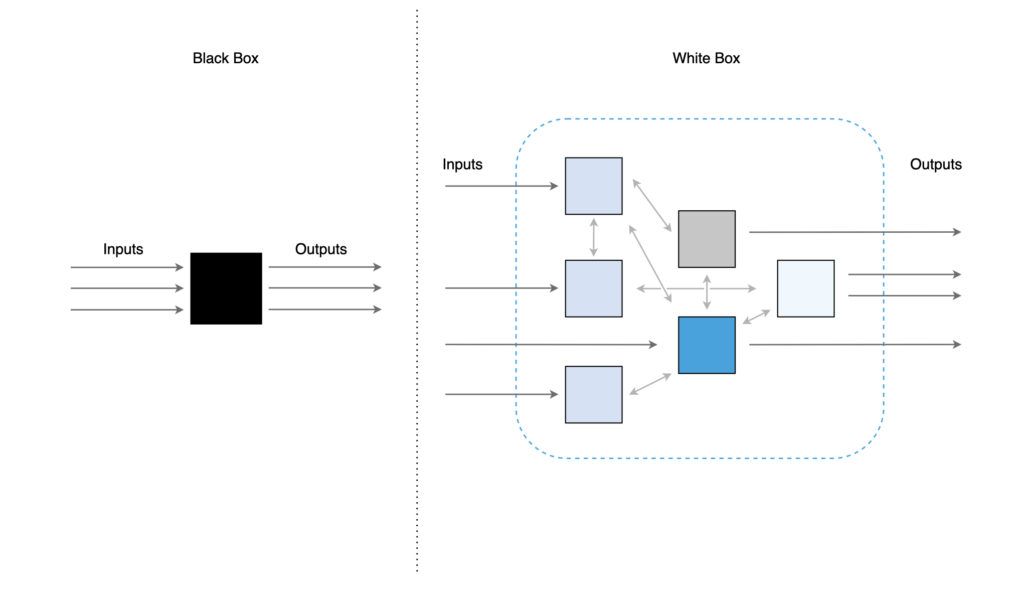
What seems like a harmless streaming fail reveals a serious problem: machines make decisions without taking us into account. Whether it's a movie recommendation, credit decision or medical diagnosis - as soon as an algorithm conceals the "why", we feel disempowered.
This is exactly where Explainable AI (XAI) comes in. It attempts to tame the autoplay gremlin and reveal what data, rules and weightings are at work in the background. But before we dive into bias traps and regulation, let's take a look at why black box models can be so dangerous in everyday life.
The dark side of the black box
| Risk | What can happen in everyday life | Example |
|---|---|---|
| Bias & Discrimination | Training data often contains hidden prejudices - which are directed against minorities. | Study: Significant discrimination against female applicants for loans. |
| Legal pitfalls | The EU AI Act stipulates traceability. Without transparency, fines of up to 7 percent of annual turnover may be imposed. | Find out more in AI-Act-Explorer articles five, 50 and 99. |
| Loss of confidence & Security gap | A lack of explanations leads to mistrust - and can paralyze entire systems. | Cruise Robotaxi accident halted entire fleet. The fleet had to be taken offline in October 2023 due to a lack of traceability. The damage: Double-digit millions per month. |
| Security gaps | Hidden functions can be exploited - often unnoticed by the development team. | Prompt injection can theoretically be misused to deliberately reverse the polarity of the model. |
| Technical debt | Unexplained model reactions lead to incorrect behavior during use. | Tesla "Phantom Braking" on highways. |
What you should take with you:
Black box models seem comfortable - as long as everything works. But without insight, we only recognize risks when it's too late. In the next section, you will find out how Explainable AI comes into play here.
Explainable AI: What does it really do for you?
XAI explains how AI makes decisions - understandable for humans.
This is not about a single tool, but about a way of thinking with many methods. Research distinguishes between four central areas:
- Data explainability: What raw data is included? Are there any gaps or biases?
- Model explainability: Is the model itself understandable (e.g. decision trees)?
- Post-hoc explainability: Tools such as LIME or SHAP subsequently show which characteristics were weighted and to what extent.
- Performance evaluation: Do people really understand the explanations?
Local vs. global
- Local methods explain individual decisions (e.g. "Why was this person rejected?")
- Global approaches analyze entire models ("Which characteristics drive the decision?")
Excursus: LIME & SHAP - understandable, but not trivial
LIME and SHAP are two of the most popular tools for making black box decisions locally comprehensible. LIME uses simple approximation models, SHAP is based on game-theoretical attribution.
Opportunities & limitations of Explainable AI at a glance
| Perspective | XAI - Opportunities | XAI - Limits |
|---|---|---|
| Transparency | Stakeholders make better decisions. | Overly technical reports can overwhelm users. |
| Regulation | Fulfillment of mandatory protocols (EU AI Act, GDPR Art. 22). | 100 % Traceability remains an illusion with deep learning models. |
| Bias control | Early warning system against discrimination. | XAI methods can also be distorted - e.g. with dependent features. |
| Engineering Insights | Recognizes relevant features and helps with feature engineering. | High computing and memory requirements. |
| Security | Detects adversarial attacks and anomalies. | Revealed explanations can also be used by attackers. |
Mnemonic: Explainable AI is not the airbag, but the seatbelt - it does not prevent accidents, but it alleviates the damage.
These three strategies provide more clarity in your AI
1. create technical foundations
Traceability also works with complex models - if two principles are adhered to:
- Protective layer: An additional logic checks every AI decision for outliers.
- Versioned data: Training and production data is systematically stored.
2. develop user-centered explanations
Users need understandable perspectives.
Decision-makers want KPIs, developers want technical details, customers want simple visualizations.
Only when real users give feedback do explanations actually get through.
3. use regulation as a guide
With its risk matrix, the EU AI Act not only provides obligations, but also opportunities: those who demonstrate traceability save on audits, gain trust and accelerate market access.
Extra tip:
Semi-annual reviews of the research and tool landscape help us to keep our finger on the pulse.
XAI as a competitive advantage - whoever explains wins
Black box models often deliver impressive metrics - but metrics alone do not generate trust. Explainable AI translates mathematical complexity into human comprehensibility.
Investing early saves twice: less technical debt and more trust - from customers, teams and regulators.
In a world in which algorithms decide on loans, diagnoses or prison sentences, explainability is no longer a luxury - but a civic duty.
Want to find out more about Explainable AI? My colleague Johannes Mayer shows, Why explainability is the key to responsible AI - and how it brings trust, fairness and security to AI systems.
Sources used
- Anthropic - Mapping the Mind of a Large Language Model (2024). (anthropic.com, time.com)
- Blog Jarrousse - Anthropic Breakthrough Paper on Interpretability (2024). (blog.jarrousse.org)
- EU AI Act Explorer - Full text & overview (2024). (artificialintelligenceact.eu)
- KPMG - Setting the Ground Rules: the EU AI Act (2024). (kpmg.com)
- Time Magazine - How This Tool Could Decode AI's Inner Mysteries (2025). (time.com)
- ScienceDirect - Model Interpretability of Financial Fraud Detection by Group SHAP (2023). (sciencedirect.com)
- University of Barcelona - Examining Algorithmic Bias in AI-powered Credit Scoring (2023). (diposit.ub.edu)
- Springer - Survey on Explainable AI (2023). (link.springer.com)
- arXiv - A Perspective on XAI Methods: SHAP & LIME (2023). (arxiv.org)
- European Commission Q&A - Transparency requirements in the AI Act (2024). (ec.europa.eu)
- California DMV - Incident Investigation: Cruise AV Collision (2023).
- Reuters - GM Cruise pauses robotaxi service after accident (2023). (Reuters)
- NHTSA - ODI Resume PE22-012: Tesla Phantom Braking (2024). (NHTSA)
- New York Times - Tesla Drivers Complain of Phantom Braking (2022). (New York Times)
- Benji Edwards - Hidden AI instructions reveal how Anthropic controls Claude 4 (2025). (Ars Technica)
(All links last accessed: June 4, 2025)