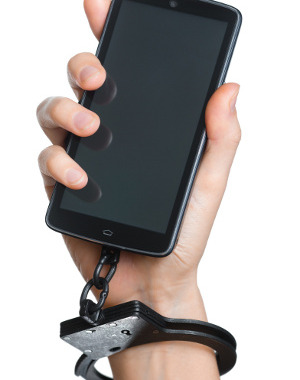
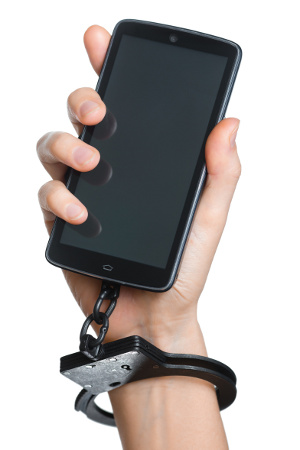
 Did you know that nomophobia and "Mobile and Internet Dependency Syndrome" (MAIDS) have been proven to often lead to jealousy in relationships, but also to more digital user attention for companies?
Recent studies and surveys show that one in four Germans is jealous of their partner's smartphone. After all, the average person spends up to three hours a day on their cell phone - and that is significantly more than with a potential "rival".
Nomophobia and the fear of unavailability
But what exactly are "no-mobile-phone-phobia" (as nomophobia is officially known) and MAIDS (Mobile And Internet Dependency Syndrome)? They describe the fear of not being available and missing out on something - also known as internet and cell phone addiction. Typical signs of addiction are anxiety, helplessness and feelings of stress when the cell phone is switched off or unavailable. The feeling of "nakedness" when the smartphone is not at hand can also be an indication of nomophobia. There is a constant need to have the smartphone or cell phone with you and to keep checking it for news. This ultimately leads to a cell phone or Internet addiction.
New scope for attention for companies
However, consumer weaknesses and needs always present opportunities for marketing and sales. For product suppliers and service providers with an online focus, this results in completely new scope for attentionwhere they can get in touch with potential customers. This is essential if companies want to capture the digital attention of their customers and prospects - of whom on average six out of ten Germans as nomophobic - want to win:
- For one in three people, the smartphone is the First point of contact in the morning and the last one before going to bed. Especially in the evening, for example when watching TV, many users are most attentive.
It is therefore worth rethinking your own marketing strategy and also addressing customers at supposedly unusual times, e.g. with a push message before going to bed with a product preview that makes them want to visit the online store the next day. - While one in ten users don't know where the off button on their cell phone is, seven in ten would rather give up alcohol than their smartphone.
Companies must therefore become an indispensable part of the user's everyday world, just as their smartphone is. The exclusive feelingThe fact that he can only access the latest information (e.g. e-books, downloads, product information, tests) on his mobile device will arouse his curiosity. - The cell phone is every 6.5 minutes on average checked for news and messages. Infotainment and messaging are the most popular activities on smartphones.
Those who are successful are those who get involved in the user's attention chain and stir up curiosity about the latest trends, releases or products via news in series. A campaign in which there is always something new happening and the user is challenged not to miss anything or to take part is also ideal. - Digital should not be impersonal: 69% of consumers feel a long-term connection to a brand, especially when they receive live support in critical situations. Above all, chat support or live help are at the top of the service ranking. 47% of online customers make a repeat purchase dependent on whether they were helped quickly and efficiently.
For companies, this means not only having a great online store, but also Real-time service that provides qualified and fast solutions to customers' questions and problems. Speed is no longer optional but a must.
The concern of most smartphone owners about missing out on something important is giving rise to new Opportunities for marketing and product marketing. You have to adapt to the needs and behavior of potential customers and develop strategies that may seem unusual at first glance - this is the only way to stand out from the competition. Whether it's product previews late at night or quick advice and delivery, the customer's "want to have" mindset needs to be awakened and served.
Smartphones and mobile devices have long been part of everyday life and do not necessarily lead to addiction for every user. However, the boundaries are blurred and psychologists are not yet in agreement as to when, instead of a Everydayness from a questionable Addiction can speak. So nomophobia is one man's joy and another man's sorrow.
Sources:
[1] http://www.agof.de
[2] http://www.industrystock.de/pressenews/de/2013/9/24
[3] http://www.axelspringer-mediapilot.de/dl/15628551/Mobile_Impact_Academy_I_Smartphone-Nutzung_in_Deutschland.pdf