


Process optimization must be intentional
Simply analyzing processes and defining and implementing measures to improve them is good, but only in the short term, as the effects are often short-lived and motivation within the company quickly wanes. This makes further future efforts more difficult, as the purpose of the optimization measures does not become clear. Sustainable process optimization on the other hand, is geared towards ensuring employees involved and convince them of the optimization benefits and improvements. In this way, the Self-motivation and interest of these employees in process optimization. Improvements are always possible, but their success depends crucially on the Corporate culture whether they can be successful in the long term.
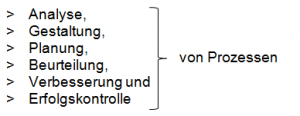
Tasks in process optimization:
dd
c
c
The Process optimization is implemented in many complicated and complex business processes in everyday business life, e.g. manufacturing processes or maintenance cycles in industry. In this article, optimization is illustrated using a simple, everyday process in order to highlight the essential features of process improvement. By means of Business Process Model and Notation (BPMN) - a graphical specification representation of workflows and business processes in IT - the processes in the ACTUAL analysis visualized and then the Process optimization shown for comparison.
In the first part of this article, process optimization is examined using a simple as-is analysis and process optimization through parallelization via the BPMN representation, and then in the second part the advantages of process optimization through M2M are discussed.
Optimize sample process "Get coffee" with BPNM
Actual state analysis
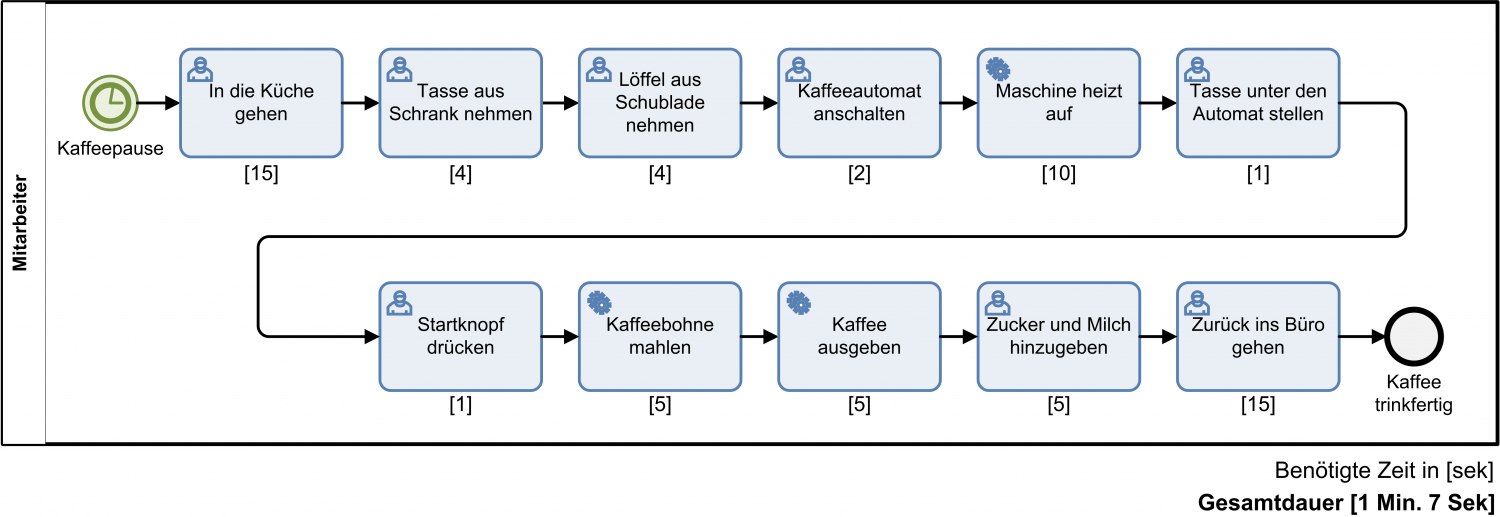
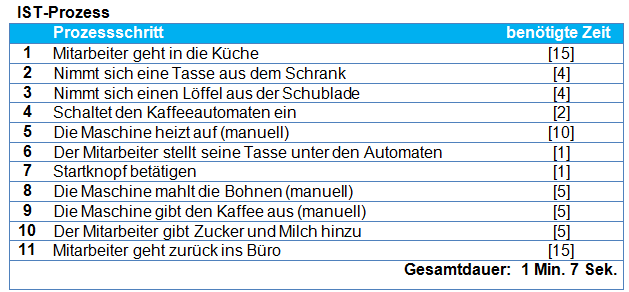
ACTUAL analysis means first recording and documenting the current process. An employee has a coffee break. He goes to the kitchen, takes a cup from the cupboard and a spoon from the drawer. He then switches on the coffee machine and waits until it has heated up. He places his cup under the machine and presses the start button. The machine grinds the beans and dispenses the coffee. Just add sugar and milk and go back to the office and the employee can drink his coffee. The whole process takes up to a minute.
Figure 1: ACTUAL analysis:
Conclusion ACTUAL analysis
The employee performs each step sequentially and independently of other process steps. This results in a total duration of 1 minute 7 seconds.
Concrete process optimization
Identify independent tasks and try to parallelizeto reduce the process duration shorten. This is the Added valuethat is created through process optimization. Tools such as BPMN support visualization.
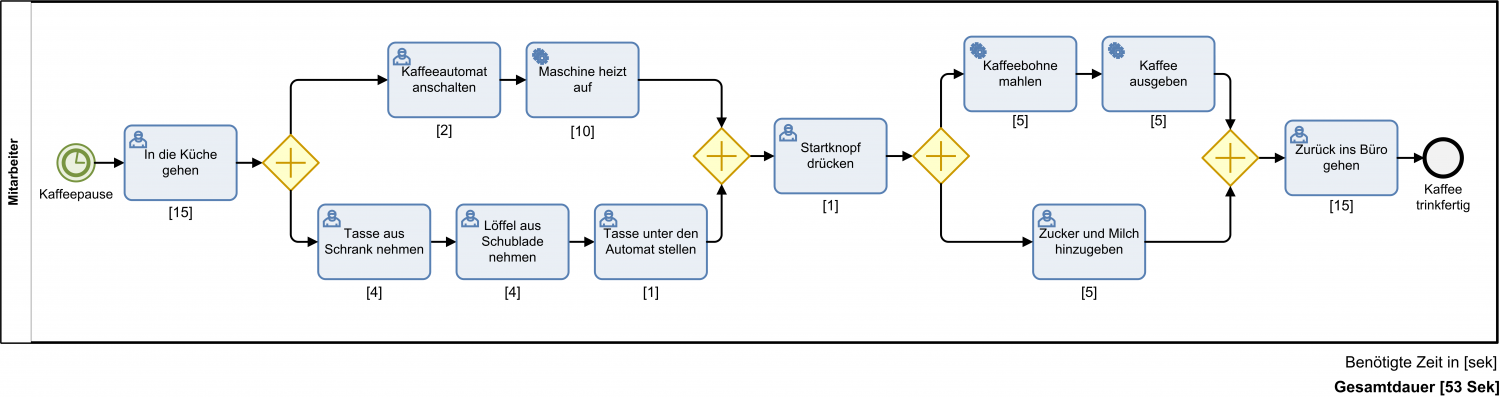
In this example, several tasks can be carried out in parallel. As in the ACTUAL process, the employee goes to the kitchen first. However, he switches on the coffee machine right at the start so that it can heat up. At the same time, he can take his cup from the cupboard, the spoon from the drawer and place his cup under the machine. Once the machine has heated up, he can press the start button. While the machine grinds the coffee beans and dispenses the coffee, the employee can add sugar and milk. They can then take the coffee back to the office and drink it there.
Figure 2: Optimized process
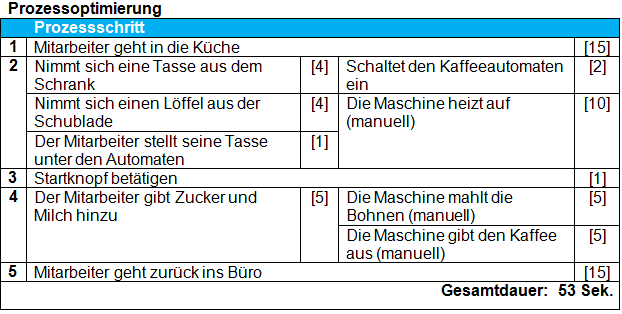
Conclusion on process optimization
By parallelizing work steps, 14 seconds can be saved compared to the ACTUAL state (1 min. 7 sec.). In this example, these are the activities that can be carried out by the employee while the machine is working (manual activities).
sd
Advantages of process optimization at a glance
Process optimization can:
- reduced throughput times,
- the processes are presented in a more structured way,
- resources are better distributed,
- and process costs can be reduced.
[Image] © alphaspirit,Fotolia.com
[1] https://de.wikipedia.org/wiki/Prozessoptimierung
[2] Cf. Thaler, K. (1999): Supply Chain Management, Process Optimization in the Logical Chain, p. 14