

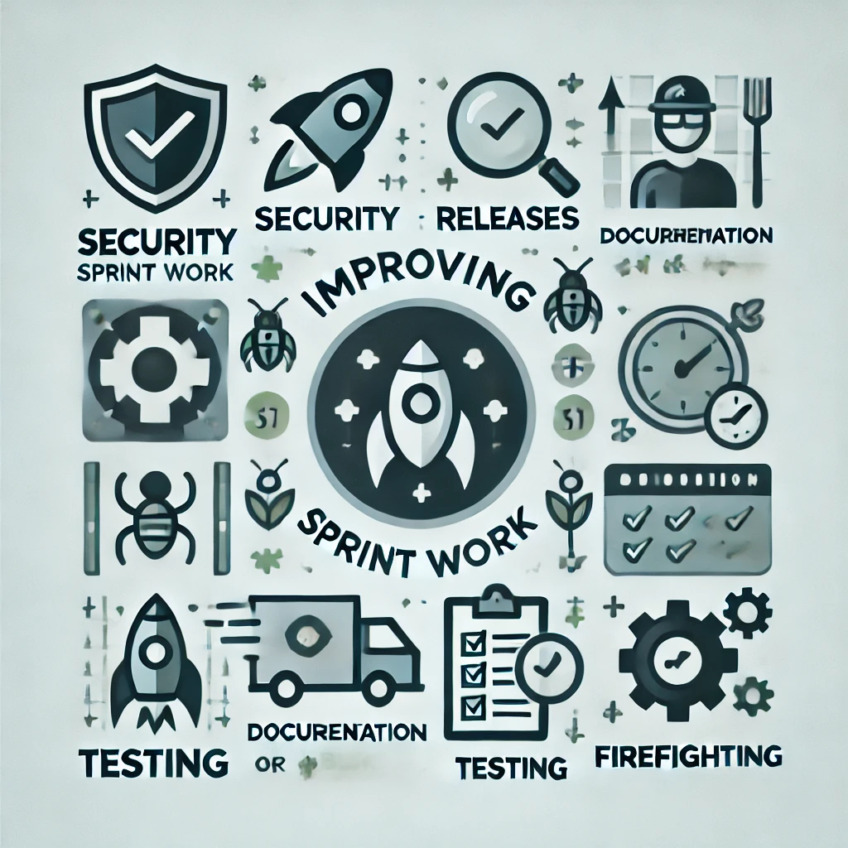
These roles help to clearly define responsibilities and ensure that important tasks are completed regularly without explicitly scheduling them into the sprint. If there are no explicit specialists in the respective subject area in the team, the rotation of roles by team members can have a positive impact on the distribution of knowledge in the team.
The roles and tasks
Security Minister:
- Stabilization and error correction of the pipeline
- Review of automated static and dynamic code analyses
- Documentation and derivation of measures to eliminate potential CVEs
- Active management of dependencies, including regular updates and cleaning up unused dependencies
Release Champion:
- Creation and provision of releases
- Ensure that an executable environment with all new features is ready for the sprint review
Documentation Guru:
- Updating the repository documentation
- Active management of TODO comments in the source code to reflect technical debt
- Onboarding new colleagues and updating the relevant documents
- Identifying and commenting on outdated documents to continuously improve documentation
test manager:
- Viewing and analyzing the automatic tests performed regularly
- Documentation of the results
- Initiation of measures to rectify any errors
- Identification of important test cases
Firefighter (On Demand)
- Maintaining the community
- Editing GitHub issues
- Escalation topics
- Communication with external contributors
- Participation in unscheduled meetings
Conclusion
The introduction of these roles has fundamentally strengthened our team. The clear division of tasks not only improves the management of responsibilities, but also promotes individual and collective knowledge within the team. Regular role reversals prevent knowledge from remaining isolated and promote the development of versatile skills within the team. In the long term, this enables a more sustainable and flexible way of working, where all team members are able to take on different key tasks and thus increase the overall performance of the team.