

Why clarity is crucial in software testing
Do you know this? Your team tests diligently, but in the end there is a lack of clarity. The problem is rarely a lack of motivation or tools - it's often a lack of clarity. What is tested precisely and Why?
Two simple questions shed light on the subject:
- What do we test?
- Why are we testing and when?
This distinction in Test type and Test category ensures that your test strategy becomes more targeted, transparent and efficient.
Test type: What are we really testing?
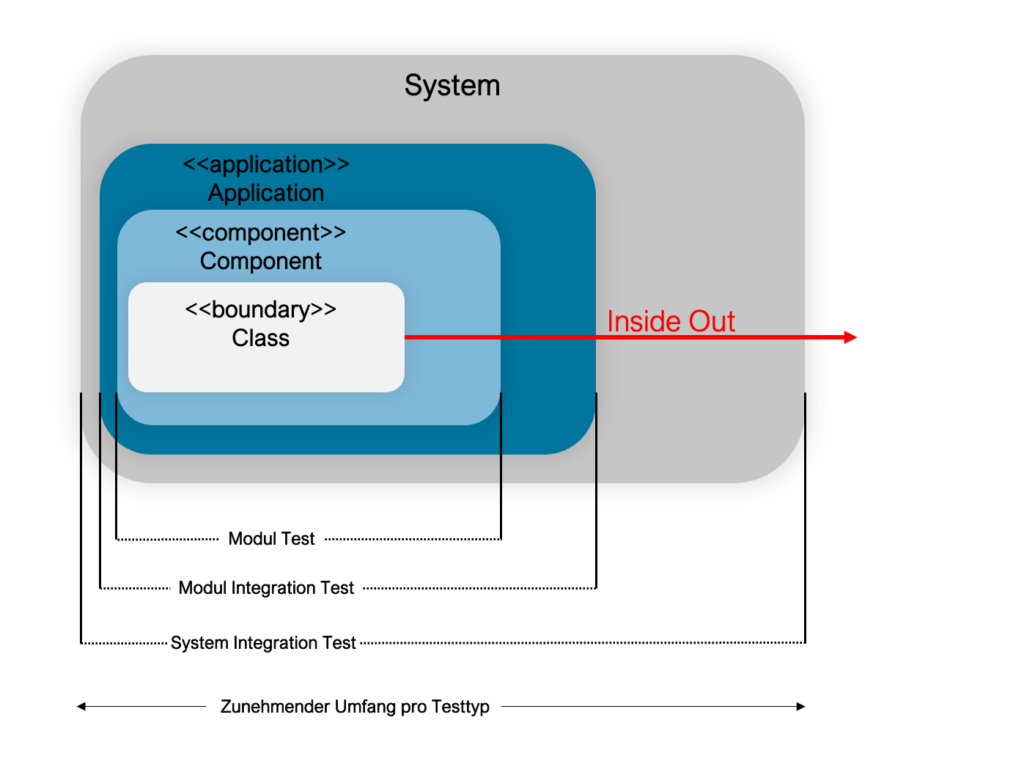
The test type describes which system or subsystem is in focus:
| Test type | Focus of the test |
|---|---|
| Module tests | Individual classes or functions |
| Module integration tests | Interaction within a microservice incl. database |
| System integration tests | Interaction of several microservices |
Note: The test type answers: "What is our system under test?". This clarifies the scope, the use of mocks and the planning of the test depth for each environment.
Test category: Why are we testing and when?
The test category describes the purpose and timing of a test - regardless of the test type:
| Test category | Goal / Time |
|---|---|
| Regression test | Ensure that existing functionality works after changes |
| Acceptance test | Validation of new features against requirements or user story |
| Smoke test | Quick check for system stability after deployment |
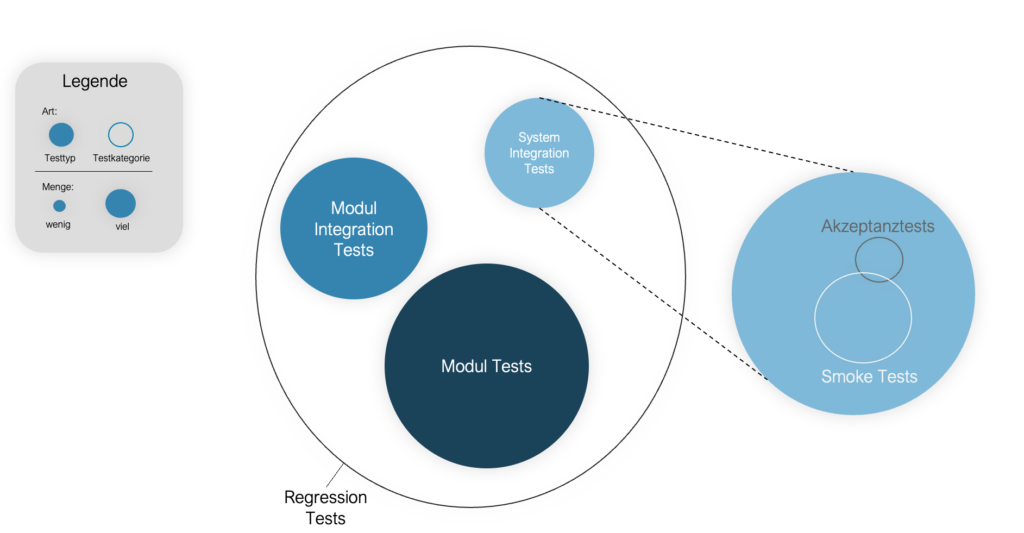
The picture is intended to illustrate that a test type can be used several times in different categories - for example:
- As an acceptance test in the feature branch
- As a regression test in the main
- As a smoke test after deployment.
What happens if this separation is missing?
Without a clear distinction, the following problems often arise:
- Tests run at the wrong timee.g. acceptance tests only after the merge.
- Tests run in the wrong environmente.g. on E2E with many dependencies instead of isolated.
- Unclear prioritization: All tests are considered equally "important" - so they block everything.
- Lack of transparencyNo one knows at what point in time which tests are to be carried out.
The result: an inefficient test system that delays releases instead of securing them.
Five practical tips for more clarity in the testing process
- Define test types along the system structure.
- Start inside-out - from simple module tests to more complex end-to-end tests.
- Assign one or more categories to each test.
- Set, when with which goal a test category is to be executed.
- Document this allocation transparently so that the whole team benefits.
Conclusion: Test wisely - not just a lot
Good tests not only answer whether something is broken - but also why we are testing. The conscious separation of test type (What?) and test category (Why?) brings you clarity, saves time and increases the quality of your releases.
This is because the test strategy is not a downstream step, but a central topic in the entire software lifecycle. At doubleSlash, it is therefore firmly anchored in the SWEP process. Anyone who deals with test strategy at an early stage of development lays the foundation for efficient and effective testing. High-quality software development.
Your next step:
Check your current test strategy now and use these two questions directly!
You can find out more about testing strategies and best practices at doubleslash.com.