
The Digital Product Passport (DPP) will gradually become mandatory for all product sectors from 2027. This development is part of the Ecodesign for Sustainable Products Regulation (ESPR). The ESPR sets new standards for sustainable products and digital transparency in the European market and is a core element of the EU Green Deals. What does this mean for companies and where does it open up opportunities?
The Digital Product Pass: your new digital ID for products
The Digital Product Pass acts as a digital ID for products. It is available digitally and can also be viewed by customers via QR codes, NFC tags or RFID chips attached to products.
How the DPP works
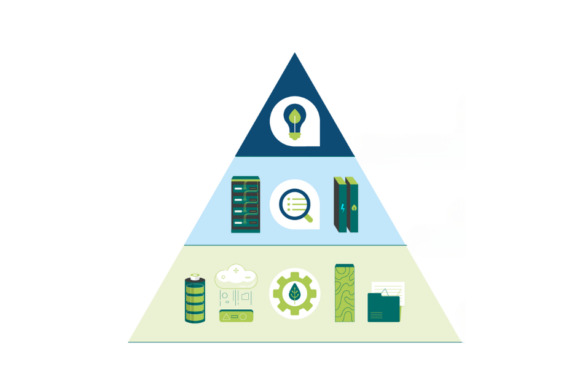
The basic structure of the DPP is the same for all product groups to ensure readability. It is primarily about compliance with IT architecture standards and protocols. The product groups are defined in the ESPR by common usage types/functions. There are data values that must be specified for all product groups, but each product group also has individual specifications for the data in the DPP. Individual specifications are, for example, the capacity and battery typology for batteries or the fiber types contained in textiles. Precise requirements will be specified in future delegated acts for the individual product groups.
A „digital twin“ is created for each product. The digital twin is a living, digital copy of an object that synchronizes with the real object in real time.
With the ESPR, it should now also contain important data on the life cycle of products, including:
- A globally unique identification code for each product
- Information on manufacturing materials and their origin
- Possible repair measures
- The environmental and CO2 footprint
- Critical substances such as chemicals
- Recycling options
The Asset Administration Shell (AAS) is generally used to create the digital twin.
What is the Asset Administration Shell (AAS)?
The Asset Administration Shell (AAS) is a standardized framework for managing digital twins in the industry. It enables the structured recording and provision of product data across the entire life cycle. You can find more information on this here.
Transparency through the DPP: the key to the circular economy
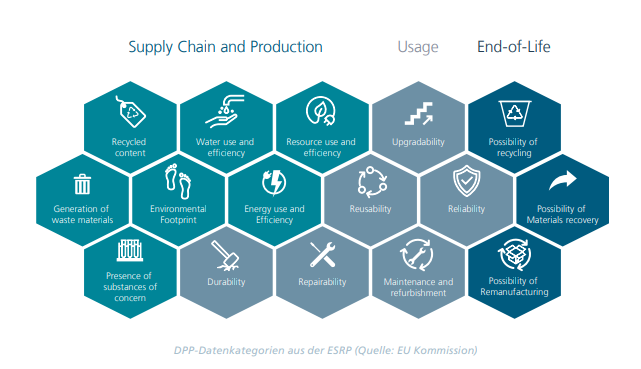
The DPP ensures comprehensive transparency over the entire life cycle of a product. It provides customers and authorities with access to important information on ingredients, environmental impact and repair options. The aim is to promote the longevity of products and establish a circular economy in Europe. In addition, the DPP supports the monitoring of legal compliance and helps with the traceability of products along the supply chain. An EU Digital Register, which is not publicly accessible, is also intended to help authorities check the authenticity and essential mandatory content of passports.
Timeliness and importance: Why companies need to act now
The obligation to introduce the DPP by 2030 at the latest makes it essential to address the requirements and benefits at an early stage. This enables companies to make the necessary adjustments in good time and thus secure competitive advantages.
Challenges and opportunities: the DPP as a driver of innovation
The implementation of the DPP could pose challenges for companies, such as the creation of new data sets, the standardization of data and the adaptation of existing processes. Despite these challenges, the DPP offers significant benefits. It promotes transparency about product life cycles, ingredients and environmental impacts. This information not only strengthens sustainability, but can also help to increase efficiency and enhance credibility and trust with customers.
Technological support through IoT and cloud solutions
IoT and cloud solutions, doubleSlash can help companies to efficiently manage and use the data required for the DPP. These technologies help to overcome the challenges of data collection and management.
Conclusion: The duty becomes an opportunity
We recommend dealing with the DPP at an early stage in order to optimally prepare for its introduction. This can not only help companies to maintain compliance, but also to gain strategic competitive advantages. The Digital Product Passport represents both a regulatory challenge and an opportunity. Companies that respond to this development at an early stage can not only ensure compliance with legal requirements, but also benefit from the long-term advantages in terms of sustainability and transparency.
FAQs on the digital product passport
What is the Digital Product Passport?
The Digital Product Passport is a digital data set that contains key information about a product - such as materials, origin, carbon footprint, reparability and recycling. It makes product information transparent across the entire life cycle.
When is the Digital Product Passport mandatory?
The Digital Product Passport will be introduced gradually from 2027. Companies in the affected product sectors must meet the requirements of the EU regulation by 2030 at the latest.
What data must be included in the digital product passport?
Mandatory data includes a unique product code, information on materials, environmental and sustainability indicators, repair instructions and information on recycling. Depending on the product group, there are additional requirements.
What advantages does the Digital Product Passport offer companies?
Companies benefit from more transparency, better traceability and greater trust from customers and authorities. At the same time, the digital product passport opens up opportunities for more efficient processes and sustainable business models.
How can companies implement the Digital Product Passport technically?
This is usually implemented using digital twins, for example on the basis of the Asset Administration Shell (AAS). IoT and cloud solutions support the structured recording and updating of product data throughout the entire life cycle.
Co-authorLaura Rossbach