
This is not only changing business processes, but also the world of work. In order to learn from data and develop business models based on it, the job description of the Data Scientist more important than ever. We have worked with our experts Markus Beller and Danny Claus talked about their job description.

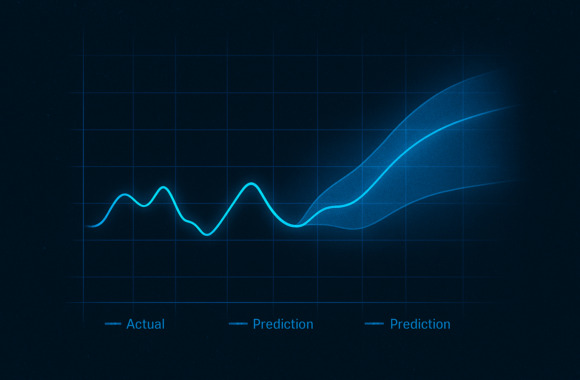
The desire to learn from data and gain new insights has always been there - data scientists haven't just been around since Big Data. But unlike in the past, business models are increasingly being built on this today, generate information from data and use it profitably. They serve this purpose, Derive predictions and Data-driven decisions to make decisions. One example of this is the field of predictive maintenance, where machine data is already being successfully collected in order to predict future sources of error or failures and thus extend the service life of machines, for example.
"The cloud offers completely different ways of processing, storing and using data volumes," says Markus Beller, Data Scientist at doubleSlash. "Today, there are data centers with performance that you could only dream of in the past.
The resulting data volumes can also be used to Extremely complex algorithms be applied." With new technologies like Apache Spark, in which already Machine learning components these large amounts of data can also be processed quickly. "A dynamic is currently emerging that is fueling the topic. There is also demand on the market to use the data profitably," says doubleSlash machine learning expert Danny Claus.
The data scientist: Swiss army knife among consultants and software developers
But what exactly does a data scientist do? When you look at the range of tasks, it quickly becomes clear that you need a specialist who is also an all-rounder - a bit like a Swiss army knife. "You work intensively with Technologies and the Selection and functioning of algorithms. Programming skills like Python won't do any harm," says Beller. It is also important to know how Data management works. How are these volumes of data integrated and stored? And how do you program a solution that uses algorithms such as Regressions, cluster analyses or Text Mining brings added value?
In addition Expertise in mathematics and statistics is required. This is because if algorithms are used in the wrong context with the wrong parameters, the result is ultimately not meaningful or even misleading. "You should be able to use the Critically scrutinize results", says Danny Claus. And then there's the Domain knowledge - After all, the aim is to solve specific problems. A good data scientist asks the specialist department the right questions and translated which then in professional and technical data. He also takes care of the suitable visualization.
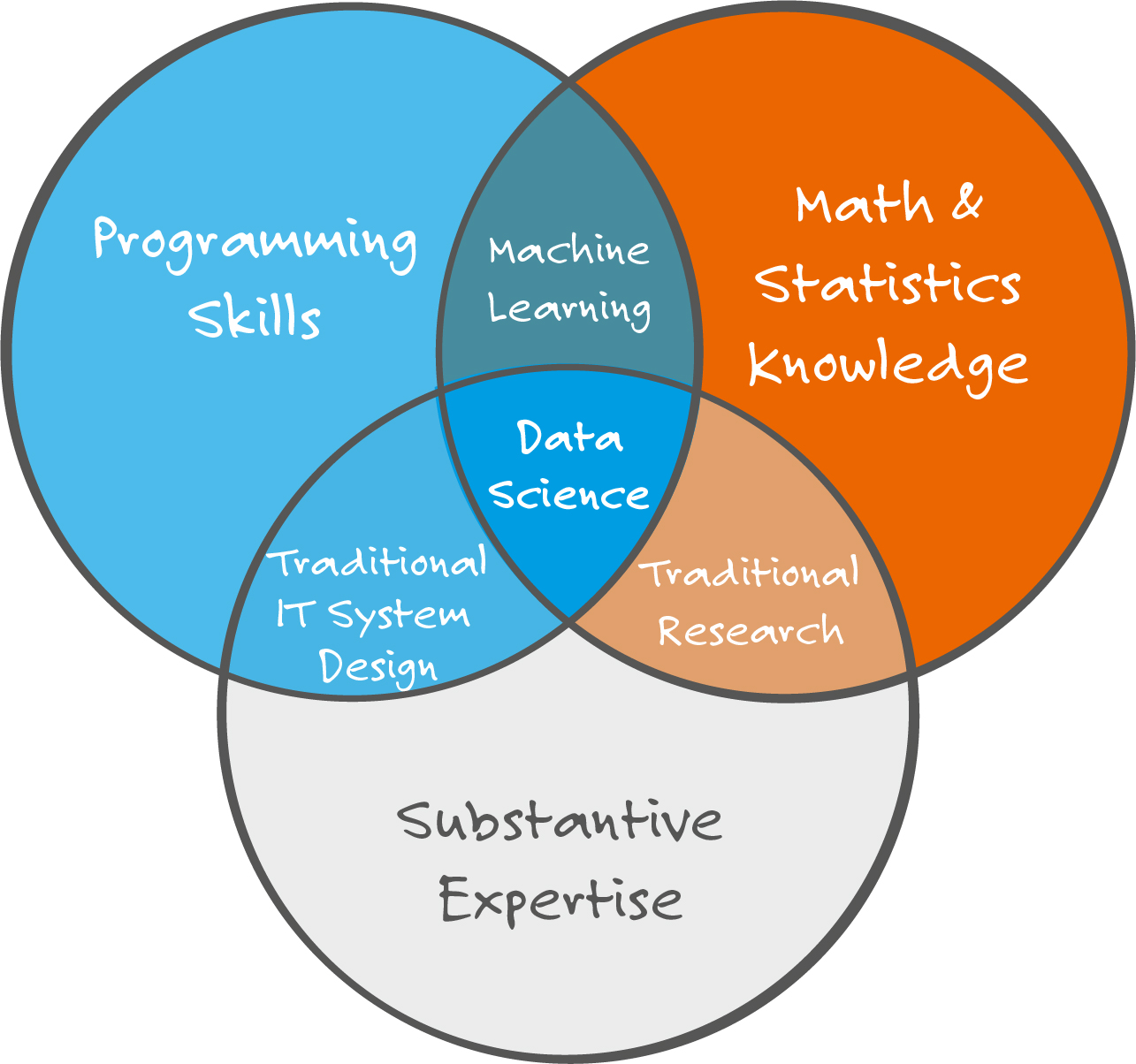 Figure 1: Competencies of data scientists (Image source: drewconway.com/)
What does this mean using predictive maintenance as an example? To access the data, the affected components or systems are technically connected or networked become. Further data sources can be historical machine status data or come from other source systems. Based on this, the professional expertise of the data scientist determines which mathematical and stochastic means (algorithms) can be used to analyze the available data in order to Reliable predictions of behavior - for example a machine.
Good mix of teamwork and expertise
In reality, the requirements of technological understanding, algorithms and domain knowledge can rarely be fulfilled by the same person. "The trend will be that there will be Experts for technological and specialist domains there are," Beller suspects. "It's precisely this mix that appeals to me: working in a team with the relevant experts to design a solution together", says Beller. He is convinced: "Data science will have a major impact on software development." Because the goal is to create a Software to build the is intelligent, learns and becomes increasingly clever at solving problems.
A wide range of applications await data analysts
Data scientists are needed in all areas, e.g. when it comes to making predictions. In production, the Data analysis For example, linked production steps can be better coordinated with one another. And in supply chain management Logistics data analyzedto optimize driver deployment.
We also encounter data science in our everyday lives: Netflix knows which series we watch and speaks Proactive recommendations out. They are based on the User behavior of otherswho have seen similar films and series. Also based on Image and speech recognitione.g. from Microsoft, or the Detecting credit card fraud on repeatedly trained algorithms.
"It doesn't hurt to find out how it all works in the background," says Markus Beller, explaining his motivation to get to grips with the topic.
Tasks of a data scientist at a glance
- Formulate questions to find out which specific use case or business problem is to be solved.
- Describe ideal data: What data is needed to solve the problem?
- Explore potential data sources: Does the required data exist or does it need to be identified first?
- Obtain data and store it in such a way that it can be accessed.
- Clean up data: In what form is the data needed to solve the problem?
- Recognize and analyze: Get a feel for the quality of the data. Is it usable?
- Create statistical models and predictions: Apply algorithms that are suitable for the problem at hand
can be used. - Interpret results and compare them with the problem.
- Validate results: Were the correct data and algorithm used?
- Prepare results in an understandable way: Identify and visualize options for action based on the results.
- Create reproducible code to scale and automate.
- Make results accessible: Building reporting to learn reliably.
The use cases will become even broader in the future and Generate ever greater benefits - whether on the road, in business processes or in the private sphere. As part of the digital transformation, it is becoming increasingly important for companies to Core taskto get to grips with data science. "Creating something intelligent from data is simply something very fascinating," says Danny Claus. There could hardly be a better answer to the question of why data scientist is a dream job.
Sources: faz.net/