You know how important it is to avoid downtime and keep quality high. But how do you use AI and AIoT applications to do just that? In this third part of our blog series, we go one step further and show you how AI-based fault detection really works in practice.
From predictive maintenance to quality control and fault diagnosis: we take a look at the technologies, methods and use cases that help you to identify faults at an early stage and make processes more efficient.
Looking for more use cases?
How predictive maintenance detects maintenance problems before they occur
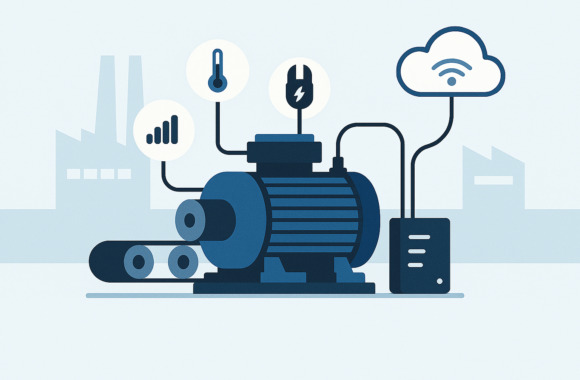
AI algorithms analyze sensor data to detect anomalies that indicate possible failures. Sensors record data such as vibrations, temperature or pressure, which is then pre-processed on edge devices or gateways. Historical data from previous defects is used to train machine learning models that recognize patterns and deviations in operation. The models analyze the data in real time and issue alerts in the event of irregularities to enable timely maintenance measures. A typical example is the detection of unusual vibrations or temperature fluctuations in machines that indicate an impending defect.
Deep learning in production: finding errors, ensuring quality
In the quality control of manufacturing processes, production data recorded by IoT sensors is analyzed by AI in order to identify defective products at an early stage. High-resolution cameras record images of the manufactured products during production. Deep learning models, such as convolutional neural networks (CNNs), evaluate these images. These models are trained with previously annotated/labeled data. Relevant features such as scratches, deformations or color deviations are marked and assigned categories, e.g. "flawless" or "defective". The trained models detect surface defects, deformations or color deviations in real time and automatically sort out defective products.
Detecting structural weaknesses: AI as the key to the construction industry
In the construction and infrastructure sectors, the use of AI be used for fault diagnosis. Sensors collect data from building technologies such as HVAC systems, lighting or security systems. AI models analyze this data to detect malfunctions, such as a heating valve that is not working correctly. In addition, AI analyzes sensor data from buildings, bridges or dams to identify structural weaknesses or material fatigue. Strain gauges and acoustic sensors measure mechanical loads, which AI systems interpret. Drones with high-resolution cameras or LiDAR systems inspect hard-to-reach areas and detect cracks or damage using image processing technologies.

Wear at a glance: Real-time diagnostics through AI models
The detection of wear or material fatigue is also supported by AI. Sensors monitor mechanical loads, temperature and pressure in real time, while AI models such as Long Short-Term Memory (LSTM) networks analyze this data to identify wear patterns historical load data and cycles serve as the basis for training the models. In the event of deviations, the system makes precise recommendations, for example to relieve a bridge or maintain a wind turbine in good time before critical damage occurs.
What companies can learn from AI-based error detection
AI-based error detection revolutionizes processes in AIoT applications by detecting errors early, reducing downtime and minimizing costs. From predictive maintenance to quality control and material diagnostics, intelligent algorithms increase efficiency and reliability. Companies that use these technologies benefit from optimized processes, higher product quality and sustainable success in the digitalized industry.