


Predictive maintenance will have a major impact on traditional service culture, if not revolutionize it. The term means something like "predictive maintenance", "being able to make fault predictions", "maintenance" and "providing usage-specific maintenance instructions". Whether production, logistics, software or maintenance companies - Predictive maintenance opens up future opportunities that increase efficiency, reduce costs and bring innovations to market faster.
Even though research and development in this area is still in its infancy, studies by the German Engineering Federation (VDMA) show that over 80 percent of the above-mentioned industries are already working with predictive maintenance. A final breakthrough is expected in 2020. [1]
What potential can predictive maintenance offer your company? Download business case template now
Reasons for the rapid development of predictive maintenance
The use of this new technology offers unprecedented Transparency and expands the scope of action for the areas of production, aftersales and research & development. The round-the-clock monitoring (24/7) all production processes and machine information creates the necessary database for this. Smart devices are used to turn the processed "data" into meaningful information that is graphically displayed and processed in the form of dashboards. Identified weak points in the machine and system area are displayed via corresponding alerts on the Dashboard displayed. At the same time, for example, a service employee is informed of the faults by message. This enables a Preventive response to identified deficits and thus the avoidance of total failures.
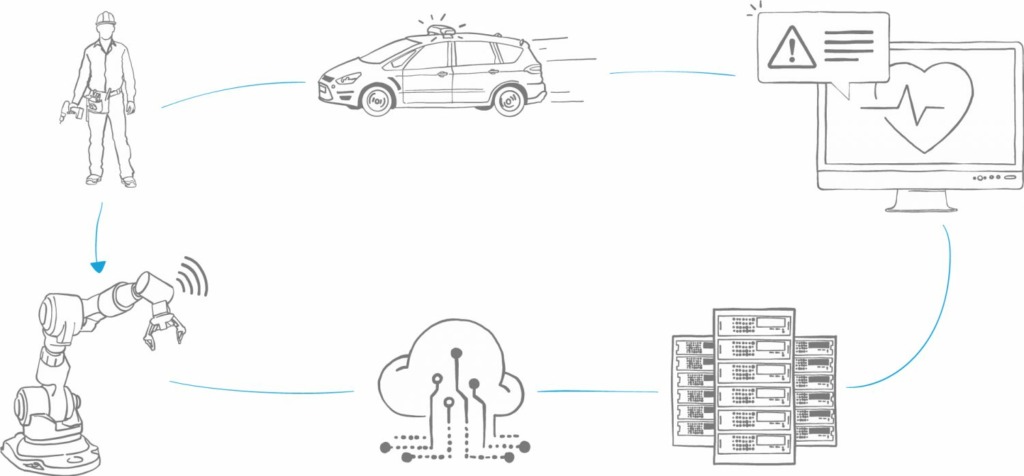
Now, at the latest, it is also clear why predictive maintenance, in particular Service concept in the area of Industry 4.0 will face a major upheaval stands. Nasty surprises caused by failed sensors, stagnant production systems or even spoiled goods could soon be a thing of the past thanks to predictive maintenance.
But how is a fault determined with the help of predictive maintenance?
As is so often the case, the key to sustainable success lies in the data. To determine a malfunction, on the one hand Data sources from already digitized processes for example the Temperature of auxiliary materials such as oil, which Inertia of a gearbox or a resulting Unbalance in similarly recurring movement sequences. On the other hand, the Manual documentation by experienced employees is used. Enriched with further data from e.g. external data sources the end result is a sum of data that provides reliable information about when an incident may occur. These data aggregations form the valuable basis for generating numerous added values, such as the Early recognition from failures or the identification of Optimization potentials, represent.
Predictive maintenance uses Data-based insights to improve service processes. Production companies in particular benefit from this by being able to optimize their Avoid downtimes, your Increase overall effectiveness and their Optimization fields faster based on the data to identify. Wind turbines, for example, are a well-known area of application among production systems. This usually involves not just one system, but entire machine parks. You can find out more about this in our next blog post in this series.
Companies that have long been Digitization trend or have already set the initial course, already have the best prerequisites for taking the next steps towards transforming their service culture and thereby setting themselves apart from the competition.
To the next blog post in the series
Find out more about predictive maintenance
Sources:
[1] ROLAND BERGER GMBH, 80538 Munich, PDF p. 8-12, April 2017, https://www.vdma.org/v2viewer/-/v2article/render/17179971?cachedLR61051178=de_DE