

Process optimization makes processes more efficient and cost-effective - if the corporate culture is right. Now the question arises, can the process be further optimized if M2M technologies or Internet of Things (IoT) be used? IoT means that even simple everyday objects are connected to the internet and can interact with each other. Communication between technical devices means that processes can be optimized even further, almost halving throughput times.
Example process "Get coffee" optimized with M2M
Variant 1:
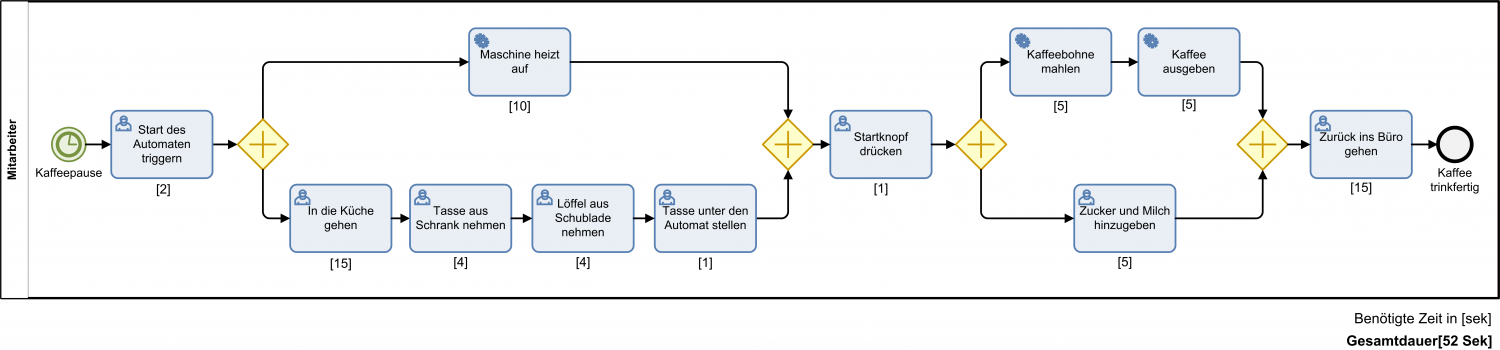
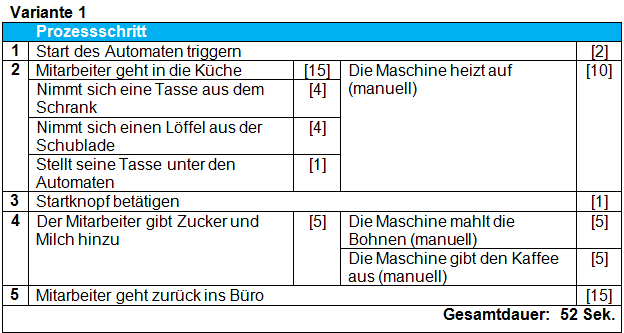
The coffee machine is networked with the employee's work computer. The employee can start the machine remotely from their workstation - and this is how it works: the employee triggers the coffee machine to switch on using their PC. He goes into the kitchen, takes a cup from the cupboard and a spoon from the drawer. Meanwhile, the coffee machine switches on and heats up. He places his cup under the machine and presses the start button. The machine grinds the beans and dispenses the coffee, and the employee can add sugar and milk at the same time. He can then take the coffee back to the office and drink it there.
Figure 3: M2M variant 1
 Conclusion Variant 1:
The initial process of the ACTUAL analysis (reference to part 1) of our example had a total duration of 1 minute 7 seconds. By optimizing the process alone, 14 seconds could be saved (total duration of the optimized process: 53 seconds). Networking the machine with the PC alone shortened the process by 15 seconds. Compared to the optimized process, only 1 second could be saved, as other processes were not further optimized.
Variant 2:
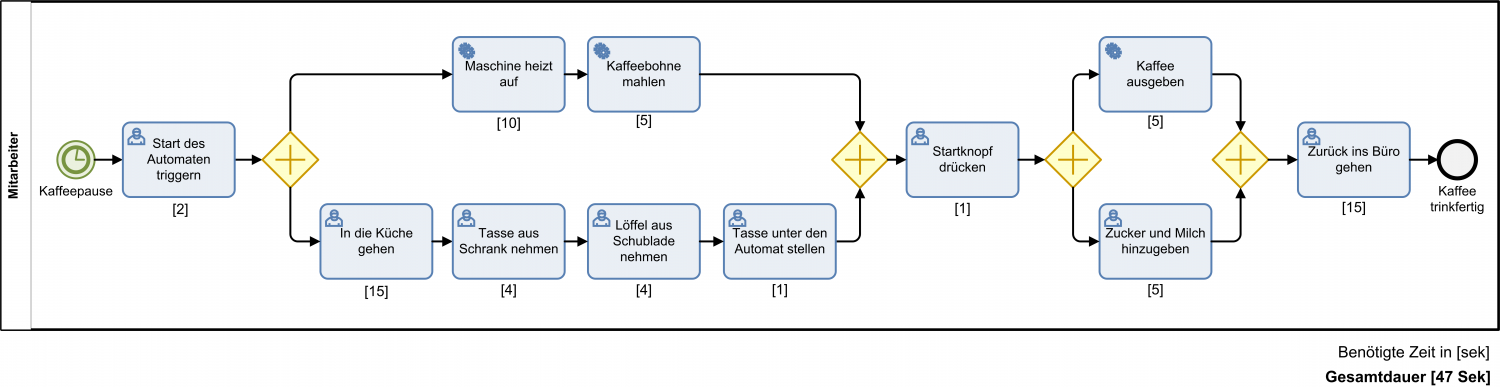
As in variant 1, the coffee machine is networked with the employee's work computer. The coffee machine is so intelligently controlled that it starts to grind the beans as soon as it heats up. As in variant 1, the employee triggers the start of the machine. It heats up and grinds the beans while the employee goes into the kitchen and takes a cup from the cupboard and a spoon from the drawer. He places his cup under the machine and presses the start button. The machine now dispenses coffee immediately and the employee can add sugar and milk at the same time. He can then take the coffee back to the office and drink it there.
Figure 4: M2M variant 2
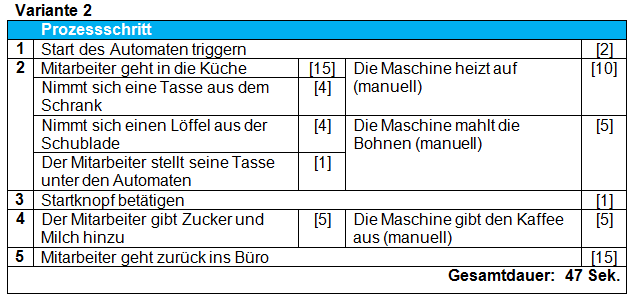 Conclusion Variant 2:
As the machine starts grinding the beans immediately after heating up, the process can be further optimized. In relation to the actual state (1 minute 7 seconds), the process can be improved by 20 seconds.
b
d
Variant 3:
In version 3, the machine can grind the coffee beans after heating up and provide a cup and spoon in parallel (thanks to an integrated provision system). The machine can dispense the coffee without the employee pressing the start button and the start of the machine is triggered again. The machine heats up and can grind the coffee beans and provide a cup and spoon at the same time and then dispense the coffee directly. The employee goes into the kitchen and adds sugar and milk to the coffee and can leave the kitchen immediately to drink the coffee.
Figure 5: M2M variant3
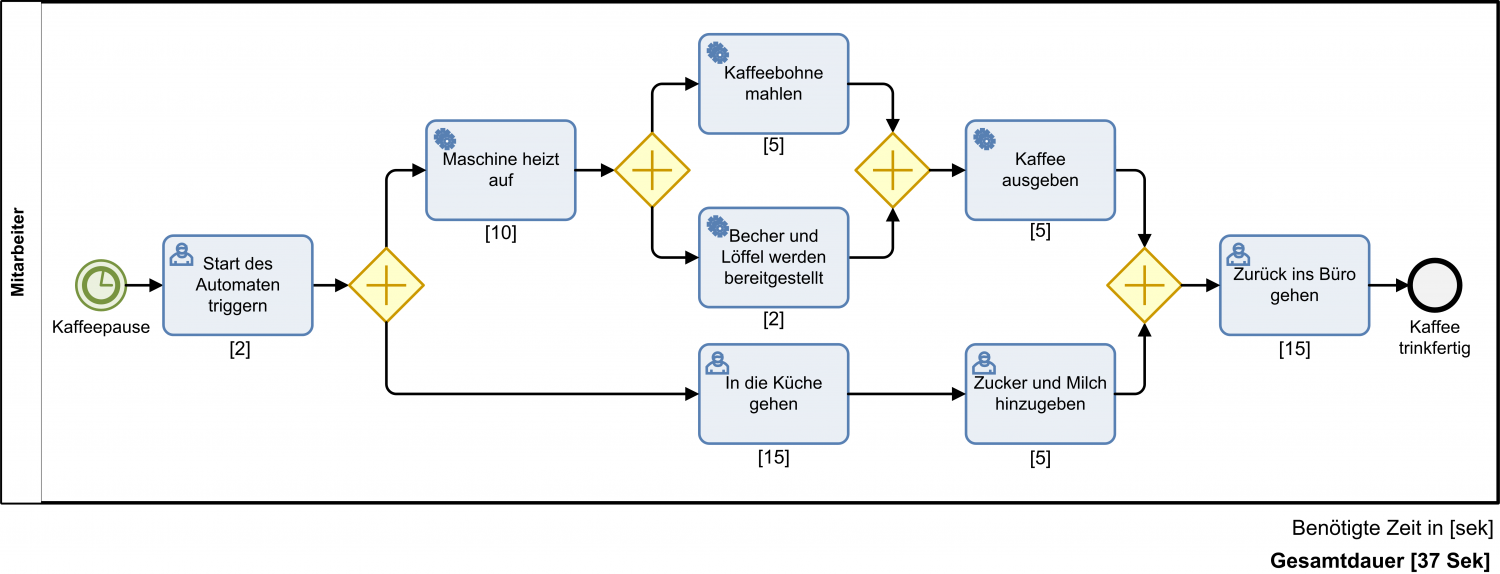
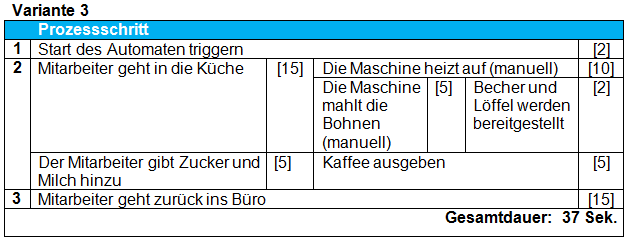 Conclusion Variant 3:
The employee only has to go into the kitchen and add sugar and milk to the coffee if required, the machine does the rest. In percentage terms, the intelligent networking of the machine saves 45% of the process time (1 minute 7 seconds = 100%).
Advantages of process optimization with M2M at a glance
Processes can be further optimized through the use of M2M technologies. Thanks to technological means, a process can be changed in its entire structure and sequence: Restrictions that were previously set during process optimization can now be changed . Thus M2M a "game changer" in the field of process optimization with the following advantages:
- Greater automation of processes leads to more efficient workflows
- In-depth digitalization of processes increases transparency and leads to better decisions
- Breaking down restrictions leads to a fundamental change in processes and is therefore the basis for a new "process revolution"
New processes and business models are now possible that were previously not feasible. M2M or IoT is therefore one of the most important tools for the future successful companies.
Sources:
[1] Image source: Fotolia © vallepu