
Customers are increasingly opting for a subscription model when consuming digital services, where they do not buy the physical product as usual.
Subscription models on the rise
Companies have also realized this trend and recognized the potential. They now want to increasingly offer their services and products via a subscription model.
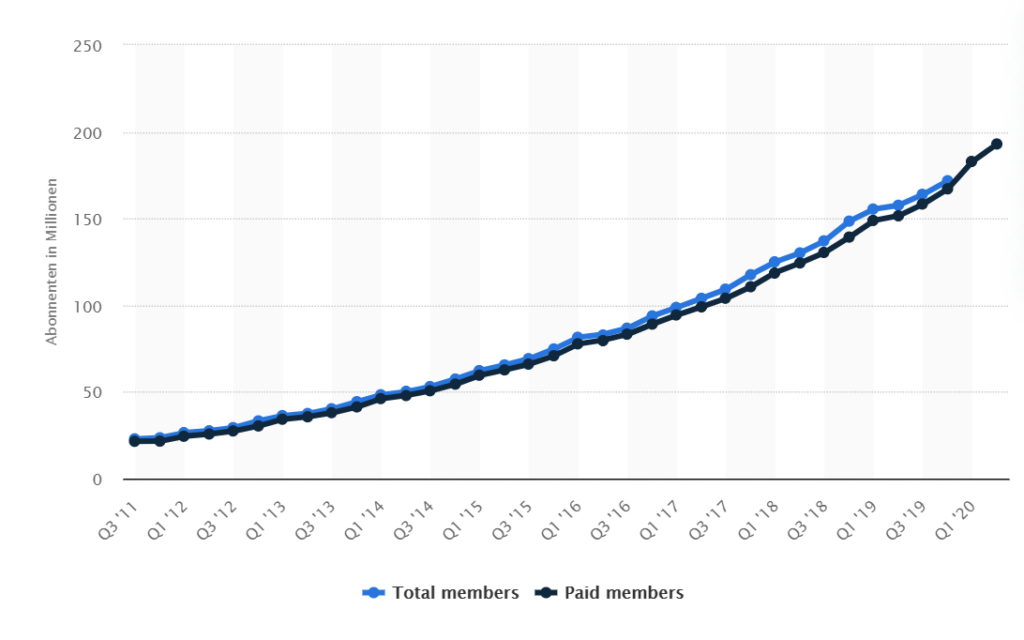
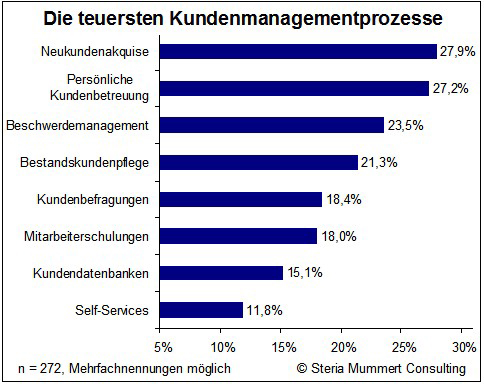
Subscription management differs from the classic one-off purchase of a product: by means of subscriptions, providers have a greater interest in retaining customers on a permanent and long-term basis, as the individual sales are significantly lower and the acquisition of new customers in particular is very expensive (see Figure 2). Individual, needs-oriented tariffs and services that are suitable for as many customer groups as possible and can be billed quickly and flexibly are particularly helpful here.
Blockchain as a problem solver for subscription models
The importance of blockchains such as BitCoin, Etherium or Hyperledger Fabric has increased significantly over the past two years, particularly in the processing and automation of payment processes. Some of the technological advantages of this technology could also be very interesting for subscription models:
- high availability,
- Security
- and transparency
are points that are of great importance in subscription management. The fact that blockchain technology sees itself as a revolutionary technology in the context of these characteristics means that its introduction could be promising for subscription models.
Core properties and core processes
For this purpose, the properties of the Blockchain-technologies, which are often cited as the main advantages of the technology, were examined with regard to the benefits for the core processes of subscription management.
Blockchain technology - core technological features
- Decentralization - No central authority to control and monitor the system.
- Reliability - Redundant data storage ensures permanent data availability.
- Tamper-proof - Cryptographic processes and consensus mechanisms are used to ensure the integrity of the blockchain.
- Transparency - All entries and their effects can be viewed, from the first to the current block with all transactions and participants.
- Throughput and speed - The number of transactions and the time span in which transactions can be processed (read and write).
- Smart contracts - With the help of smart contracts, processes can be automated and individual contracts can be created.
Subscription Management - core processes
- Mediation process - Collect usage data and transform it into billable and standardized data units.
- Rating process - Pricing based on usage data, customer data and contract data.
- Market specifics - Observance of and compliance with market-specific conditions.
- Invoicing - Creation of the invoice based on tariff and price models.
- Dunning - The company's payment reminder to the customer when the receivable is overdue.
- Payment - Processing of payment transactions.
- Performance integrity - The protection and control of the use of digital goods.
- Data protection according to EU-DSGVO - Compliance with the legal requirements for handling personal data.
| Mediation | Rating | Market specifics | Invoice position | Dunning | Payment | Performance integrity | Compliance EU-DSGVO | |
| Decentralization | + | + | - | + | + | + | + | + |
| Reliability | - | - | - | - | - | - | - | - |
| Manipulation safety | + | + | + | + | + | + | - | – |
| Transparency | + | + | - | + | + | + | – | – |
| Throughput and speed | + | + | + | + | - | – | - | - |
Blockchain-based subscription models: advantages and disadvantages
Individual aspects of subscription management can be optimized through the use of blockchain technologies.
For example, almost all aspects of subscription management (with the exception of dealing with market specifics) can benefit from blockchain technologies due to their decentralized nature. Among other things, this is due to the one (de)centralized data source, integrated payment options or the possibility of automating processes directly via smart contracts on the blockchain.
Blockchain technologies also contribute to greater transparency, which can be advantageous in individual aspects such as GDPR aspects, but is not necessarily desirable in all aspects. For example, maximum transparency with regard to price structures, customer segments or confidential data must be viewed as critical and concepts or measures must be derived to prevent this.
In terms of reliability, neither advantages nor disadvantages are to be expected from the use of blockchains in subscription management. This sounds surprising at first, as reliability is often cited as a unique selling point. However, cloud-based solutions and cluster operation, as well as the fact that a blockchain in subscription management must also be integrated into a system landscape that is not blockchain-based, negate these advantages.
In summary, it can be said that the use of blockchain technology in subscription models makes perfect sense.
The various processes involved in the management of subscription models offer potential support where the features and functionalities of blockchain technology can be utilized.
However, it should be noted that blockchain technology is not a fully comprehensive solution for subscription management. With the current state of technology, it can only serve as a supporting technology. Especially in the context of service integrity and data protection, combinations with central databases and content protection technologies must be developed.
Hasan Kerem Karadeniz wrote this blog post as part of his bachelor's thesis "Potentials and risks of using blockchain technology in IoT subscription management". Michael Rotter assisted him with this blog post.