This could develop into a real unique selling point (USP) for you, as you are essentially tapping into the customer group of e-car drivers in a new way and thus offering this customer group a real incentive. In return, this customer group brings new dimensions and potential for you in connection with a revenue-based charging offer: Customers are potentially more likely to spend their charging time in your retail store and often stay longer than those who do not charge their car during their shopping time [1].
The idea: Customers are motivated to make larger purchases in your store by means of sales-related discounts at the store. Those who do not shop with you pay the regular charging price.
The following article shows how charging points in front of stores and the associated Shop & Charge represent real added value for customers and a unique selling point for you in the retail sector. Particularly in view of rising energy costs and the resulting increase in the price of charging services, discounts and special offers have become even more attractive.
"Then I'll just drive to where there's a free charging station!"
"If it's full, I just go to the discount store, there's always something free."
This is how a friend of mine reacts when the charging station at the supermarket around the corner is full again. She is happy to take the two-kilometre detour because she knows that there is very likely to be at least one free charging point there. Even though she might find a smaller range of products there.
It's a bit different for me: I weigh up whether I really need something urgently and then go to the supermarket without charging my car - but then I only really buy the essentials. Or I drive home because I have my evening meal delivered, for example, so that I don't have to do the shopping in the first place.
Until recently, the occupied charging stations at large supermarket and discount chains were a major annoyance for customers, as the stations were quite often occupied by so-called charging scroungers.
Retailers reacted to this and ended the free offer. Since then, a standard market price per kilowatt hour charged has been charged at the charging stations in Aldi, Lidl or Kaufland parking lots, for example, as at all other charging stations.
Park store during shopping
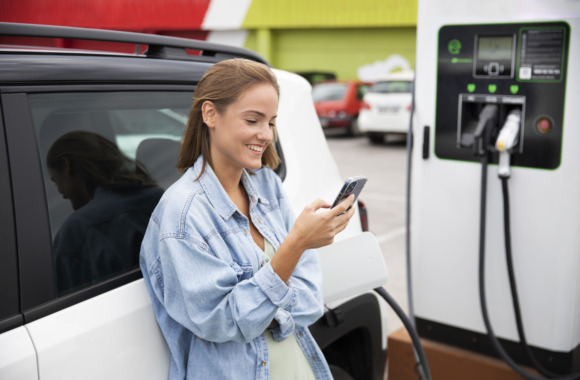
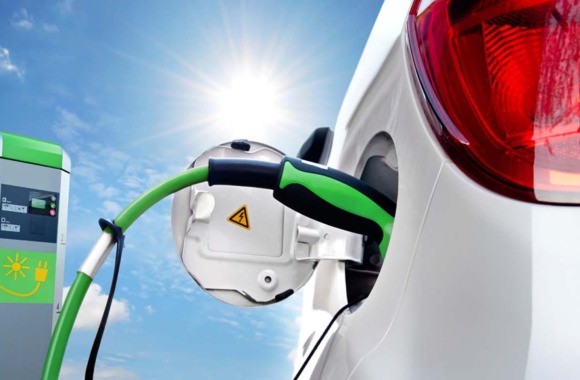
As an e-car driver, you like to use so-called parked charging. This involves using the time the vehicle is parked to charge the batteries. The car is parked anyway.
One starting point here is to use the waiting time for errands, such as shopping. From a retail perspective, there is enormous potential if travelers become store customers and spend their waiting time shopping.
According to the UScale Public Charging Study 2021, almost half of e-car drivers surveyed base their decision on the availability of charging facilities when choosing a retailer (supermarket or shopping center). More than half of them stated that charging extends the time they are likely to spend in the store.
With the advent of electromobility, the mere provision of a charging station near the store was a competitive advantage. In addition, a free offer attracted additional customers to the parking lot and to the store. This advantage was lost due to the growing range of charging options and the discontinuation of the free offer.
There are charging stations at numerous locations in many regions. The range of vehicles is increasing and home and workplace charging is also being used more and more. This means that the need for drivers of electric cars to charge near stores is decreasing and the perceived added value is therefore also shrinking.
The challenge: Achieving a competitive advantage for your own customers through Shop & Charge
As a retailer, you want to offer customers a special charging offer, but the offer is offset by the exploitation by "charging scroungers". Taking both into account is difficult and so far there seem to be only two opposing solutions:
- Free (or heavily discounted) loading for all visitors to the customer parking spaces, including people who do not store in the store
- "Regular" fee-based charging for everyone, including your own customers, and thus the loss or severe restriction of your competitive advantage
Neither solution is completely satisfactory. A compromise hardly seems possible.
The solution: The customer revenue-based charging offer - digital and simple
Ideally, the subsidized or free charging offer can be directly related to the turnover generated in the store. This allows the offer to be tailored specifically to your own customers. The incentive is retained and sales in the store increase.
During implementation, the retailer's backend is connected to the charging station operator's backend via a backend module. The module assumes the adapter function between the back ends and thus enables communication.
The rating is also carried out. This means that predefined parameters and rules are used to calculate how much the customer should be charged for the charging process. Billing can then take place directly at the checkout or via the retailer's app.

Further details on the solution are available here.
The advantages of revenue-based parking charging at a glance
- Incentivize your own customers with a free or heavily discounted charging offer depending on the turnover achieved in the store
- Strengthened customer loyalty through a unique offering
- Increased dwell time and higher turnover of customers in the store
- People who do not store in the store pay the "normal" charging rate, which opens up another source of income, even outside opening hours
- Visibility of the charging station and therefore the store in various charging apps
- Additional source of data on customer behavior and living conditions
- A direct connection to the existing customer card (systems) is possible
Conclusion: sales-based charging is a win-win situation
A blanket charging offer by retailers for all e-car drivers hardly offers a competitive advantage. The USP is lost due to the wide range of charging options.
If the store offering is targeted at the store's own customers and adapted accordingly, customers are attracted and retained, and their sales in the store are increased.
Directly to the Shop & Charge offer
Co-author: Dennis Wagenblast
Sources:
[1] UScale Public Charging Study 2021