
But how do companies deal with the dual task of mastering the volume of data on the one hand and ensuring its security on the other? One solution to this is so-called "federated data rooms", also known as "Dataspaces". In this blog post, we explore what lies behind this concept and why it could be so relevant for modern companies.
Definition
The term "data spaces" refers to a specific type of data relationship between trusted partners that adhere to the same high standards and guidelines in terms of data storage and sharing within one or more vertical ecosystems. Vertical ecosystems in this context are specific industries or sectors in which data is shared by different partners and actors within that specific vertical industry. A vertical ecosystem is a network of companies, organizations and institutions that are active in the same industry and often work together in a value chain or in certain business processes. The data remains in its original sources or storage locations, but is merged and controlled via metadata, authorizations and security mechanisms. This allows users to access data from different sources, while control over data management and data protection remains with the original data sources.
In the context of data rooms, federated data rooms refer to the Creation of a common platformon which data from various distributed sources can be merged and made accessible.1
Components of a data room
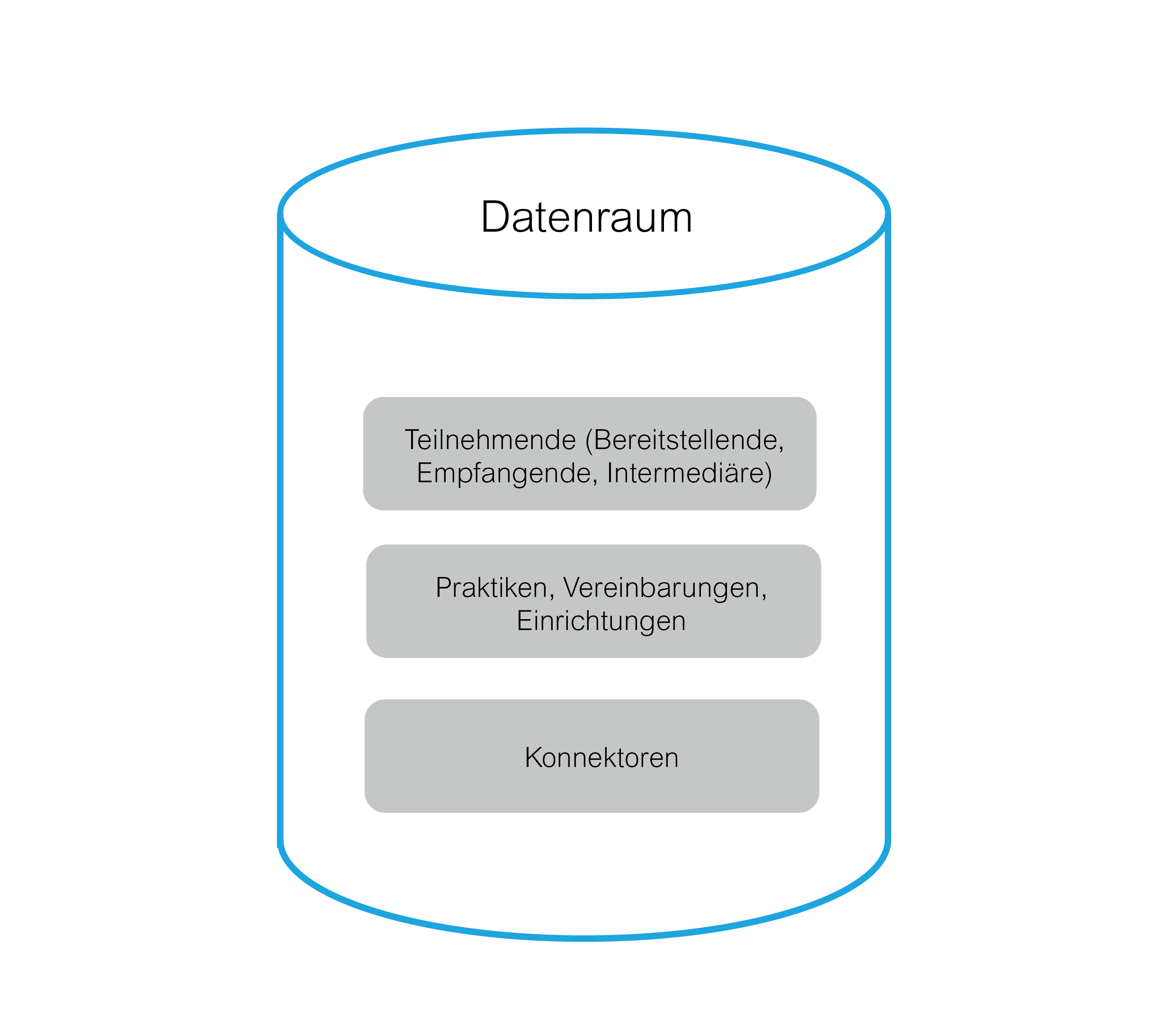
Participants: These are the actors in the data space and consist of providers (data sources), recipients (data target) and intermediaries (mediators between providers and recipients). Participants can be organizations or individuals and take on different roles depending on the exchange process.
Practices, agreements, facilities: These components include the various practices, agreements and facilities that enable, facilitate or control the exchange of data in the data room. These include, for example, software protocols, standards and contracts that ensure the smooth exchange and interoperability of data.
Connectors: Connectors are client-side applications that enable participants to take part in data exchange in the data room while exercising maximum control over the data in question. They serve as interfaces through which participants can access and exchange data and manage security and access rights.2
What are the advantages of federated data rooms?
Sovereignty over data and protection of privacy
Federated data rooms allow data owners to retain control over their data. Instead of storing the data in a central location, it remains with the original sources or organizations. This strengthens the Data sovereignty and ensures that data protection regulations and guidelines are complied with.
Promoting collaboration and data exchange
Shared data rooms create a platform on which different organizations or institutions can securely exchange and jointly process data. This facilitates collaboration in various areas, e.g. in research, business and public administration.
Scalability and flexibility
The federated approach enables the integration of data from different sources. The data does not have to be physically copied. Without centralized data migration, this enables flexible scaling and opens up new possibilities for applications and analyses.
Reduction of redundancy and costs
Federated data rooms reduce the need to store and manage data in more than one place. This reduces redundancy and costs. Companies can manage their data independently and still benefit from the advantages of shared use and added value.1
Federated data rooms speak for secure and controlled collaboration and Use of data between different players. The integrity and confidentiality of the data are safeguarded. They help to strengthen digital sovereignty and open up new opportunities for data-driven innovation and collaboration.
Examples and use cases
Gaia-X
Gaia-X is a European project that aims to create a sovereign, networked and federated data infrastructure for Europe in which companies and organizations can exchange data securely. The aim is to comply with European data protection standards and regulations and provide a trustworthy data platform for various sectors. Another effect resulting from Gaia-X is a reduction in the number of Dependence on non-European providers.
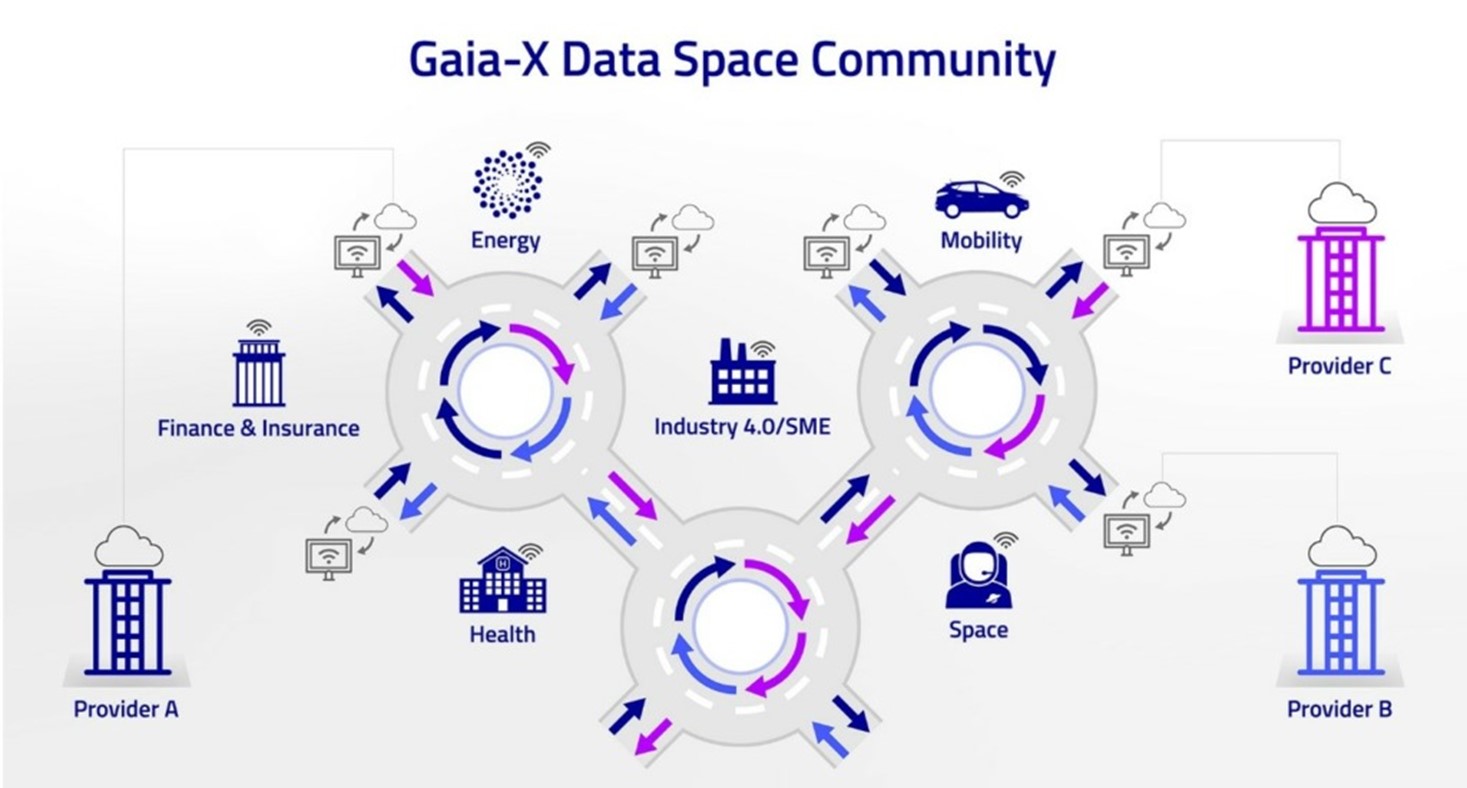
The Gaia-X project could, for example, be the collaboration of several companies from different industries in the development of a new product. Each company has its own data sets that are required for the project. By using Gaia-X, the data can be exchanged securely and efficiently between the companies without them losing their data sovereignty. To ensure this, the International Data Spaces Association (IDSA) has proposed a reference architecture model for the participants that defines the standards and guidelines in terms of data storage and sharing. It is important to note that Gaia-X is a future project2.
Catena-X
A somewhat more concrete sub-project that should be mentioned in the context of federated data spaces is Catena-X. This is an initiative of the German automotive industry that aims to create a Common data infrastructure for the entire supply chain in the automotive industry. The project aims to establish a federated data platform on which companies along the value chain can exchange data securely and efficiently.
The name Catena-X is derived from the Latin word "catena", which means "chain". The aim is to strengthen the data chain in the automotive industry and improve collaboration between manufacturers, suppliers, dealers and other players. By networking the various data sources and exchanging information securely, companies can optimize their processes, increase transparency and develop innovative solutions3.
A concrete use case of Catena-X is the Tracking the supply chain of a car. In the automotive industry, there are a large number of partners and suppliers involved in the production of a vehicle. Each of these partners generates and holds data that is crucial for tracking and quality assurance in the supply chain. By using the Catena-X data platform, this data can be exchanged securely and reliably between the parties involved. This creates a transparent and traceable supply chain that makes it possible, recognize potential bottlenecks or quality problems at an early stage and fix them. The development of the project can already be followed in the form of numerous development projects.
The Catena-X initiative attaches great importance to security and data protection regulations when sharing data. Companies retain control over their own data and decide what information they want to share. Through the use of technologies such as the Eclipse Data Space Connectors data can be stored in a tamper-proof manner, transmitted in a standardized way and access rights can be precisely regulated.
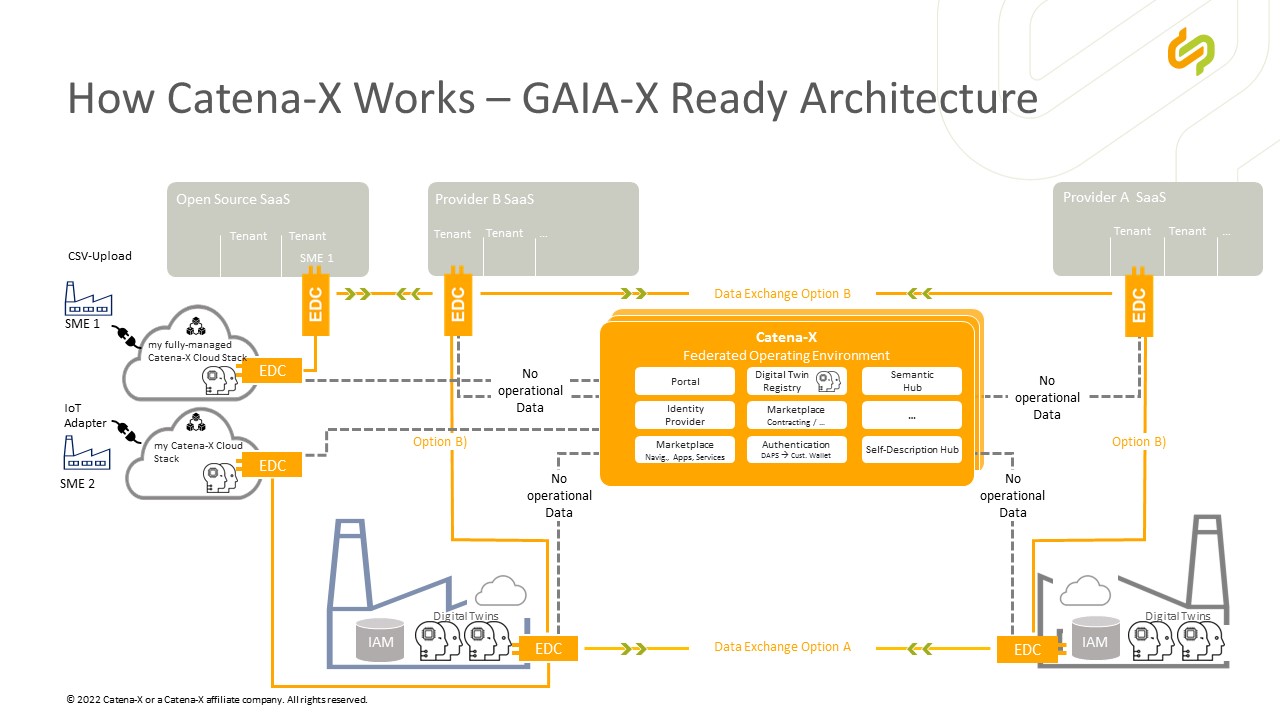
With Catena-X and similar federated data rooms, companies in the automotive industry can Strengthen collaboration, promote innovation and increase efficiency along the entire value chain.
doubleSlash is involved in the implementation of Catena-X. Through our involvement in the development of this federated data platform, we have gained valuable knowledge and experience on how to fully exploit the many benefits of a federated data platform.

For more information about federated data rooms, how they work and who plays a role, we have published further blog posts:
- Gaia-X, Catena-X, IDSA: parallels and contrasts
- Gaia-X - Secure data exchange for Europe
- The Eclipse Dataspace Connector (EDC) - architecture and benefits of the framework
- Eclipse Dataspace Connector (EDC): Hands On
[1] https://internationaldataspaces.org/why/data-spaces/ ^
[2] https://www.bmwk.de/Redaktion/DE/Publikationen/Digitale-Welt/das-projekt-gaia-x.pdf?__blob=publicationFile&v=1 ^
[3] https://catena-x.net/de/ ^