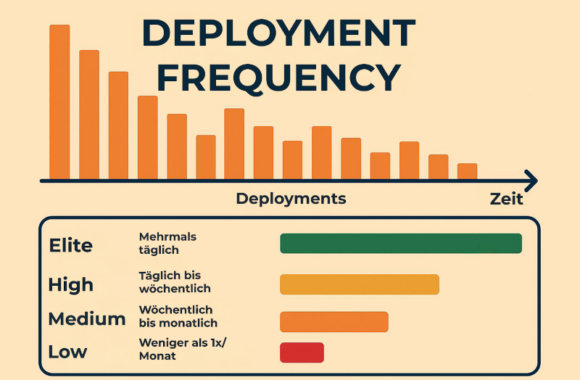

For weeks, the designers and developers We have been working on these new features for a long time and now they can finally go live! The only thing missing is the deployment - i.e. the provision of the new product on a production environment. One push of a button and the whole thing is up and running? That would be nice.
How deployment pain clouds the joy of new features
Because the reality often looks like this:
- Deployments take place outside of regular working hours in order to minimize customer impact.
- With large release cycles, many features are delivered at once. And the more features are delivered at once, the more errors can occur in a deployment.
When errors like this happen, things quickly become hectic in development. Which feature caused the error? Does a rollback need to be started, or can the problem be solved with a hotfix? Developers ask themselves all these questions in the middle of the night or very early in the morning - not exactly easy.
That's what Nicole Forsgen, Jez Humble and Gene Kim - the authors of the book "Accelerate". They conduct annual surveys among Teams from various companiesn through. The results of these surveys are published each year in the DevOps Report published. The aim of the blog post is to highlight the findings in the area of deployment. This is because the "Stress Deployment Scenario" described above was also identified in the survey and referred to as "Deployment Pain".
What the surveys showed was that individuals process the problems from the deployment differently. Many people ponder the problems long after the actual deployment, making the night even longer. On the day, the new features are then discussed with colleagues and further analyzed in a post mortem. As a result, the joy of the new features is quickly forgotten and turns into frustration.
Continuous delivery for more joy and excitement about new features
Accelerate divides companies into different performance levels:
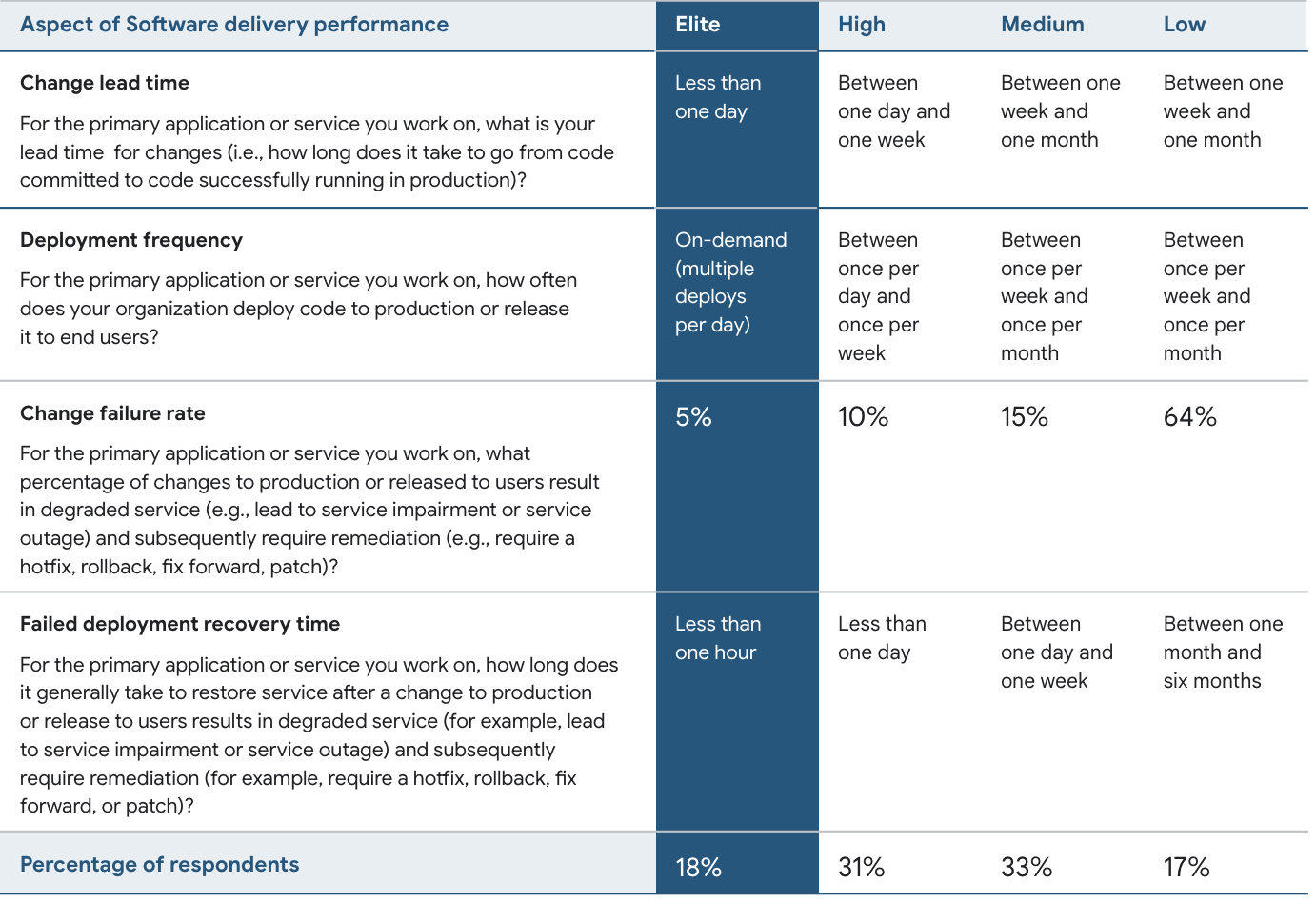
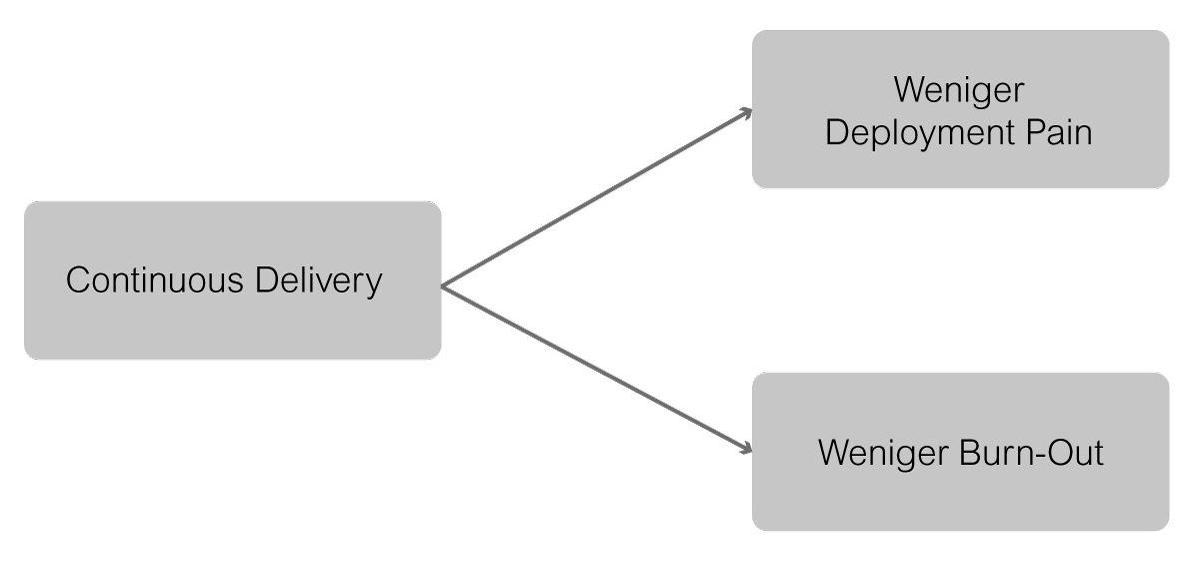
The table above clearly shows that people who deploy frequently are more satisfied than those who deploy less frequently. One reason for this is that frequent deployments contribute to higher satisfaction. Continuous delivery means that smaller packages and fewer features are deployed at once. This makes troubleshooting less time-consuming and nerve-wracking.
How Continuous Delivery makes you faster, more efficient and happier
Continuous Delivery (CD) enables teams to automatically test code changes and seamlessly transfer them to production. Automated deployments are crucial for minimizing human error and accelerating processes.
What is needed for this
- Automated tests: Comprehensive automated tests are required to ensure that new changes do not affect existing functions.
- Continuous Integration (CI): CI enables the continuous integration and testing of code changes, which promotes early error detection.
- Deployment pipelines: These automate the entire process from code commit to production and ensure consistent, reliable deployments.
- Monitoring and logging: Comprehensive monitoring and logging solutions are required to identify and rectify problems quickly.
- Culture of error tolerance: A corporate culture that sees mistakes as learning opportunities reduces the pressure on developers and promotes continuous improvement. (see next section)
The change processess
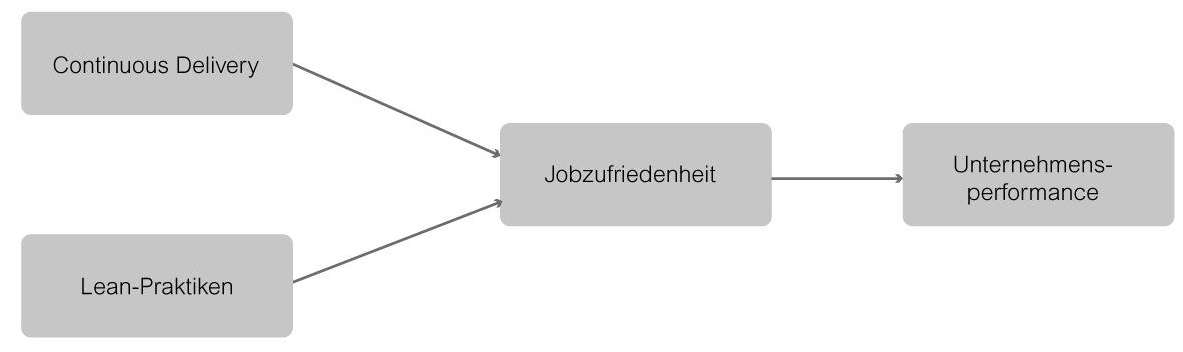
Accelerate shows that approvals by external bodies tend to disrupt the process. Instead, a simple approval process based on peer reviews within the team, such as pair programming or code reviews, is recommended. In combination with a deployment pipeline, this leads to better results. Teams with such internal processes achieve higher performance and satisfaction.
By implementing these practices, organizations can improve the frequency and quality of their deployments, ultimately leading to happier and more productive teams.
Lean management: fault tolerance as the key to improving performance
In the dynamic world of software development, the ability to react quickly and efficiently to changes and challenges is crucial. Accelerate shows that companies that apply lean management principles achieve significantly higher performance. A key aspect of these principles is the culture of fault tolerance.
Why fault tolerance is extremely important
Error tolerance means that mistakes are not only accepted, but are seen as valuable learning opportunities. In an environment that promotes error tolerance, employees feel safe to take risks and develop innovative solutions without fear of negative consequences if they fail. This creates a culture of trust and continuous improvement.
Why fault tolerance leads to higher performance
- Faster problem identification and resolution:
- In a fault-tolerant environment, errors are reported and analyzed more quickly. This enables teams to identify and resolve problems early on before they develop into larger, more costly problems.
- Increased ability to innovate:
- When employees are not afraid to make mistakes, they are more willing to try out new ideas and pursue innovative approaches. This leads to a culture of creativity and continuous improvement, which strengthens the company's competitiveness.
- Improved employee satisfaction and loyalty:
- A culture of fault tolerance contributes to a positive working environment in which employees feel valued and supported. This leads to higher employee satisfaction, less fluctuation and greater loyalty to the company.
- More efficient processes:
- Processes can be optimized and streamlined through continuous reflection and learning from mistakes. This leads to a more efficient way of working and reduces waste, which is a core principle of lean management.
Our assessment - more efficient, more productive and happier in software development with Accelarate
The principles and practices from Accelerate provide a valuable guide to reducing deployment pain and increasing the efficiency and productivity of development teams. By implementing continuous delivery and fostering a culture of fault tolerance, organizations can not only improve their performance, but also increase employee and customer satisfaction. Investing in these methods pays off in the long term through better results and a more resilient organization.