
How is it possible for an AI system like ChatGPT to provide fluent, context-aware and precise answers to a seemingly infinite number of questions? And how exactly does this technology actually work in the background? This blog post dives into the world of language AI and explains how modern Large Language Models work and why applications like ChatGPT or Claude are changing the way we interact with technology today.
Artificial neural networks lay the foundation
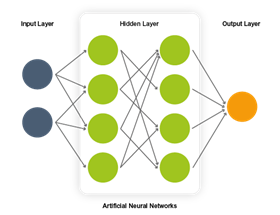
A fundamental concept in language processing is that of artificial neural networks. These are inspired by the way the human brain works. Numerous "artificial neurons" are linked together and organized in layers. These neurons receive, process and transmit information. Each layer has a specific task:
- Input layer: It records data, e.g. words or sentences.
- Hidden layers: This is where the actual processing takes place. The neurons recognize patterns and connections, e.g. which words often occur together.
- Output layer: It delivers the result, e.g. the answer to your question.
Neural networks are trained on data sets. You can think of this principle in a similar way to a person learning a language: initially, a child hears many unfamiliar words. Over time, it learns through repetition/training what e.g. "mom", "dad", "dog" means. You can find an example of neural network training here here.
The underlying concepts for artificial neural networks date back to the 1940s and 1950s. They have been further developed over the years and have become increasingly sophisticated as computer computing and storage capacities have increased. If you want to find out more about the historical development of language processing, you can do so at here do.
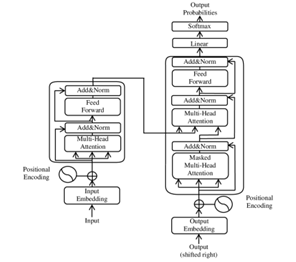
A groundbreaking breakthrough in this further development was achieved in 2017 as part of a paper published by Google called "Attention is all you need". The concept of transformer architectures was introduced. These form the basis of today's Large Language Models such as BERT or GPT-4.
The secret behind the Transformer architecture
The special thing about Transformer architectures is that they have the ability to "understand" complex contexts and deal efficiently with long dependencies in texts.
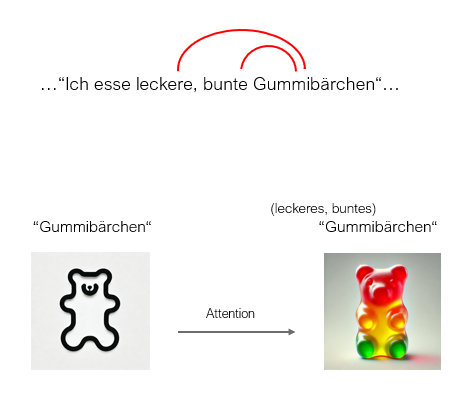
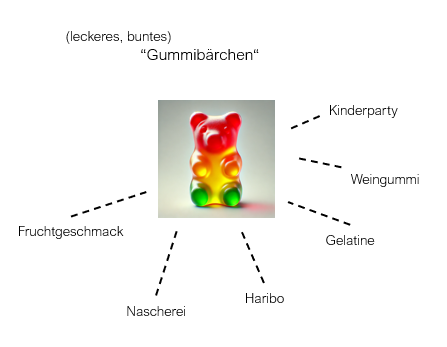
Among other things, the so-called attention mechanism is used to ensure that the model understands the meaning of individual words in context. In other words, this process is able to highlight important information in a text sequence and link it together. For example, suppose you have a text sequence that reads "I eat delicious, colorful gummy bears." Then the attention mechanism understands that the words "delicious" and "colorful" are important for the context of the term "gummy bears". And so a "gummy bear" becomes a "delicious, colorful gummy bear".
In addition, transformer architectures have the ability to learn complex non-linear relationships between terms and to understand their respective context, i.e. they are able to enrich the trained neural networks with knowledge. In our example from just now, the model understands that terms such as "children's party", "Haribo" or "fruit flavor" are highly relevant to our "delicious, colorful gummy bears".
What is a Large Language Model and what makes it so big?
Large Language Models are very large language models that have been trained on extensive text corpora to understand, process and generate language. They use the previously introduced transformer architectures and attention mechanisms to handle tasks such as text generation, translation, summarization and much more. The currently best-known GenAI chat applications such as ChatGPT or Claude are based on a large language model.
They are characterized by three central factors that make them powerful and "big":
- Number of parameters: LLMs have billions of parameters (i.e. specifically very large/complex artificial neural networks with a large number of nodes, connections and layers), which ensure that they can understand and generate complex relationships in texts. If you want to get a feel for the size and complexity of modern LLMs, you are welcome to here (Note: It is estimated that current models such as GPT-4 have over 1 trillion parameters).
- Data volume: These models are trained on enormous amounts of data. This includes general internet data, Wikipedia, digitized books, subtitles of films, news pages, scientific papers and much more. This variety of data sources enables the models to cover a wide range of topics. It is assumed that current models such as GPT-4 have been trained on several hundred terabytes of data with several trillion tokens (i.e. words).
- Computing capacity: The training process of LLMs requires immense computing power. High-performance servers and specialized hardware (such as GPUs and TPUs) are necessary to handle the huge data sets and complex calculations. Companies such as Microsoft are currently investing in projects such as Stargate up to 100 billion $ in the development of computing capacities for training the next LLM generations.
How does a text input become an answer?
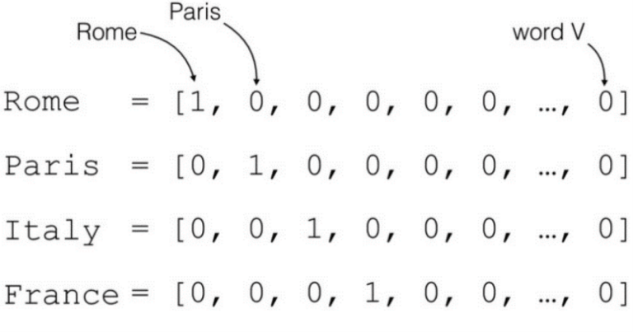
As every computer system can ultimately only work with numbers, i.e. zeros and ones, the entered text - the so-called "prompt" - must first be converted into a mathematical representation. This is done using vectors that represent the meaning and context of the individual words.
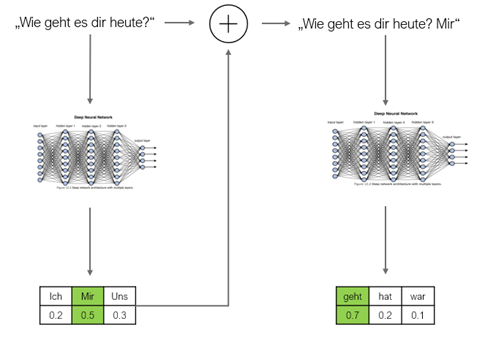
The model then calculates the probabilities for possible subsequent words based on the input sequence. For example, at the prompt "How are you today?", the model could determine the probabilities for the words "Me" (50 %), "Us" (30 %) and "I" (20 %) and select the most probable word, in this case "Me".
The selected word is then appended to the original input and the extended sequence is fed into the model again. This process is repeated until a complete response has been created. In this way, a text is created step by step that matches the original prompt in terms of both content and grammar. This iterative process enables the model to create context-aware and natural-sounding responses.
Confused by the different terminology?
The multitude of different terms can sometimes be confusing. We have therefore summarized the most important terms from this article in a table below:
| Term | Explanation |
|---|---|
| Artificial neural networks | Computer models inspired by the functioning of the human brain. They consist of layers of "neurons" that process data and recognize patterns. |
| Transformer architectures | A modern architecture for AI models based on parallel processing. It enables efficient learning and processing of long texts. |
| Attention mechanism | A method that allows AI models to focus on relevant parts of a text in order to better understand the context. Key concept behind Transformers. |
| Large Language Model | An AI model that is trained on huge amounts of data and can analyze, understand and generate language. Examples: GPT-4, LaMDA. |
| GenAI applications | Applications such as ChatGPT or Claude, which use generative AI to create texts, hold conversations or solve creative tasks. |
Conclusion
Applications such as ChatGPT are an impressive advancement in the field of artificial intelligence that enrich our everyday lives because they can understand and generate language at a high level and use it in a context-aware manner. The basis of these applications lies in an impressive combination of modern technologies: artificial neural networks, transformer architectures and the attention mechanism make it possible to understand language efficiently and process it in a context-aware manner. Large language models such as GPT-4, which are based on huge amounts of data and high computing power, make these capabilities highly versatile.
These technologies are not only technological milestones, but also pave the way for a future in which humans and machines can work together more efficiently. It is clear that the better we understand how these technologies work, the better we can harness their potential - and address their challenges at the same time.
If you would like to find out more about how such technologies can also be used in your working environment, you can find more information on our AI Assistant Services page at doubleSlash.