

What space-based architecture can do
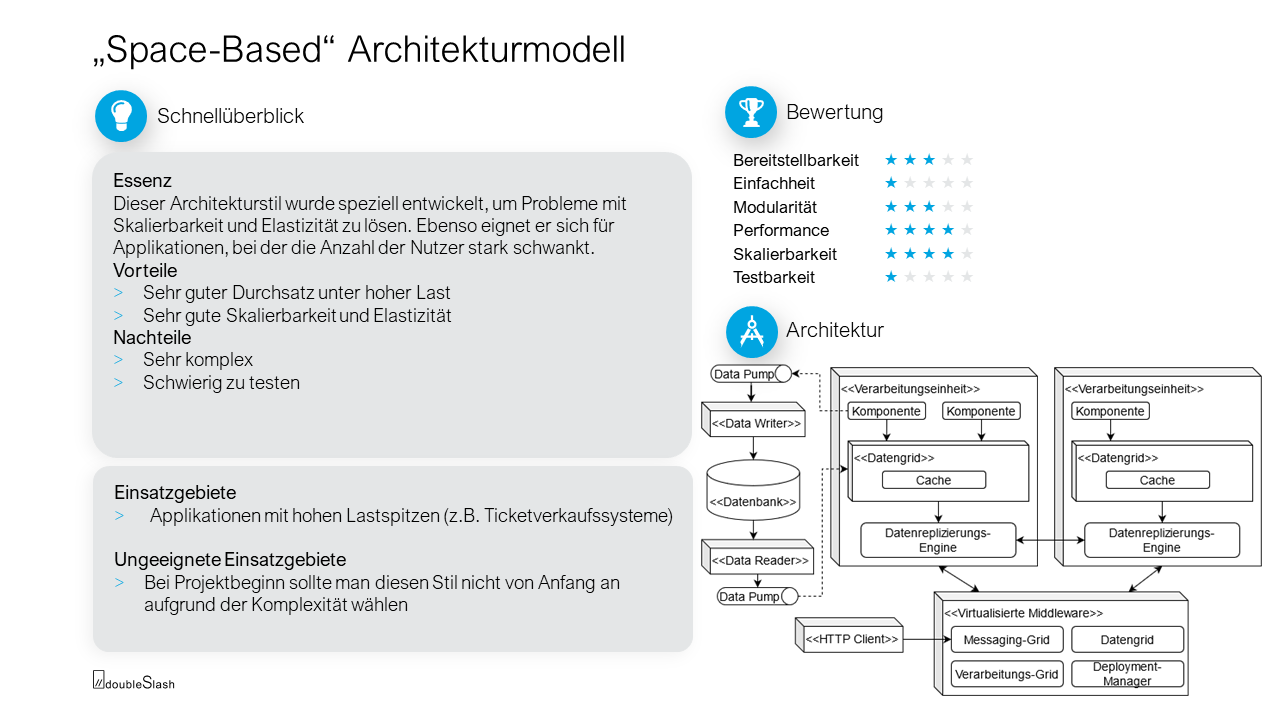
The components of the "space-based" architecture model: The virtualized middleware is at the heart of this architecture style and handles data synchronization and request management. The messaging grid forwards the incoming requests to the active processing units, whereby a web server with load balancing capabilities can be used. The data grid component is necessary to ensure that all processing units have the same data in the cache. Each processing unit has its own replicated cache, and the data grid ensures that all caches are synchronized. The processing grid is optional and is used when requests need to be orchestrated between multiple processing units, for example during an order process and payment processing. The deployment manager monitors the response times and user load and starts additional processing units if necessary to counteract an increase in load. Data pumps enable access to the database via messaging and services for reading and writing data. They are necessary because the processing units cannot access the database directly.
Areas of application and unsuitable scenarios: The "space-based" architecture model is particularly suitable for applications with high load peaks, such as ticket sales systems. Thanks to its scalability and elasticity, it can handle millions of simultaneous requests and highly fluctuating user numbers. However, it is important to note that this architecture model is not always the best choice at the start of a project due to its complexity. For a simpler and faster time to market, microservices or service-based architectures may be more suitable.
Advantages and disadvantages of the "space-based" architecture model: One of the main advantages of the "space-based" architecture model is its impressive scalability and elasticity. It enables the processing of millions of simultaneous requests and can adapt flexibly to fluctuating user numbers. However, the implementation of this architecture model is both costly and complex. Setting it up and testing it under realistic conditions can be challenging.
Conclusion
The "space-based" architecture model offers a powerful solution for demanding applications with high load peaks. By using virtualized middleware and specific components such as the messaging grid, the data grid and the processing grid, it enables scalable and elastic processing of requests. However, it is important to consider the complexity and costs during implementation and carefully weigh up whether this architecture model is the right choice for the project in question.
Summary
We have briefly summarized the most important features of this style for you as a picture.
Disclaimer: The Architecture Spicker is largely based on the book Handbook of modern software architecture by O'Reilly. For more in-depth information, we recommend buying this book.