
Twitter is a place where concentrated insights are often shared. For example, I found the following exchange insightful from @GeePawHill.
I spoze the historic and ongoing inability/unwillingness of the software trade to grasp and adopt test-driven development (TDD) is one of the most frustrating & demoralizing events of my forty-two years as a professional geek.
As it is often a little easier for me to understand things in German, here is the translation.
The software industry's historical and persistent inability or unwillingness to embrace test-driven development (TDD) to understand and accepting it is one of the most frustrating and demoralizing events in my forty-two years as a professional geek.
"Grasp" is not only a central aspect here with TDD, but in my view also in the development of sustainable software. When the advantages and necessity of TDD are explained, most developers nod their heads and ultimately do not implement it with the necessary consistency. We are generally aware of the effects, but do not link them directly to our actions.
It is precisely this bridge that the answer from @wittyelk to the original tweet.
Not doing TDD is like not doing anything against climate change. You get away with it too long. And the effects (bugs) become evident only weeks & months later. They are never connected with the cause: not doing TDD.
Again, the translation reinforces the content:
Not doing TDD is like doing nothing about climate change. You can get away with it for too long. And the effects (bugs) only become visible weeks and months later. They are never associated with the cause: not doing TDD.
As a rule, we are far too busy to worry about clean testing or ensuring that our software is "ecologically" effective. New features need to be implemented and the existing complexity needs to be overcome. As a developer, you're often happy when something basically works and that's often the horizon you're working towards. But it is precisely this approach that is also the cause of our problem.
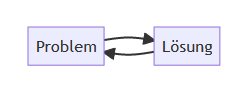
From this, you could derive the rule that everything you do to solve a problem always has a feedback effect on the problems of the future. The smaller (more effective) the solution, the less feedback there is on the problems of tomorrow. We are therefore doing our future self a favor if we stick to the simple principle of "Less is more" hold.