
Self-driving cars or unlocking smartphones using facial recognition, for example, were only conceivable in science fiction films just a few years ago. All these successes are made possible by "Machine Learning" methods. These mathematical methods combine two core aspects:
- Self-improvement through learning: The best mathematical equation between input data and model output is searched for by trial and error thousands of times. The equation found and adapted is then referred to as a "model".
- Black Box: While an engineer often builds mathematical relationships on physical principles such as the law of conservation of energy, machine learning models do not necessarily have this claim. It is often not exactly clear why a model does certain things and not others. What is used is what works.
Bias and the challenge in the black box
It is precisely this "black box" aspect of many machine learning processes that makes it difficult to ensure that Models behave as expected. For example, an autonomous car recognizes a red balloon as a stop sign and triggers emergency braking, it obviously does not behave as intended.
For such a Misconduct of the model can have many reasons. Some fall under the English term "bias". "Bias" essentially means:
- Bias - depending on how we see the world based on our experiences, we come to different conclusions.
- Bias - in the statistical sense as the mean systematic deviation between the expected ("correct") model result and the mean model result that actually occurred.
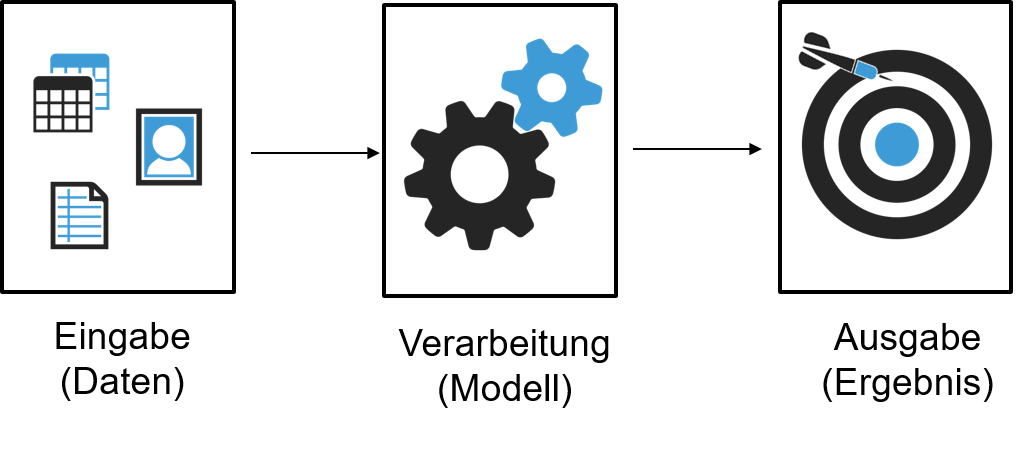
Bias mechanisms can be of a very different nature and, above all, can occur at very different points in the simplified machine learning pipeline shown in Figure 1 - in the input data (input data), the model itself (processing), or the model output (output or result).
Garbage in, garbage out
Let's start directly with the Input data on. A machine Learning model can only find the correlations in the data provided. If, for example, a product recommendation system is to be built, we would ideally measure the purchasing behavior of every single potential customer. Of course, this is not possible - instead, we have to make do with the purchasing behavior of a selection of customers. The question here is: At which "point", or for which customers, do we want to measure purchasing behavior?
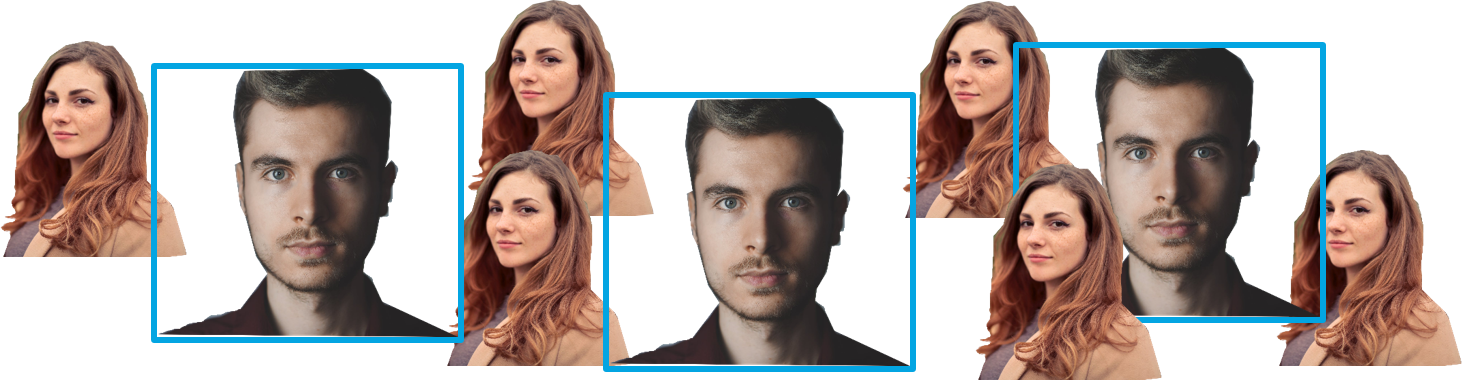
If you measure in the wrong "place", you create a so-called sampling bias. In this case, the data selected for the model is not representative of the situation in which the model is later used. This difference between the collected data and the real situation can arise for many different reasons. Figure 2 illustrates an example: While the actual target group contains men and women, only data from men was collected.
This effect often occurs, for example, when Customers for beta programs of all kinds in which new products are to be tested on a small scale. If you want to use the behavioral data of these customers for a model, you have to be careful: These customers apply voluntarily (self-selection). They may be particularly tech-savvy customers, for example, or particularly young or old customers. Their user behavior can differ significantly from the user behavior of the general customer base. With such distorted input data, the model learns incorrect correlations, that cannot cover the desired application scenario.
The art of measuring
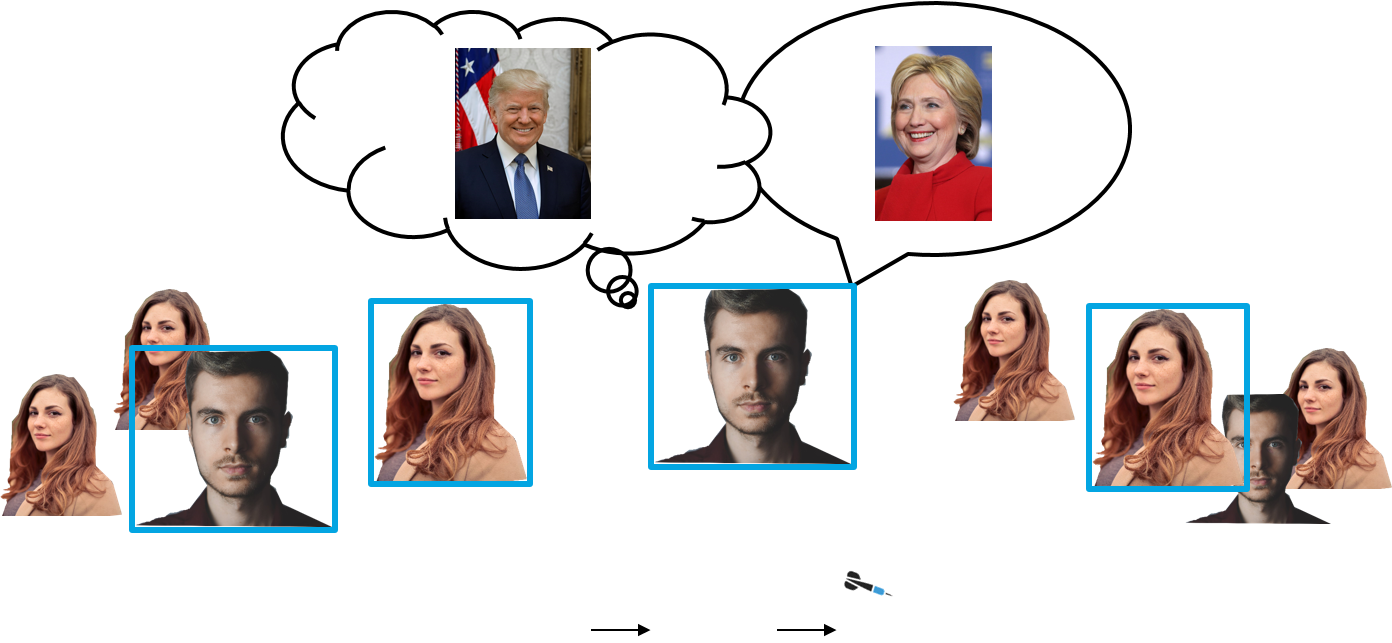
Even if you have selected the correct individuals or measured them in the right place, it is by no means certain that you are collecting the correct data. Measurement inaccuracies We are all familiar with this from physical measuring devices: be it a temperature thermometer, the speedometer in a car or a clock. The same effect can occur whenever people are interviewed. We cannot see into people's heads, but are dependent on your truthful answers. In drug studies, not every test person may always report the full truth about their actual diet and medication intake. Here, too, we have a measurement error. This effect is also shown in Figure 2: a person acts differently later than they announced in the survey.
One Another type of measurement error in the broader sense can be Object recognition occur. Here, a machine learning algorithm must be presented with a set of images in which the correct object ("car", "motorcycle", ...) is already marked for each image. Recognizing and marking the objects in the so-called training images, from which the algorithm will learn, is still a manual process today. If there are no uniform rules for this process, different people will systematically mark different objects differently. This effect also means that the model will later systematically learn incorrect correlations from the data.
Bias of the experts
Even experts are not immune to prejudice. Different machine learning methods are differently suited to different problems. Ideally, you would always use the perfectly tailored algorithm from your toolbox. But of course, every expert has their own preferences, experiences and external limitations when it comes to the tools available. It is not only the choice of algorithm that makes solving a problem easier or more difficult: clever transformations of the problem often reveal completely new approaches. This is where the expertise and ingenuity of the technical experts is required to minimize the bias effect.
The unrecognized bias effect: fairness and prejudice
An important bias effect also exists in the direct meaning of the word as "prejudice". Artificial intelligence is already influencing the lives of all of us - more or less obviously. From credit checks, to news recommendations and even crime prediction. Algorithms can either enhance our lives or put obstacles in our way.
However, the use of artificial intelligence undoubtedly makes many activities possible in the first place, or means that procedures and processes can be significantly optimized. In order for these advantages of artificial intelligence to be socially accepted in the long term, algorithms must behave "fairly". If the algorithm is not fair, it makes judgments with built-in prejudices.
Fairness is a concept that cannot be clearly defined. Depending on the objective, conflicts may arise that cannot be resolved. For example, does fairness mean that similar individuals should be treated equally - or does fairness mean that different social groups should be treated equally on average?
Regardless of the final answer to this question, they are of fundamental importance for the application of artificial intelligence. Here is an example from a publication by Zhao et al. In the vastness of the Internet, there is a multitude of images that are embedded in surrounding text.
Very often there is a connection between an image and the surrounding text: The text describes the image or the image illustrates the text. One task for artificial intelligence can now be to try to classify images with all kinds of keywords. For example, for the image in Figure 4: place - kitchen, person acting - man.

If we now use the data from the Internet to adjust our model, we notice that not every second kitchen picture shows a man, but only about every third kitchen picture. This means that men are depicted less frequently in kitchens than women. This data has now been used to adapt a model. However, when the finished model was presented with kitchen pictures, it incorrectly recognized a man in only one of six kitchen pictures and not in one of three.
Conclusion: Bias shows - AI requires knowledge and needs trust
Artificial intelligence can create great added value on the one hand, but it also behaves in surprising ways on the other. In order to minimize these (unpleasant) surprises, it is important to familiarize with the methodology and effectswhich lead to a systematic distortion of the model behavior. In English, many of these effects fall under the term "bias".
On the one hand, this includes distortions in the statistical sense, but also, for example, effects such as implicit social prejudices.
This means that artificial intelligence can lead to existing prejudices being reinforced by the algorithm. This results in a self-reinforcing effect.
Fairness for artificial intelligence is a current research topic. There are numerous methods to mitigate and prevent these effects, but the same applies here: only when these effects are known can they be addressed and remedied. In order to strengthen society's trust in artificial intelligence, it is particularly important to understand these effects and actively counteract them.
You might also be interested in this blog post: The five ultimate AI trends for the next decade
Sources
Zhao et al. "Men also like shopping: Reducing gender bias amplification using corpus-level constraints." arXiv preprint arXiv:1707.09457 (2017).
Figure 2: Man: https://www.pexels.com/photo/face-facial-hair-fine-looking-guy-614810/ Woman: https://www.pexels.com/photo/closeup-photo-of-woman-with-brown-coat-and-gray-top-733872/ License pexels: https://www.pexels.com/photo-license
Figure 3: Man: https://www.pexels.com/photo/face-facial-hair-fine-looking-guy-614810/ Woman: https://www.pexels.com/photo/closeup-photo-of-woman-with-brown-coat-and-gray-top-733872/ License pexels: https://www.pexels.com/photo-license Trump: https://commons.wikimedia.org/wiki/File:Donald_Trump_official_portrait_(cropped).jpg License: Public Domain https://commons.wikimedia.org/wiki/File:Hillary_Clinton_by_Gage_Skidmore_2.jpg License by Gage Skidmore, CC BY-SA 3.0, https://commons.wikimedia.org/w/index.php?curid=46897599
Figure 4: "Cooks being trained at the École supérieure de cuisine française in Paris", David Monniaux, https://de.wikipedia.org/wiki/Kochen#/media/File:Cooks_050918_154402.jpg , License: CC BY-SA 3.0 (https://creativecommons.org/licenses/by-sa/3.0/deed.en)
These other blog posts may also be of interest:
How to start a machine learning project
Harnessing the potential of data with machine learning
Technical implementation of machine learning solutions with Spark MLIib





.jpg)
